












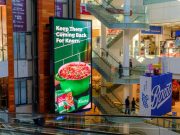




 The steady growth in Digital Out of Home advertising comes on the back of sustained investment, more sophisticated and better cross platform planning opportunities and better attention metrics, writes Caroline Decourcy.
There’s been no shortage of conversation around attention in recent years.
Shorter attention spans. More fragmented media. More pressure on every channel to deliver stronger results.
But if attention is becoming harder to capture, then one of the more interesting questions is this: Why are we seeing it increase in Digital Out of Home (DOOH)?
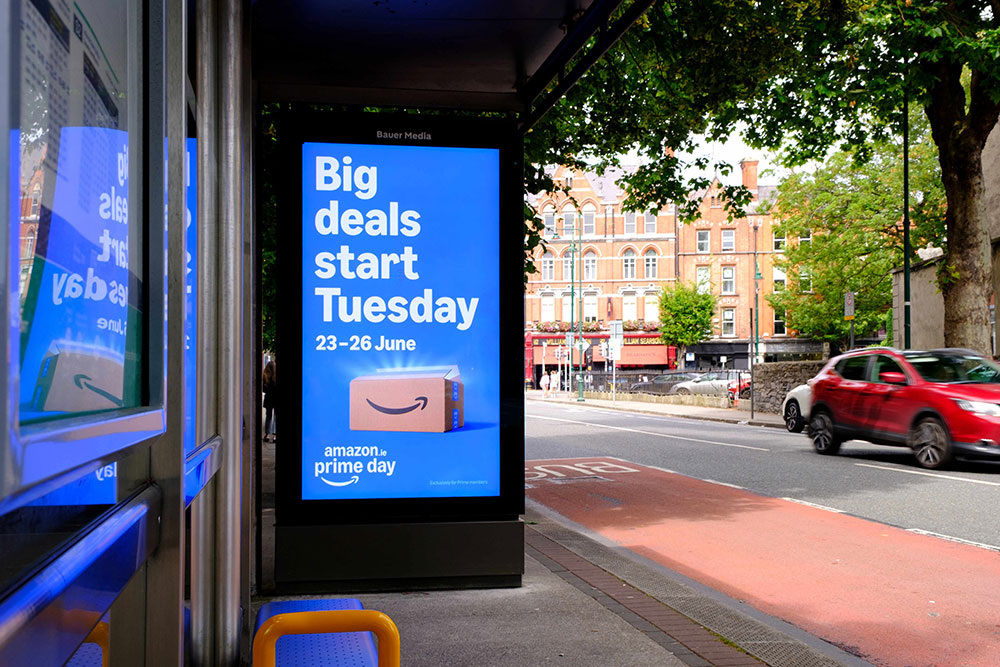
Because that’s exactly what our latest Pulse Brand Tracker research, developed in partnership with Opinions highlights. 77% of consumers now say they pay attention to DOOH advertising – up 7% in just two years.
Scale Works Harder
Over the past number of years, we’ve seen significant investment in DOOH across Ireland, led by media owners who are continuing to expand and evolve the channel at pace. The network has grown meaningfully, with circa 1,100 digital sites now available outside of Dublin. This investment has been particularly strong in large format roadside DOOH supported by ongoing improvements in infrastructure and overall quality.
Now accounting for over half of total OOH budgets, it has allowed DOOH to move beyond isolated placements to a channel that delivers consistent presence across multiple environments. Which brings me to my next point…
Inside Behaviour, Not Alongside It
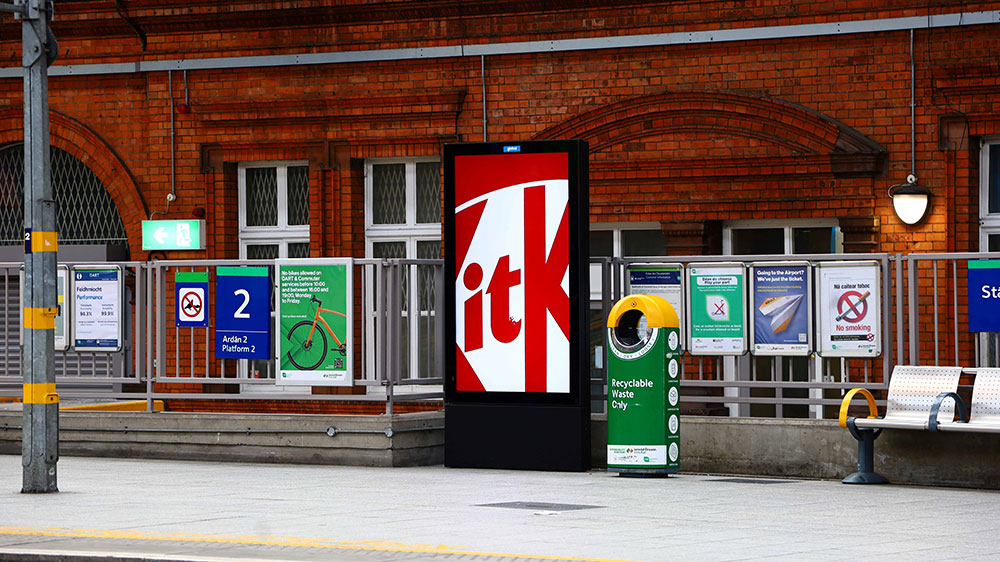
DOOH sits within real-world movement. People aren’t choosing to opt in or out of it, they simply encounter it is as part of their day:
- On the way to the supermarket, a behaviour 86% of consumers do weekly.
- While commuting, with 73% driving weekly, alongside significant usage (81%) of public transport.
- Or in and around purchase moments with high weekly footfall across high streets (39%) and shopping centres (38%).
And because of this it’s capturing attention in moments where people are already alert and engaged with what’s going on around them. That context is a fundamental reason why attention is increasing.
Capturing Attention
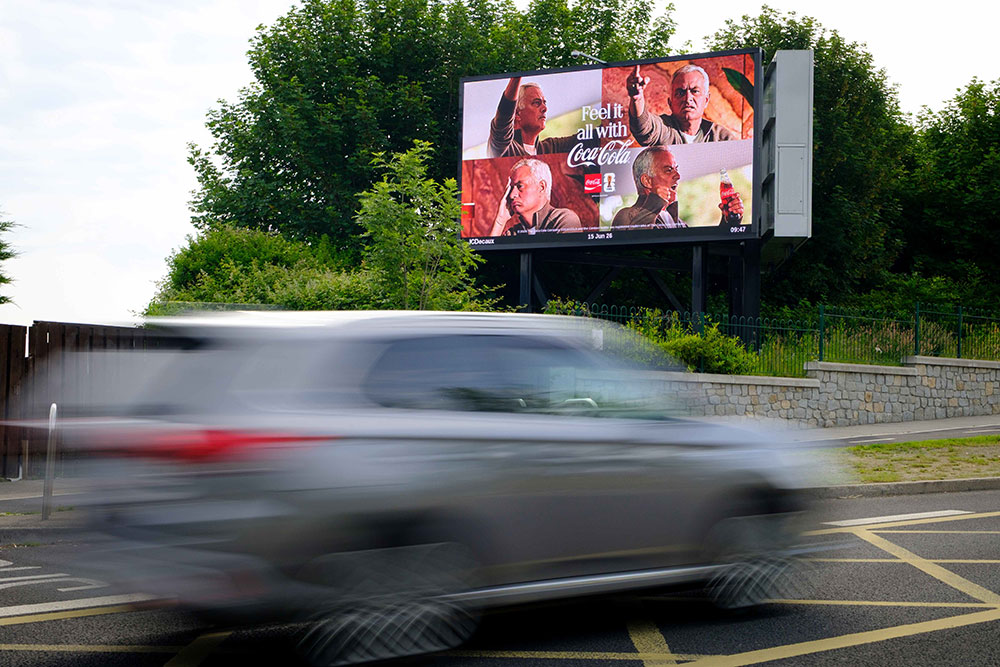
With the scale we now have in DOOH, campaigns have evolved to clever placements and strategic planning across multiple environments, and, importantly, alongside classic OOH, delivering broader coverage, stronger consistency and optimum frequency.
This isn’t about one replacing the other, it’s about using the full OOH ecosystem effectively.
And we can see the multi-format effect at play in the data:
- 61% of consumers say they are more likely to pay attention after seeing a DOOH campaign across multiple environments
- 73% say they are more influenced by DOOH when it appears in the right setting
What these insights highlight, and numerous insight pieces conducted by Talon demonstrate, is that attention isn’t driven solely by format but instead driven by how well we plan across formats.
Context is critical here. When we asked consumers what matters most in DOOH, 41% said that seeing content at the right time and in the right place is deemed very important.
Translating Attention into Action
When people notice digital Out of Home (DOOH), rather than move on, they act:
- 59% are likely to visit a store of a brand they see on DOOH
- 46% go on to search for more information about a brand online
- 22% purchase online
- 26% have scanned a QR code they have seen on a DOOH ad
This is where the role of the channel has fundamentally shifted.
Out of Home (OOH) has long evolved beyond a top-of-funnel role, and these latest results reinforce its proven ability to drive behavioural impact.
We’re now seeing a much clearer link between where DOOH shows up, the attention it captures, and the behaviour that follows.
So, when we ask why attention is increasing in DOOH, the answer is down to a combination of shifts across the entire channel.
- Sustained media owner investment driving greater scale and presence
- A channel that sits naturally within real-world behaviour
- Campaigns planned across multiple environments, alongside classic OOH
- And, crucially, attention is now translating into measurable action
The data is there, and consumers are responding. With new industry research on the horizon, we’re moving towards a clearer, more unified view of OOH’s impact.