









The first time I went to the Cannes Lions Festival of Creativity was over 12 years ago. It was far too traditional for me. It lagged. It didn’t teach me things about the areas of marketing I believed most in – social media, creative digital-first content and youth culture. Over the last decade, however, it has transformed enormously and become much more relevant. I feel like it will morph again over the next few years into something more ‘cultural’ and less ‘worky.’
This year, double the amount of creators attended the festival, versus last year. This created a global cultural hype, repositioning Cannes right before our very eyes. Lots of TikTok creators ran ‘explainer’ content on their TikTok accounts to help their fans understand what the Cannes Lions Festival of Creativity is all about. The hype was real and the excitement tangible as they explained to their followers that: “Cannes was once for old school marketing elite; but is now the place to be for creators.” and “Cannes is the new SXSW”.
The work, the work, the work. This year, Cannes served. I had access to the best creators, agencies, creative leaders, creative tech and brand campaigns in the world. From watching the case studies at the award ceremonies to speaking on a panel with leaders of the best indie agencies in the world, I relish seeing how, and why, the best work in the world gets made.
My big, important takeouts from Cannes 2026 are as follows:
The Creator Economy is the New Home of Entertainment
This year, the biggest brands were all flexing how ‘all in’ they’ve gone on Creators. We’re far past the point of creators being tacked onto campaigns at the last minute or doing transactional deals. They’re the future of programming, the new appointment to view. The New Primetime. The New Media Buy. The new Entertainment industry.
There’s loads of examples of this, from Sidemen in the UK (Arcade Media) to FIFA, YouTube and Fox partnering up with IShowSpeed, one of the world’s biggest Gen Z creators, to let him stream select World Cup matches to his own audience, something that would have been almost unthinkable a few years ago. But for FIFA to remain relevant, it knows it needs to innovate how it reaches younger audiences.
A panel discussion on the Creator Terrace around ‘The Microdrama Boom’ featured Sasha Tkachenko from MyDrama (which has just been acquired by FOX) and Scott Brown, CEO of Second Rodeo (he previously worked at Mr. Beast). They explained how, and why, they’re creating ‘movies at the speed of TikTok’ as part of the ‘scripted digital boom’ by creating vertical microdramas starring creators. Brown’s belief is that “Great storytelling transcends whatever screen it lives on.” It was easy to see where the future lies.
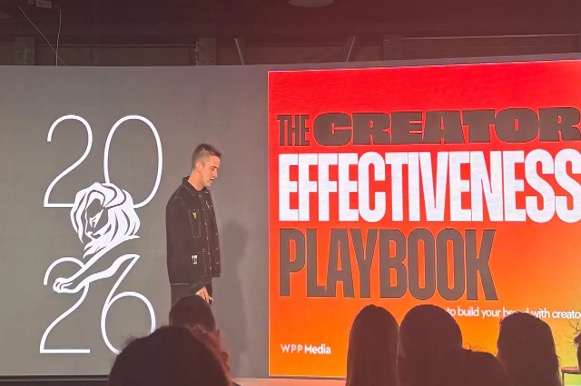
Back in the main building, System1’s Andrew Tindall and Creator and Tracksuit Ambassador, Eugene Healy’s talk highlighted how Creators have “moved from the edge of the media plan into the centre of how brands show up.” The data on brand awareness lift and evidence from IPA demonstrates how creator campaigns are paying back commercially. They challenged the audience to ‘stop chasing clicks and chase brand memory’ and explained how traditional metrics underplay the brand memory lift, fame and commercial power of creators. I agree.
For so long – beyond our own case studies and research from The Youth Lab – we lacked evidence-based, academic industry research to further validate our belief that creators build brands. Despite that – our clients trusted us and we have grown so many brands through this work. Now, the evidence has mainstream-ised, the demand for this Creator Marketing services which is only set to grow further.
GEO and the intelligence economy is here
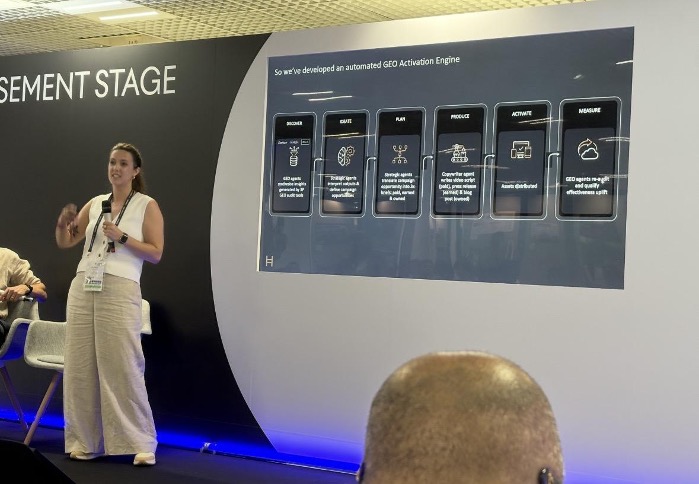
I’d headhunt Chelsea Carson in a heartbeat. One of the leaders of a small UK agency, T&P, Chelsea gave a masterclass in sweating one major creative asset (in this case, an ad that was made for TV and Digital) for B2B comms by using Generative Engine Optimisation to create hundreds of highly-personalised pieces of content for their growing customer base. This resulted in major growth, across the UK market, for their client. This was the most practical, applied example I witnessed, across the whole festival.
This year OpenAI made its first official appearance at Cannes, using the festival to pitch Codex which currently boasts 5m weekly active users. Codex started with developers but it’s now expanded to all knowledge workers including creatives and marketers for building and automating work. Its activation was tiny and it was tucked away in the Creator area, meaning that most people at the festival didn’t have access to it; but I had the fortune of spending time with the developer to ask very specific questions about the technology. What I managed to do, in a very short amount of time, is learn how to produce a quick website. Now, I work with teams that use these tools far better than me, but there’s something in the thrill of doing-it-yourself!
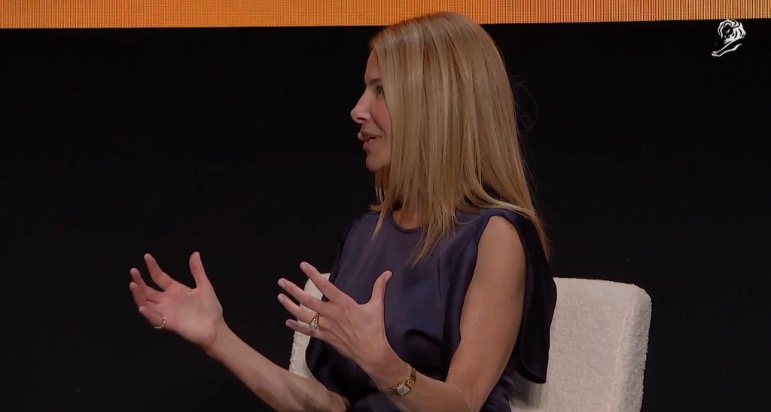
Meanwhile, Denise Dresser, Chief Revenue Officer of OpenAI was interviewed on the Debussy stage. She spoke about the launch of Ads in ChatGPT and the shift required in mindset for brands showing up in LLMs.
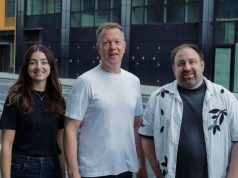
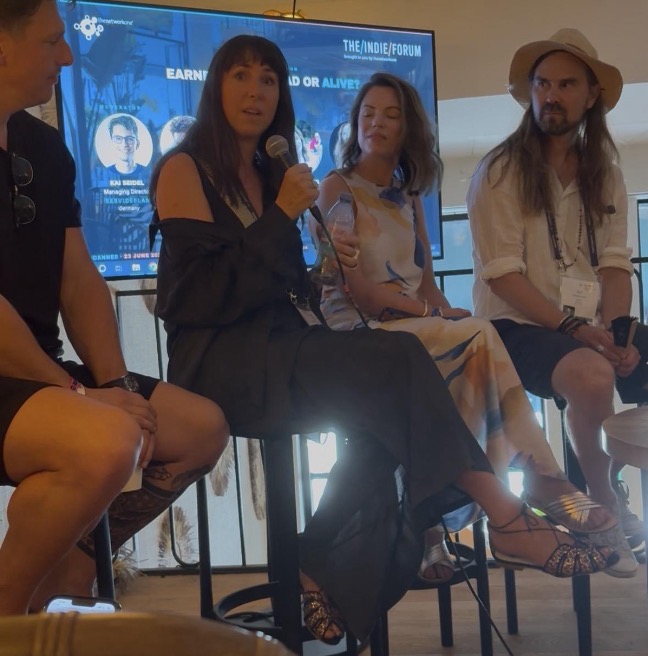
This was also a major topic on the panel I spoke on, on Tuesday, relating to ‘earned media’. (see pic below)
In speaking about ads in ChatGPT, Dresser said: “It’s going to feel less attention grabbing and more useful and conversational.” When asked for an example, she shared Maybelline’s partnership with OpenAI and how it transforms ChatGPT into a beauty discovery and shopping destination by combining conversational product recommendations, virtual makeup try-ons, and AI-powered marketing. In specifically addressing OpenAI’s impact on marketing, Dresser declared that “We’ve moving from an awareness economy to an intelligence economy.”
She spoke about the role of the CEO in ‘getting their hands dirty’ to expedite meaningful business transformation ‘from the bottom up’.
To me, this session, in combination with the panel I spoke on, reinforced how important it is for CMOs to understand the changing landscape forced by new consumer ‘conversational’ behaviours on LLMs like Chat GPT and Claude.
The brilliant basics of marketing are still brilliant
Last year Mark Ritson, one of the industry’s most revered thought leaders, rocked on stage with burger juice stains down his front and pants. He was sweating profusely and cursed consistently. This year; complete with a new look, a new physique and fresh funky glasses; he took to the stage with Byron Sharp to discuss the key things they agreed on in relation to marketing effectiveness. He has kept up the cursing though. His usual reminder, was delivered with great aplomb: “Nobody gives a fuck about your brand.” before they outlined the 5 things they both agree on:
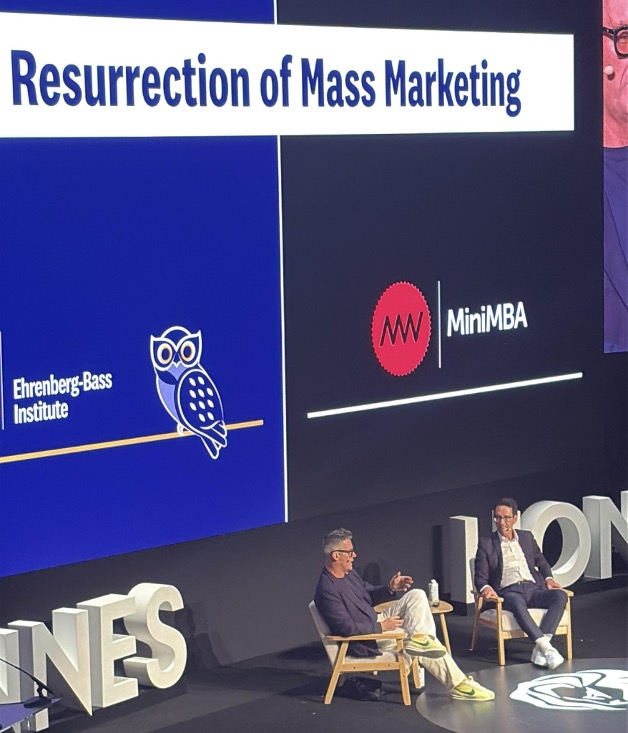
- Mental availability is one of marketing’s primary jobs – make people remember your brand.
- Distinctive brand assets are essential – even if you, the marketer, gets bored of them.
- Reach matters more than precision targeting – mass marketing matters
- Brand purpose is vastly overrated – They criticised the idea that brands need an elevated social mission to succeed.
- Consistency beats constant reinvention – Great brands don’t need to look different every campaign.
Agencies of Record (AOR) Produce the Best Results
Lots of agencies won big at Cannes this year: Publicis, LePub, GUT and UNCOMMON.
What do they have in common? Much of the work they’re winning on, is created in partnership with clients they’ve long-established partnerships with.
Kit Kat has been with the same agency for over 21 years. Heineken’s partnership with Publicis is over a decade long (the collaboration resulted in the creation of Le Pub, a specific agency built for Heineken) and our own, valued relationship with Heineken (and many other clients) extends even beyond that.
When asked about the common thread for GUT’s best work, its founder Anselmo Ramos said: “I love an AOR. It’s no coincidence that our best work is coming out of AOR relationships. You know why? You get to know each other and you build trust over time. It’s a human business. You work with people that you like and that you trust. So when you have that responsibility you become a brand ambassador, your problem is my problem. We are working together, there’s no ‘client agency’. It’s one team working for the brand. Our best work comes from those relationships.”
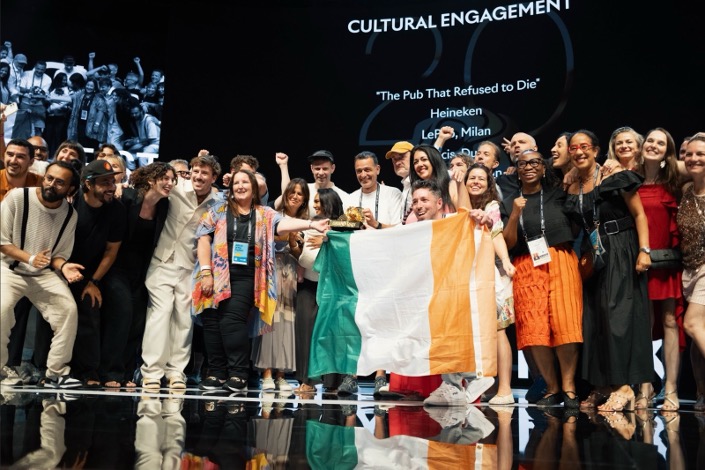
Long-term agency relationships build institutional memory and consistent creativity compounds in effectiveness over time. Marketers often mistake boredom for wear-out, when consumers are only just beginning to recognise the work. But the best marketers don’t.
Heineken’s campaign “The Pub That Refused to Die” is a perfect example of long term, multi-agency relationships that are producing exceptional results. Heineken was listed as the Cannes Lions 2026 Creative Brand of the Year, a result achieved through Heineken’s belief, and investment, in radical collaboration, true partnership and world-class creativity.
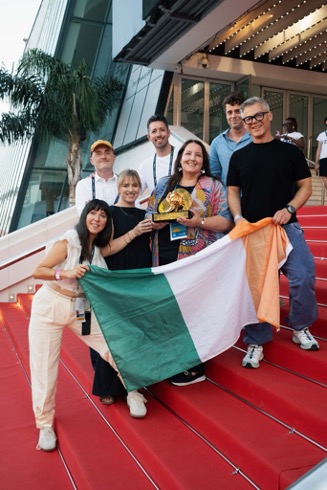
Here’s to being part of the brilliant Irish team that contributed to Heineken’s big wins in Cannes this year for ‘The Pub That Refused to Die’, winning 4 Bronze Lions (including 1 for PR) and the Grand Prix for Creative Strategy.