















Aaron Poole, Marketing Insights Manager, PML Group with this week’s Out \ Look on Out of Home
 Advertising rarely works in one neat moment. People notice campaigns in passing, hear them in the background, see them again somewhere else and often recall them later when the brand, message or need becomes relevant. In practice, campaign memory is built over time, shaped by repeated encounters that make brands easier to recognise, easier to recall and easier to act on.

That question sits within a wider body of OOH effectiveness work. PML Group’s own IMPACT Attention research explored OOH’s role in capturing attention in public environments. Separately, The Point of Search, a UK Posterscope study undertaken in partnership with Bauer Media and JCDecaux, examined how OOH behaviours and mobile search can connect through location, need states and creative triggers. Our recent retail OOH thinking has also looked at how Outdoor can support shoppers across the journey, from brand building through to proximity and point of purchase.
PML Group’s latest research series builds on that body of work by exploring what we are calling the Reminder Effect: how advertising comes back to mind after people have already seen or heard it somewhere else, and where Out of Home fits into that process.
The aim is not to claim that a single channel creates the whole effect. Campaigns are experienced across multiple environments, platforms and moments. Instead, the research looks at how memory is reinforced, how messages are reactivated and how OOH can help brands remain visible, familiar and mentally available beyond the first encounter.
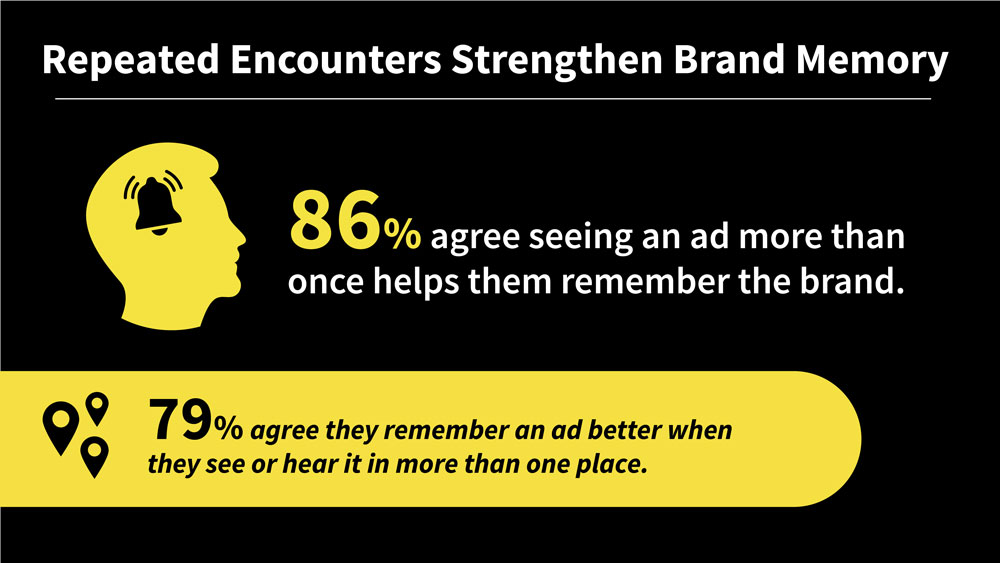
The first wave of the study focused on how people respond to advertising seen or heard in different places. Among Dublin respondents, 86% agreed that seeing an ad more than once helps them remember the brand, while 79% agreed they remember an ad better when they see or hear it in more than one place. A further 72% agreed that seeing the same ad in different places makes it stand out more.
Those findings point to a simple but important planning truth. Repetition is not only about delivering more impacts. It is part of how campaigns become more familiar and easier to retrieve from memory. When people encounter the same brand or message in different settings, each exposure has the potential to strengthen recognition and make the campaign feel more present.
The demographic pattern adds a useful planning layer. AB respondents over-indexed on remembering ads better when they see or hear them in more than one place, at 85%, indexing at 109 versus the total sample. The same was true of 35-44s, also at 85%, indexing at 108. ABs were also more likely to agree that seeing an ad in different places can remind them to buy or do something later, at 81%, indexing at 110.
This matters because the Reminder Effect is not only a broad audience behaviour. It appears to sharpen among commercially valuable audiences and at different stages of the memory journey. For some groups, the strongest signal is recognition. For others, it is stand-out, familiarity or later action. That gives planners more than a total-level endorsement; it gives them a way to think about how repeated campaign encounters may work harder depending on audience, context and objective.
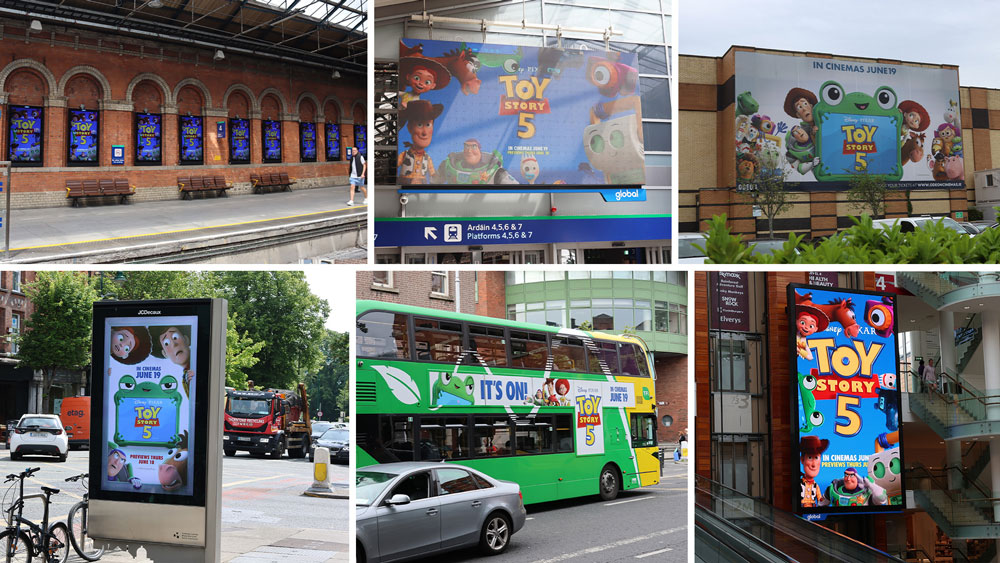
This connects directly with one of the long-established strengths of OOH: its ability to work in synergy with other media. Outdoor has always offered scale, location and public presence, but the Reminder Effect allows us to examine that role through the lens of memory. Rather than treating OOH as a standalone exposure, the research looks at how ads seen outside the home can help reinforce messages people may have already encountered elsewhere.
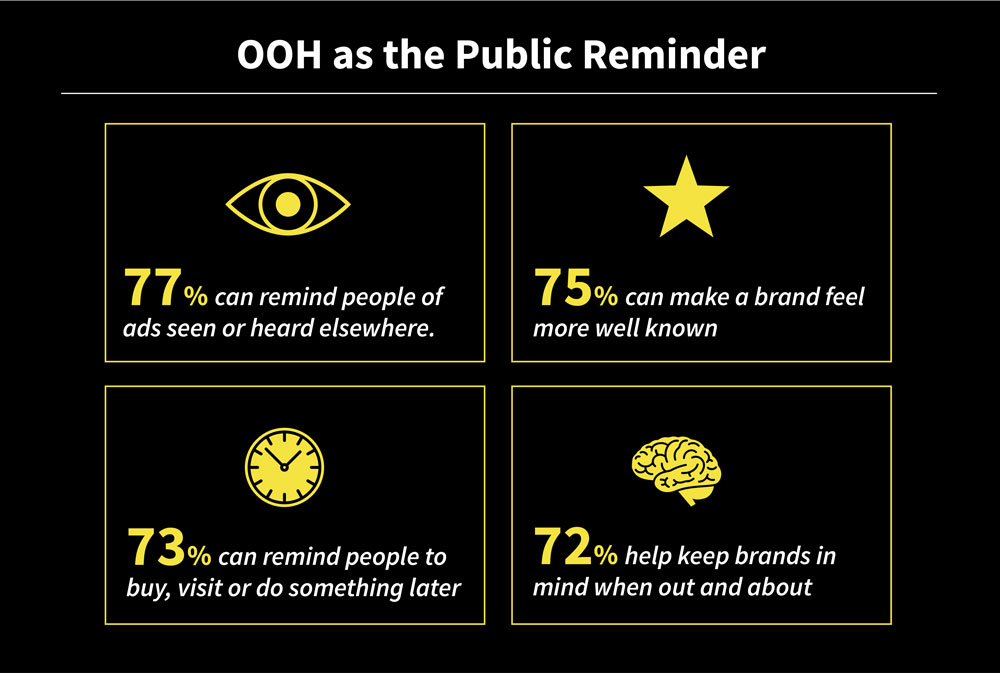
The OOH findings from this first wave are particularly relevant. More than three quarters of respondents agreed that ads seen outside the home can remind them of ads they have seen or heard somewhere else, while 72% agreed that these ads help keep brands in mind when they are out and about.
Younger adults were slightly more likely to highlight this out-and-about reminder role. Agreement reached 75% among 16-24s and 76% among 25-34s, indexing ahead of the total sample. That is a useful signal for brands trying to remain present among mobile, socially active audiences whose daily media encounters are spread across screens, places and public environments.
The familiarity effect is just as important. Three quarters of respondents agreed that ads seen outside the home can make a brand feel more well known. This was particularly pronounced among C2 respondents, where agreement reached 86%, indexing at 115, while AB respondents also over-indexed at 83%, indexing at 110. That suggests the Reminder Effect is not only about jogging memory in a narrow sense. It is also about presence. When a brand appears in public, repeated and familiar environments, it can feel more visible, more established and easier to bring back to mind.
There is also an action layer. In the broader advertising section, 74% agreed that seeing an ad in different places can remind them to buy or do something later. In the OOH section, 73% agreed that ads seen outside the home can remind them to buy, visit or do something later. Again, the AB audience indexed ahead on both measures, reinforcing the value of OOH in supporting campaigns where memory, familiarity and later response need to work together.
For planners, the implication is clear. OOH can play a valuable role after the first exposure, helping campaign messages travel beyond the original point of contact and into the public spaces where people continue to move, shop, commute and make decisions. It is not simply a matter of being seen again. It is about helping the brand remain available in memory when it becomes relevant again.
This first wave of the Reminder Effect research suggests that campaign memory is built across places and through repeated encounters. OOH’s role is to help brands stay visible beyond the first exposure, strengthening recognition, supporting familiarity and keeping messages present in the real world.
In the next phase of the series, we move from memory into moments, exploring when advertising comes back to mind and how real-world context can influence what people notice, remember and do.
Heinz Brings the Sauce to Summer OOH
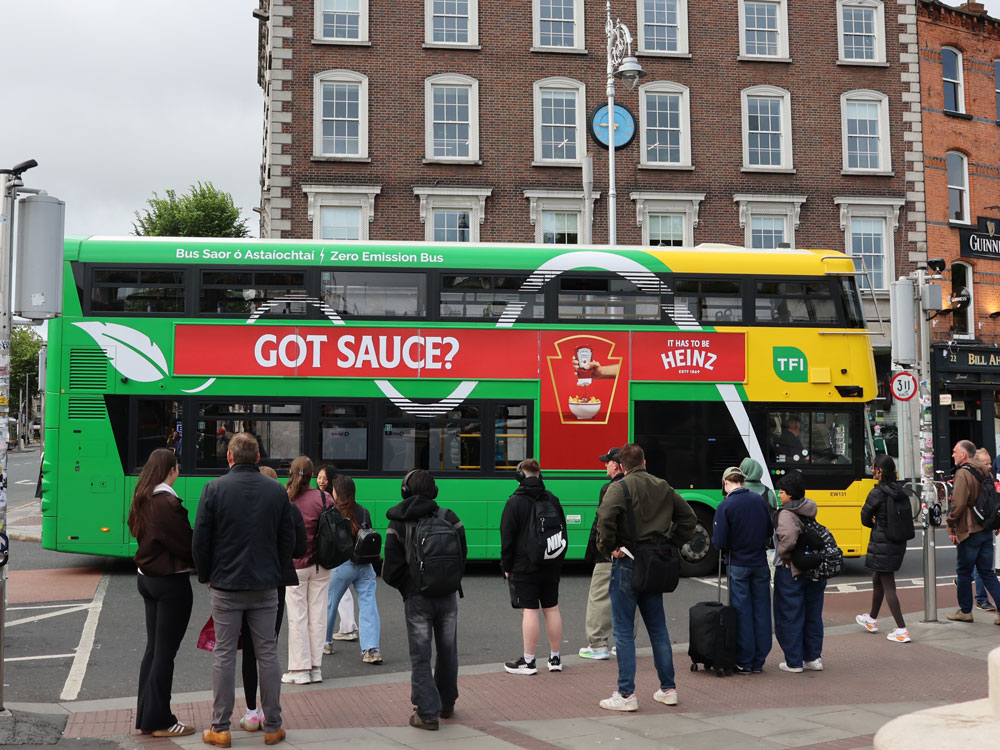
When temperatures climb, eating habits change quickly. BBQs move from vague weekend ambition to actual dinner plans, burgers and hot dogs start appearing on shopping lists, and the question around the table becomes very simple: Got Sauce?
With Ireland experiencing a spell of hot and humid weather this week, Heinz Tomato Ketchup’s latest Outdoor campaign has landed at an ideal moment. Met Éireann forecast highs of 25 to 31 degrees, with Friday remaining warm and humid as temperatures reach up to 29 degrees. Rather than creating demand, the campaign is designed to show up as these summer occasions naturally unfold, ensuring Heinz is front of mind when people are deciding what to buy, cook and share.
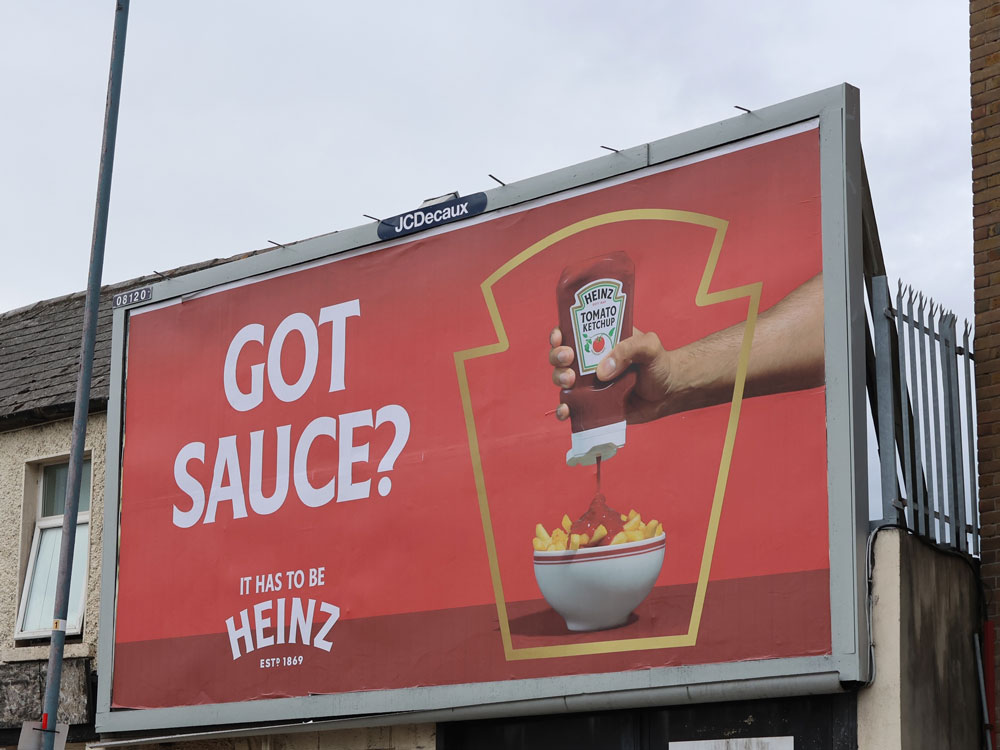
The campaign is live throughout June and July, bringing one of the brand’s most recognisable products into high-footfall roadside, retail and mall environments. The creative keeps the message simple and product-led, pairing Heinz’s distinctive brand world with direct copy including “Got Sauce?” and “When the BBQ is ready and someone asks…”, using familiar cues to connect instantly with the food occasions where Heinz naturally belongs.
Planned by dentsu and PML, with creative supplied by Kraft Heinz, the campaign uses a broad mix of classic and digital formats including bus T-Sides, roadside panels, digital mall formats and retail-facing screens. This broad Outdoor ecosystem allows Heinz to stay visible across the entire street-to-store journey, from travelling through towns and cities to the point where shoppers are actively making meal decisions. The bus activity gives Heinz movement and scale through city streets, while roadside panels build broad visibility across everyday journeys.
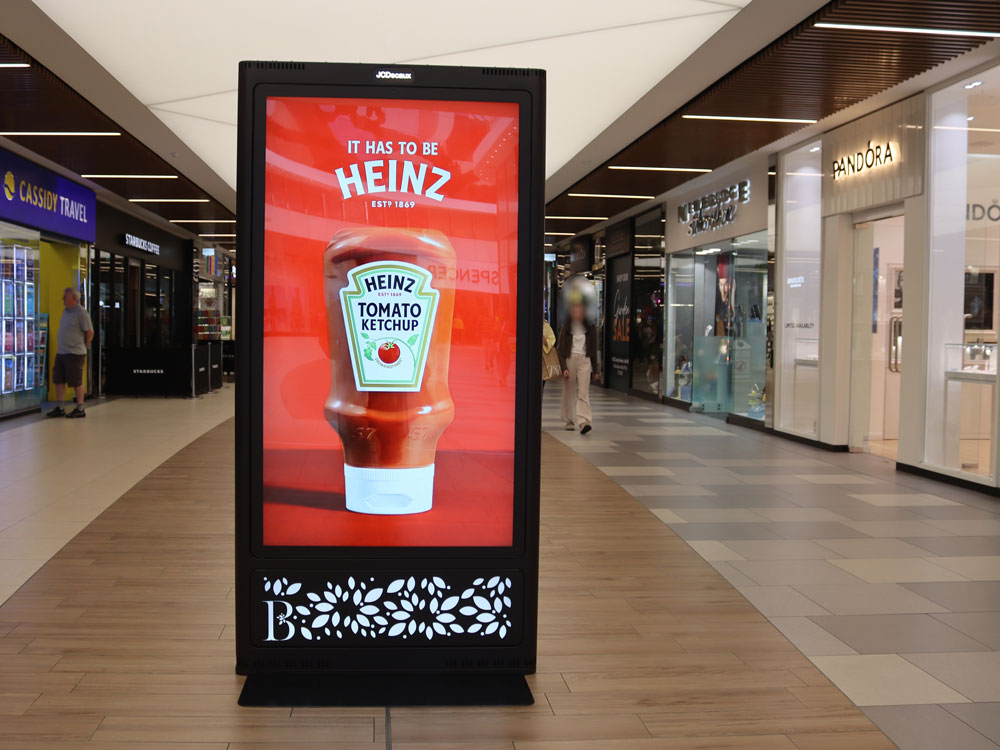
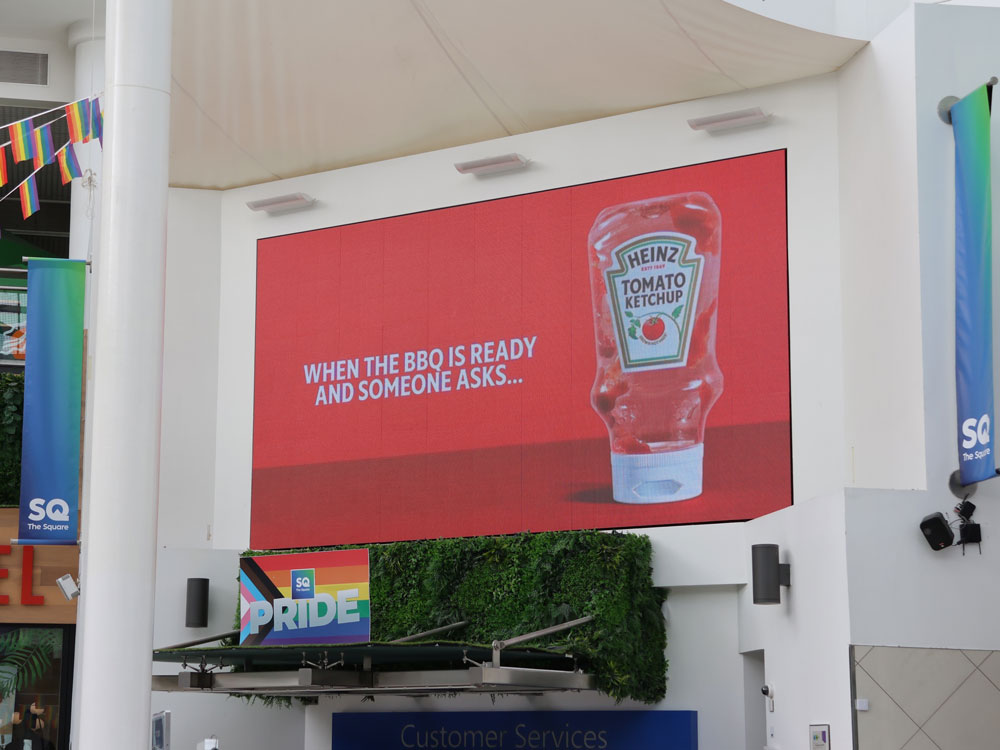
Closer to purchase, mall and retail-facing formats place the brand in environments where shopping, meal planning and impulse food decisions are already happening. That proximity strengthens both mental and physical availability, reinforcing brand memory while making Heinz easy to choose when purchase occasions arise. For an established FMCG brand, the role of Outdoor is not simply to advertise or remind, but to ensure Heinz is the first brand consumers instinctively recall when summer food moments happen.
In this case, the occasion is already happening. Warmer weather changes how people eat, shop and socialise, creating natural moments for Heinz Tomato Ketchup to stay front of mind. Whether it’s a BBQ in the garden, a quick summer dinner, a bag of chips on the go or the weekly grocery shop, the campaign uses Outdoor to connect brand memory with real-world behaviour.
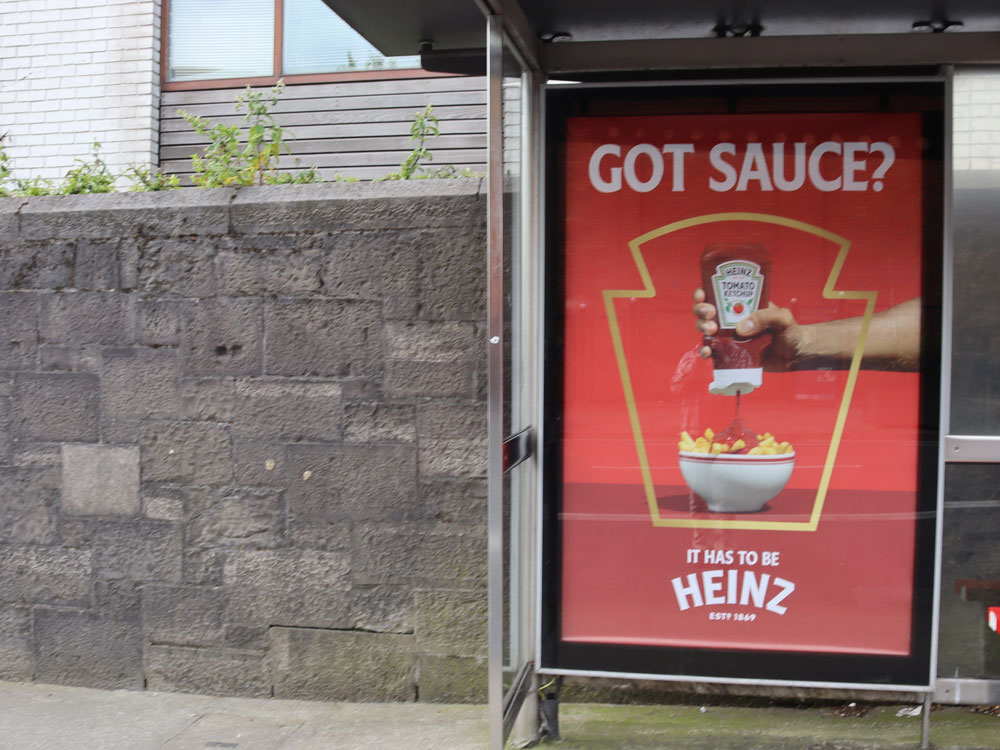
The campaign also demonstrates the power of creative restraint. By leaning into Heinz’s iconic bottle, distinctive red, recognisable typography and simple messaging, each execution communicates the brand, the product and the occasion within seconds, an essential advantage in the Outdoor environment where attention is limited but impact can be immediate.
Ultimately, the campaign reflects Heinz’s broader communications strategy: creating emotional craving for the irrational taste of Heinz while using Outdoor to build mental availability at the moments that matter most. Rather than interrupting consumers, Heinz simply becomes part of the summer occasions already taking shape.