














 Aaron Poole, Marketing Insights Manager, PML Group, with this week’s Out \ Look on Out of Home
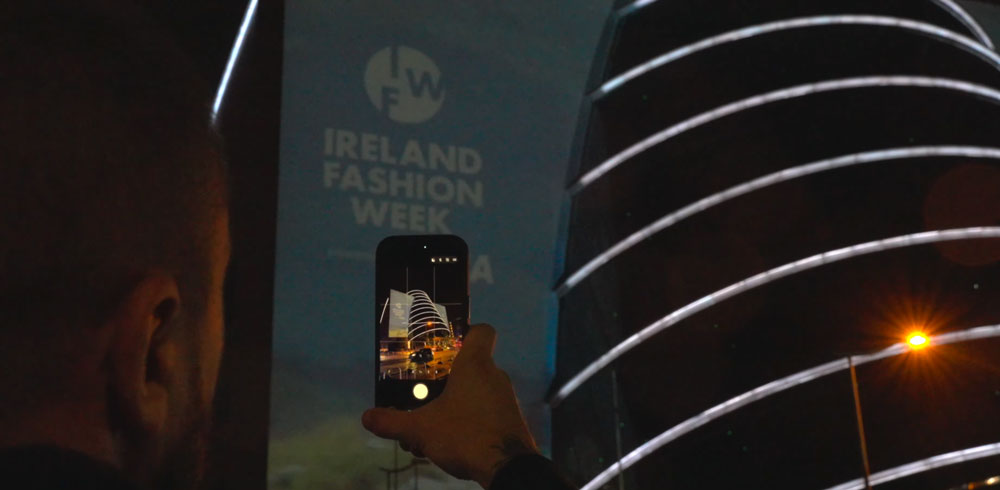
Visa is putting Ireland Fashion Week on the Dublin skyline this week, with a landmark projection on the Convention Centre Dublin forming the opening act of a wider OOH campaign ahead of the event’s return next month.
The one-night projection, delivered by Nightlight Screens on Wednesday 16 September, gave Visa’s title partnership with Ireland Fashion Week a large-scale presence on one of Dublin’s most recognisable buildings.
From there, the campaign will move into a sustained digital presence across the city from 21 September through to 18 October. Visa will feature across a 52-screen JCDecaux Digipanel mix alongside Global Gallery screens at Connolly, Tara Street and Grand Canal Dock stations. Nightlight’s Green Screen at the Grafton Street entrance to Stephen’s Green Shopping Centre completes the mix.
The timing gives the campaign a natural build towards Ireland Fashion Week, which takes place from 7 to 12 October. Visa returns as title partner for the event’s second year, with the programme expanding again following its inaugural edition in 2025. Ireland Fashion Week itself has described this year’s programme as spanning fashion, accessories and jewellery, with shows and events taking place across Dublin and other locations around the country.
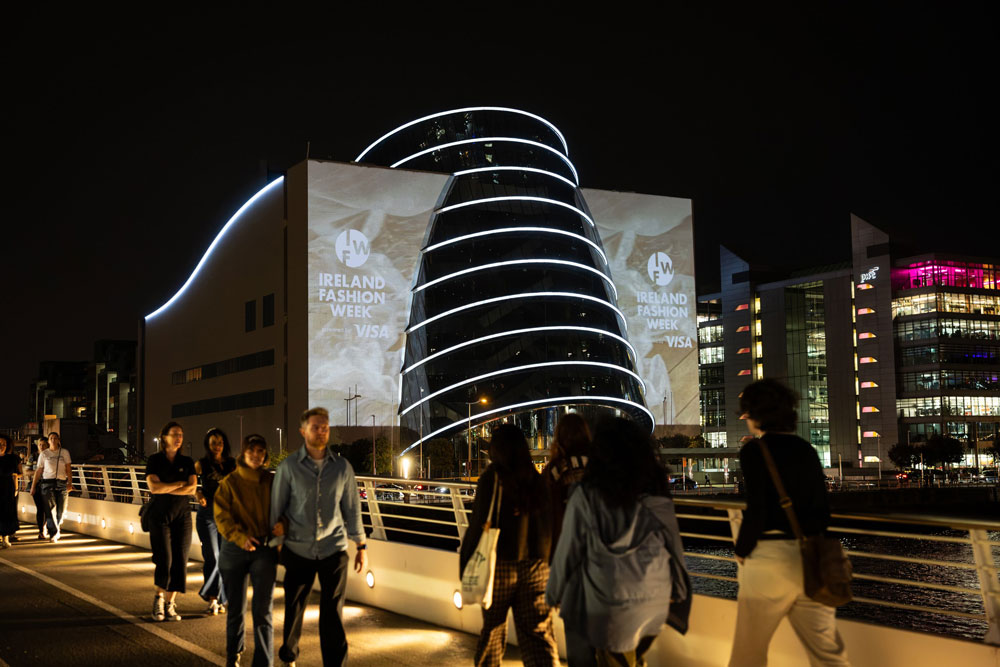
The OOH activity follows the same journey, moving from a single high-impact launch moment into the places people encounter as part of their everyday movement through Dublin. The Convention Centre projection brings scale and spectacle, while the rail environments at Connolly, Tara Street and Grand Canal Dock build frequency among commuters in the weeks leading up to the event. The Green Screen adds a further presence in the heart of the city’s retail district.
That mix gives the sponsorship a physical footprint beyond the runway itself. Rather than relying on a single launch moment, Visa will remain visible before, during and after Ireland Fashion Week, with the campaign continuing until 18 October.
Visa has positioned its involvement in Ireland Fashion Week around increasing the visibility of Irish fashion and supporting the designers and businesses behind it. Its wider partnership has included initiatives such as brand bootcamps and support for emerging designers, alongside consumer activity giving Visa cardholders access to the event.
Welcoming visitors to Ireland
The brand has also been live this week greeting passengers arriving into Dublin Airport with a travel-focused OOH campaign encouraging visitors to explore Ireland, discover local experiences and make Visa part of the journey.
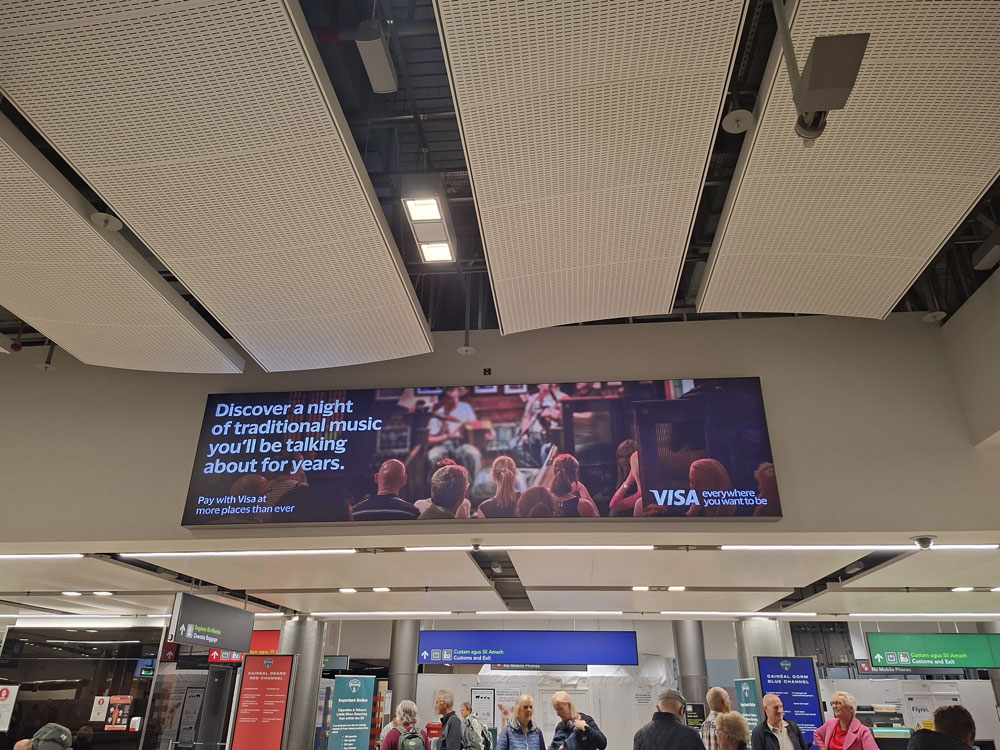
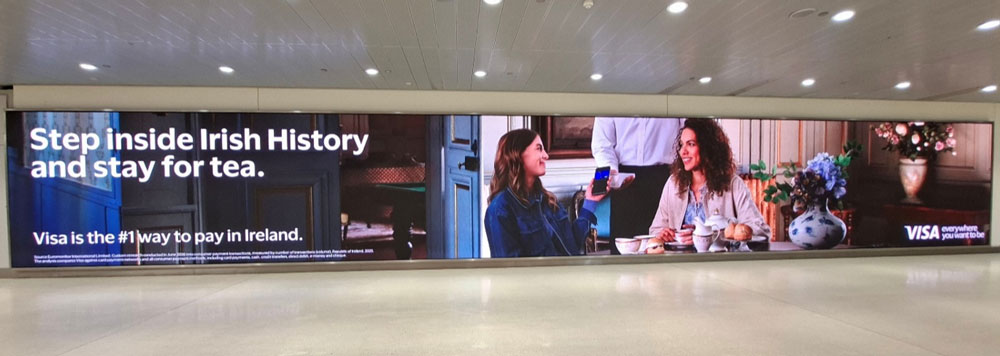
Creative across the airport taps into recognisably Irish experiences, from afternoon tea and traditional music to shopping and discovering hidden gems, supported by Visa’s long-running “everywhere you want to be” positioning. Alongside the destination-led creative, messaging around contactless payment and fraud protection connects those experiences back to Visa’s role throughout the visitor journey.
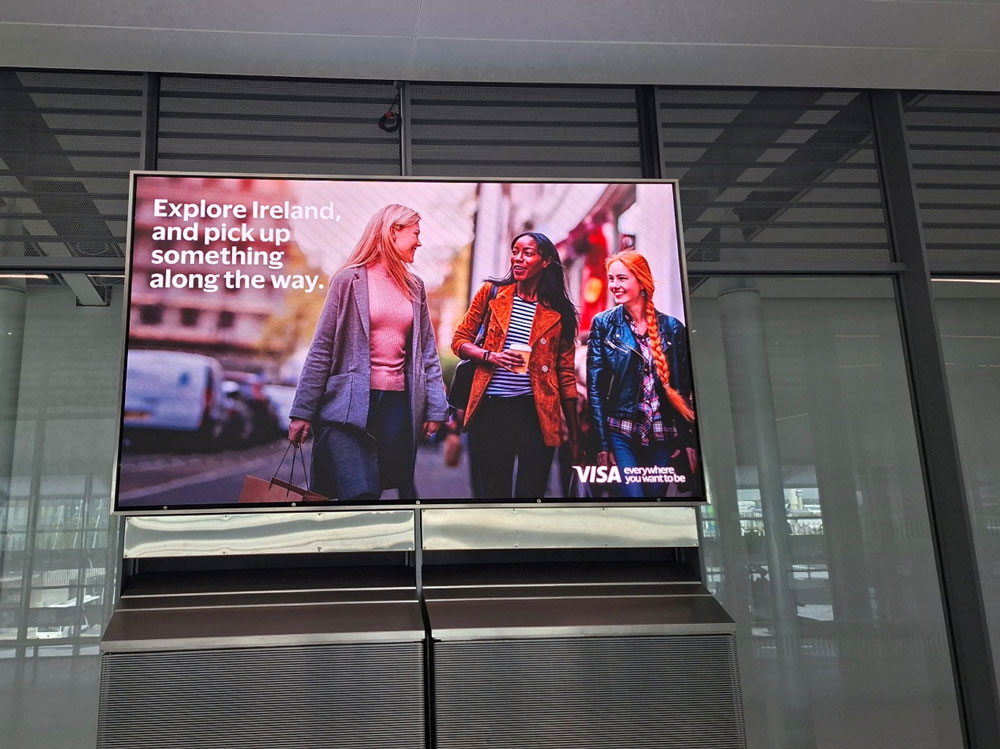
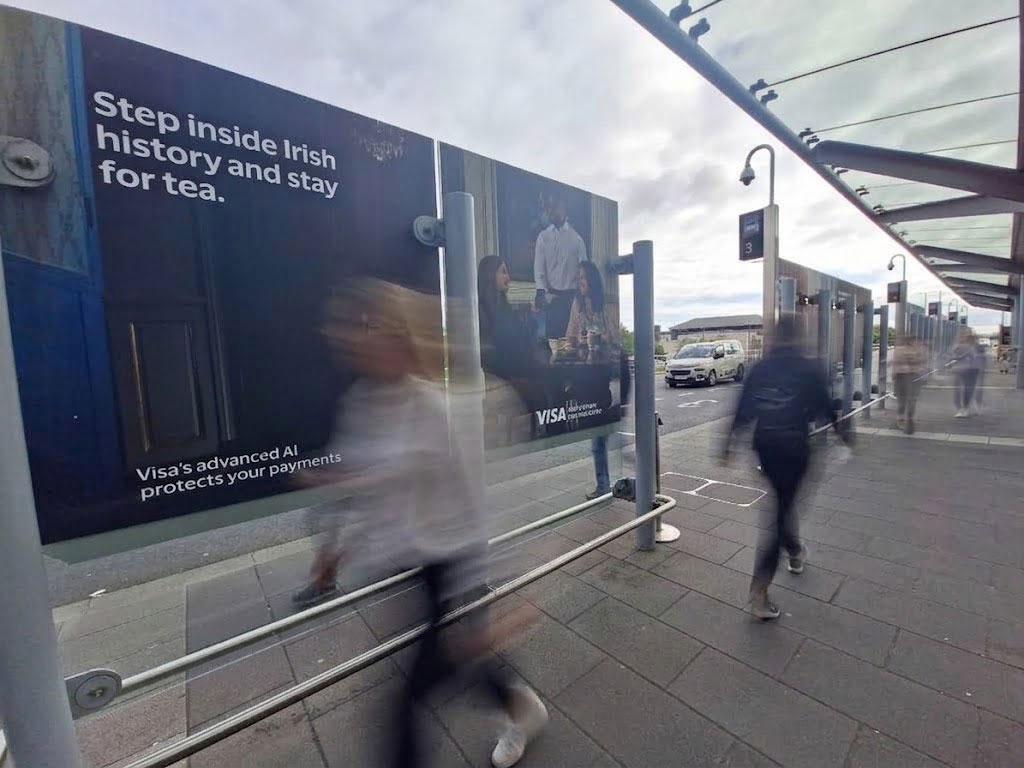
The current phase spans prominent digital screens across Terminals 1 and 2, including the T1 Mór and Tara screens, alongside arrivals packs, Aerpods, backlit panels and outdoor airport sites. Activity remains live through this weekend, with the campaign continuing into early October.
Both campaigns are planned by Zenith and PML.
Driving awareness ahead of Black Friday
Black Friday remains one of the biggest moments in the retail calendar, but the opportunity for brands begins well before the offers go live.
Latest TGI data shows 36% of Irish adults purchased something around Black Friday in the past year, representing almost 1.56 million people. In Dublin, that rises to 38%, or approximately 479,000 adults.
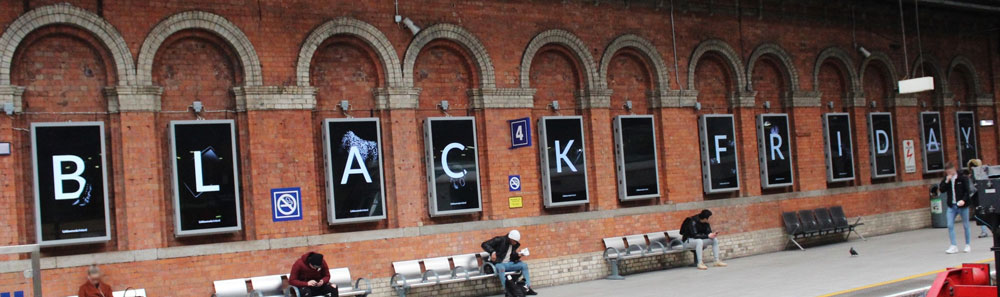
It is also a period when value comes sharply into focus. 81% of adults say they always look out for special offers, while 64% agree that even when they have a favourite brand, they will buy another if it is on special offer.
For advertisers, that makes Black Friday more than a short-term promotional event. With consumers comparing offers and brand choice becoming more fluid, OOH can work across different stages of the shopping journey, building mental availability in advance and adding relevance as purchase gets closer. For brands, that creates an opportunity for a layered OOH approach, building broad mental availability first, adding relevance as the sales period develops, and creating additional impact around the moments that matter most.
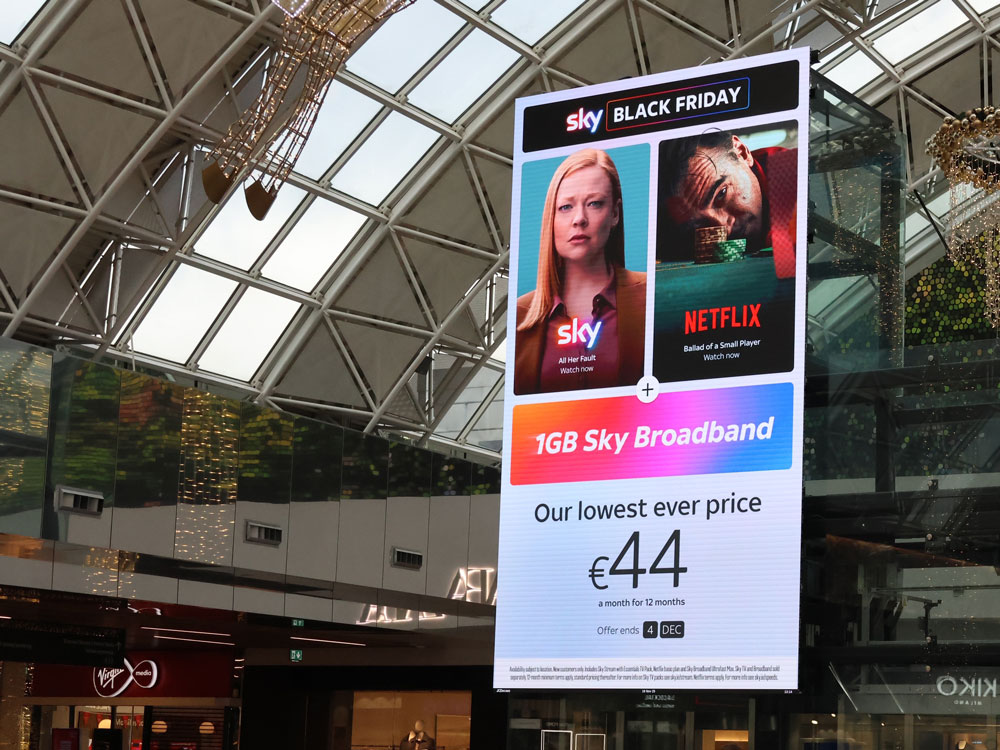
Broadcast OOH can establish that presence early. High-reach roadside, transport and retail formats can build familiarity before the volume of promotional messaging reaches its peak, keeping brands visible while consumers decide where and what they intend to buy.
As the sales period approaches, Dynamic OOH can make that presence more useful and immediate. Live data and responsive creative can count down the time remaining on an offer, reflect changing prices or product availability, direct shoppers towards nearby stores, or switch messaging as particular products sell through.
Programmatic can sharpen how that activity is delivered, weighting investment towards relevant audiences, retail catchments, locations and times of day. Rather than treating Black Friday as one uniform shopping moment, brands can respond to the behaviours and environments most relevant to their category.
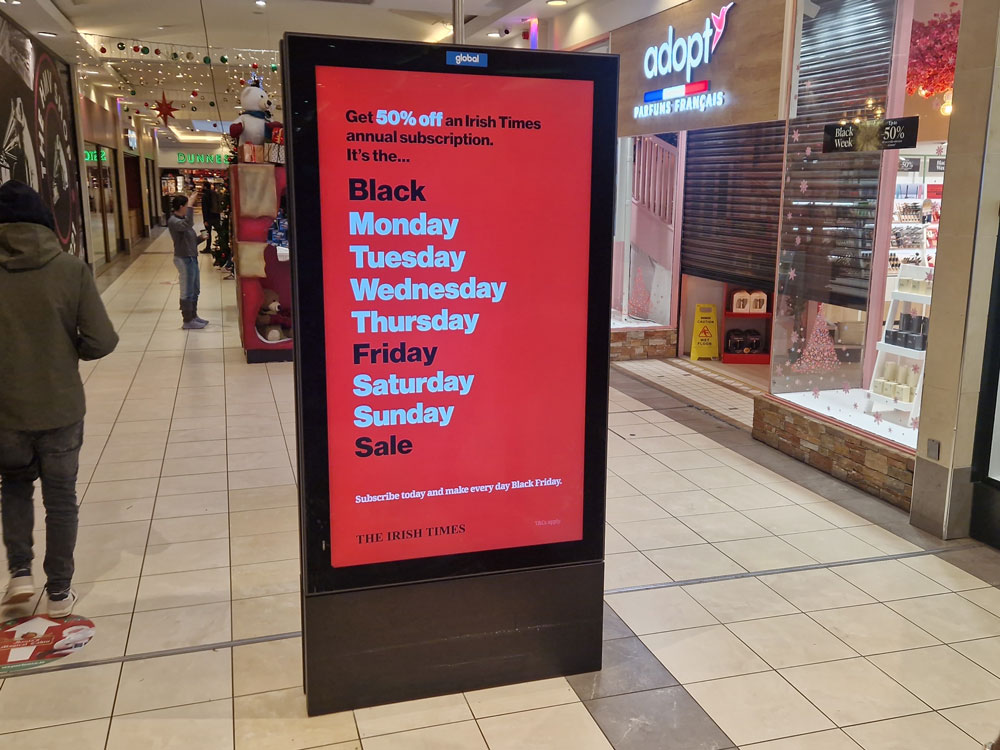
The opportunity also continues beyond Friday itself. TGI shows 14% of Irish adults purchased around Cyber Monday, rising to 18% among Dublin adults. Rather than ending activity on Friday, brands can evolve the message across the weekend, shifting from Black Friday launch messaging towards countdowns, remaining availability, new offers or last-chance prompts as Cyber Monday approaches.
PrOOH can provide an incremental layer of impact in the locations and moments most relevant to a brand. Contextual placements, physical interventions or creative built around real-world behaviour can turn an offer into something more distinctive than a conventional sales message. Where the idea is inherently shareable, that physical moment can also become content for social and earned channels, extending its impact beyond the audience at the site itself.
That cross-media role is particularly relevant to our recent Reminder Effect research. 77% agree OOH reminds them of advertising they have seen elsewhere, while 74% say it can remind them of a brand close to where they can buy or use it. A further 73% agree it can influence what they buy, visit or do when encountered at the right moment.
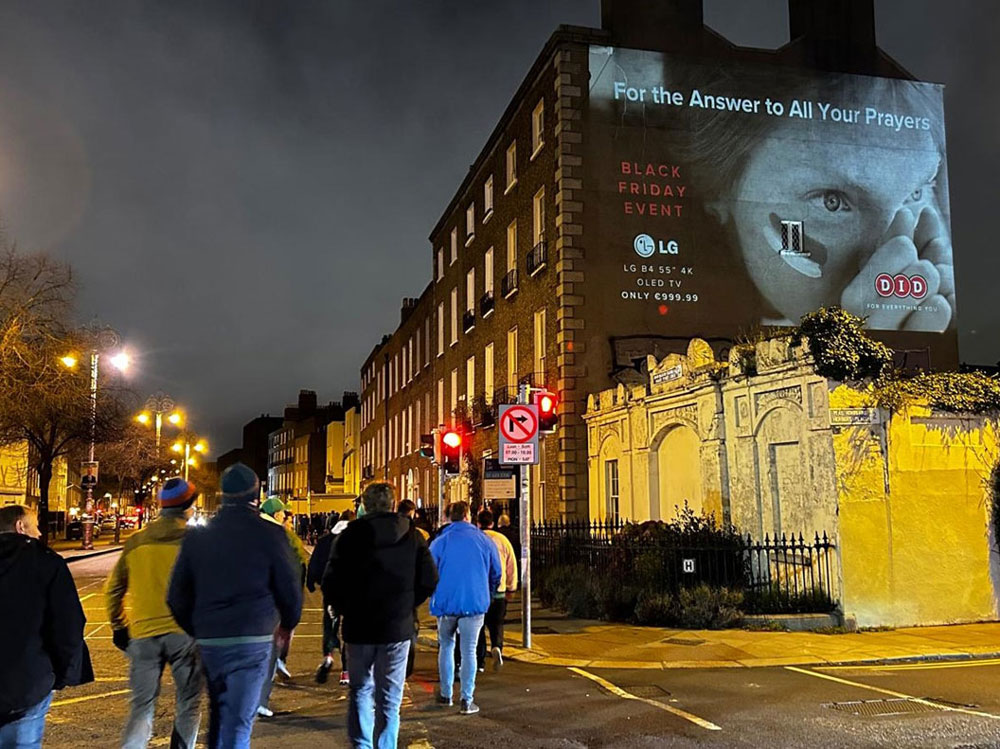
The mix will look different for every advertiser. Audience profiling can identify how Black Friday shoppers differ by category, life stage and behaviour, while location and media consumption data can help determine where those audiences move, shop and can be most effectively reached. That insight can then inform the balance between broad reach, dynamic relevance and more targeted activation.
For brands, the opportunity is therefore not simply to put an offer on a poster. It is to build presence before the rush, use data and context to sharpen relevance as intent develops, and create additional impact around the moments closest to purchase.
The Audience Doesn’t Stand Still
This week, the National Transport Authority launched its 2026 National Household Travel Survey, asking around 4,000 households across Ireland to record how they travel, where they go and why.
Participants will provide information not just on where they live, but on the journeys they make, their purpose, duration and mode of transport. The survey arrives as European Mobility Week gets underway from 16-22 September, while the familiar September return to schools and workplaces has once again brought changing travel patterns and congestion into focus.
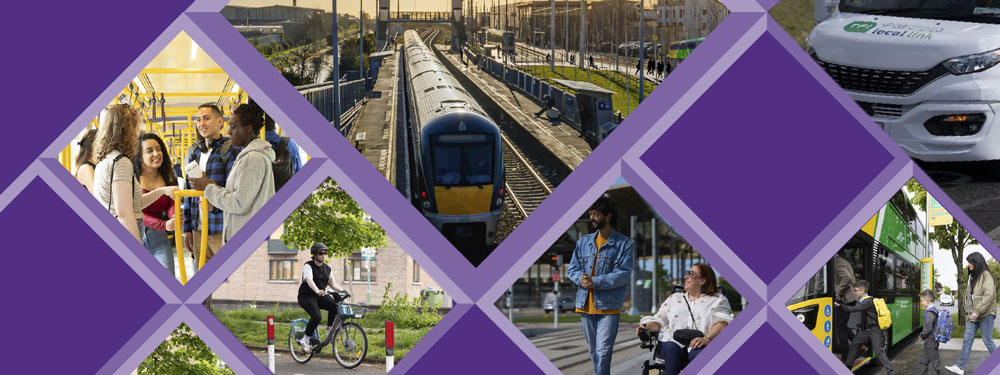
There is an interesting lesson in that for advertising. We spend a lot of time defining audiences by who they are. Age, life stage, interests and purchasing behaviour all help us understand the people a brand wants to reach. But people do not remain in one place, environment or mindset throughout the day.
The same person might begin the morning on a commuter route, spend lunchtime around a retail district, pass through a supermarket on the way home and meet friends later that evening. The demographic has not changed. The context around them has.
For Out of Home, that distinction matters. Location has always been one of the medium’s defining strengths, but increasingly the opportunity is not simply to understand where an audience is. It is to understand how people move between places, what those journeys represent and which environments matter along the way.
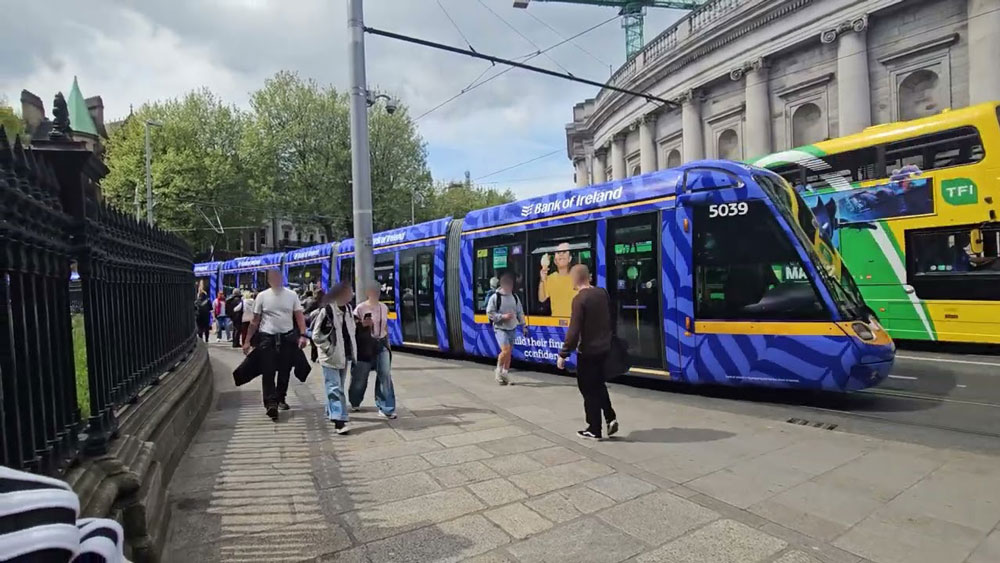
Ireland’s mobility patterns underline the scale of that opportunity. Public transport recorded around 364 million passenger journeys in 2025, close to one million journeys every day. At the same time, journeys by road, rail, bus, Luas, bike and on foot continually reshape the audiences present in different parts of our towns and cities.
That creates a much richer planning question than simply asking which panels are closest to an audience.
Where do people work? Where do they shop? Which routes connect those places? Where do they dwell? Where does a journey intersect with a purchase, an occasion or a moment when a message becomes particularly relevant?
Our own research points towards the importance of that context. Some 68% of respondents agree they are more likely to notice an ad when it relates to what they are doing at the time, while 73% say a reminder at the right moment can influence what they buy, visit or do.
The implication is not that every campaign needs to become hyper-targeted or complicated. Reach and repeated public visibility remain fundamental strengths of OOH. Rather, movement gives planners another layer through which to decide what role each part of a campaign should play.
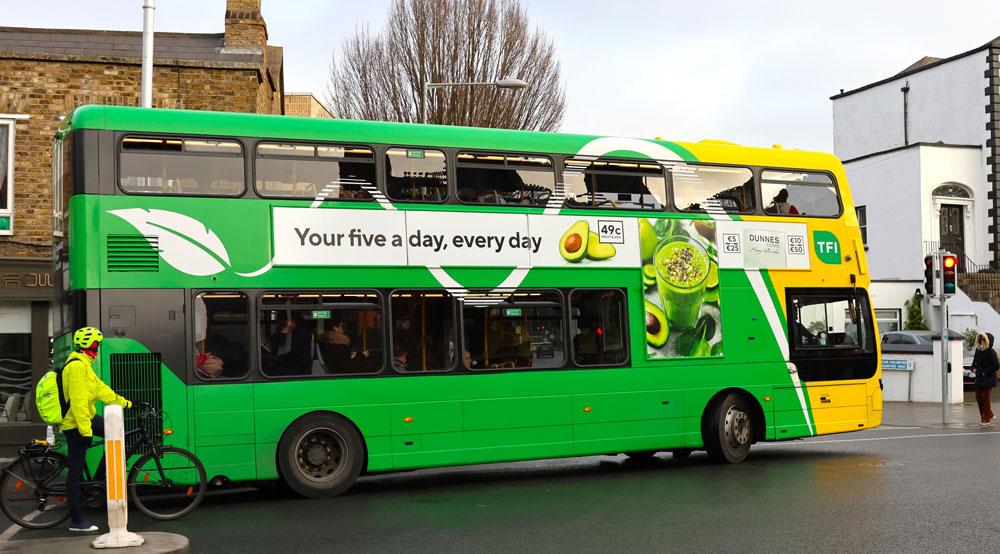
A high-reach roadside format might build fame across a city. A commuter environment can provide repeated encounters along a habitual journey. Retail OOH can bring a message closer to a point of decision. Dynamic and programmatic DOOH can then introduce time, location or other contextual signals where they genuinely add relevance.
These are different jobs, connected by the same audience moving through the physical world.
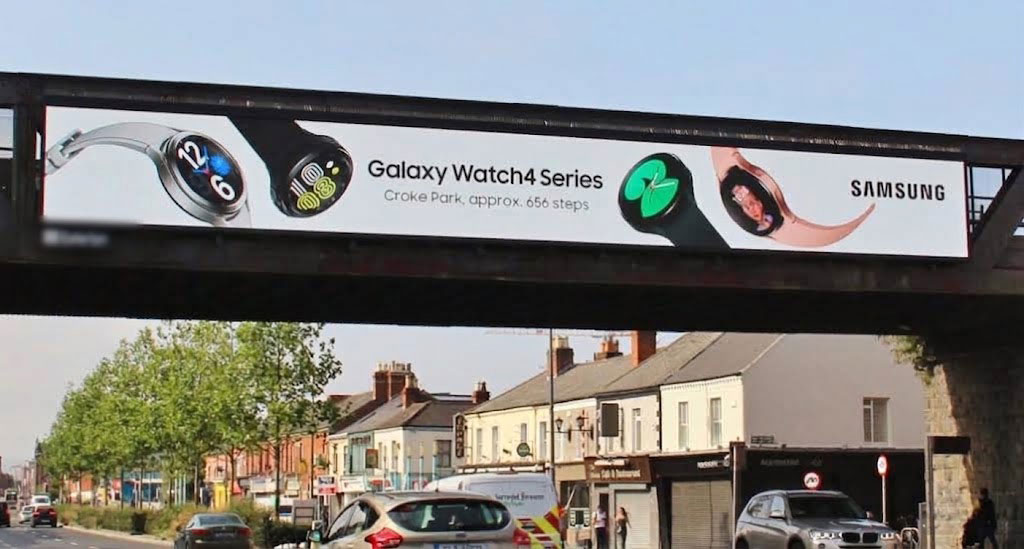
That is why developments in mobility and audience measurement matter to advertising beyond the transport statistics themselves. Better understanding of real journeys gives us a clearer picture of how people encounter places, media and brands across the course of a day.
The future of location-based planning will still depend on knowing where audiences are. But location tells us where an opportunity exists. Movement helps tell us why it matters.