














With the Irish digital audio market now estimated to be worth in excess of €30m a year, there is a growing case for digital audio to be recognised its own distinct media channel for for the purposes of advertising investment, writes John McGee.
The latest Listen Up Ireland research, commissioned by IAB Ireland and carried out by RED C Research, found that 76% of adults aged 16 and over listen to digital audio in an average week, equivalent to about 3.09 million people.
At 96% the reach is almost universal among 16-to-34-year-olds, underlining the extent to which streaming music, online radio and podcasts are embedded in younger audiences’ media habits.
The fact that digital audio now captures the largest share of typical weekly media time, level with live television in average hours consumed, strengthens the argument that it be treated as a standalone core media channel rather than a tactical extension of radio.
The commercial question raised by the findings is whether advertiser investment has kept pace with that consumption.

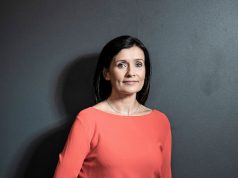
Lee Thompson, co-chair of the IAB Ireland’s Digital Audio Council, said: “The investment gap between digital audio consumption and ad spend audio is so large, it can be seen from space.”
“Consumers love the format and are devoting ever more time to it,” he said. “It confirmed that the channel people spend most media time within Ireland is Digital Audio at 21%, placing it ahead of TV & Social. However, Digital audio achieves a share of ad total spend of less than 2%.”
Thompson described the imbalance as “a golden opportunity for brands with ambition”, arguing that their advertising would face lower levels of competition and clutter than in more heavily funded channels.

Ryan Reid, also a member of the IAB Ireland’s Digital Audio Council and client director with Zenith, part of Core, takes a similar view.
“The findings don’t require us to reinvent the wheel when it comes to media budget allocation, but they do strengthen the case for digital audio becoming a core channel,” he said.
Reid said digital audio had not kept pace with consumer listening behaviour and remained under-invested compared with other channels.
“This report provides a strong rationale for reassessing budget allocation and the balance between Audio, AV, Social etc,” he said.
Total audio, rather than competing channels
One of the report’s most consequential findings is the scale achieved when FM radio and digital audio are considered together.
FM reaches 80% of adults, while digital-only listeners add another 12 percentage points, taking combined weekly audio reach to 92%. The proportion listening exclusively to digital audio increased from 10% in 2025 to 12% this year.
The incremental contribution is markedly higher among younger audiences, according to the report. Digital audio adds 29 percentage points beyond FM among 16-to-24-year-olds and 18 points among those aged 25 to 34. It also adds 16 points among Dublin residents.
Reid said the figures reinforced the need for a multi-platform audio strategy.
“Rather than relying solely on FM, planners should combine broadcast radio with streaming audio and podcasts to maximise reach, as digital audio delivers significant incremental audiences that traditional radio alone cannot,” he said.
“For brands targeting Gen A, Gen Z and younger Millennials, digital audio should now be considered an essential component of any awareness media plan, rather than a ‘nice to have’ channel.”
Thompson argues that digital audio should not be regarded solely as an extension of radio.
“The diversity of content from music streaming to podcasts attracts more diverse audiences than available on FM and so is proven to significantly expand a radio campaign’s reach,” he said.
However, he argued that its role extended across other media combinations and stages of the customer journey.
“Digital audio is now so mainstream that you could pair it with any other medium and you would reach over 90% of the adult population,” Thompson said.
He added that digital audio could work alongside connected television and video to support brand fame, with social media to build consideration and with search to stimulate demand and conversion.
Beyond Reach
Although weekly reach has been broadly stable since 2022, the amount of time spent listening has increased.
Across all adults, digital audio consumption rose 7% year on year to 12.6 hours a week, matching live television and exceeding social media, FM radio, subscription video, YouTube and broadcaster video-on-demand.
According to the IAB Ireland report, digital audio also captures 21% of typical weekly media hours, compared with 20% for live television, 14% for social media and 13% for subscription video.
Among digital audio listeners, average consumption increased from 15.4 hours to 16.6 hours a week. The rise was driven primarily by 25-to-34-year-olds, who listen for an average of 23.7 hours, while consumption among listeners aged 16 to 44 averaged 21 hours.
The report’s findings also suggest that digital audio is competing for time beyond traditional radio. Some 35% of listeners said they listen to less FM because of online radio, music or podcasts, while 25% said they spend less time on social media and 20% said they watch less television or online video. Among 16-to-34-year-olds, 47% reported listening to less FM.
“I think we’re already reaching that point,” Reid said when asked when digital audio moves from being an add-on to a core media channel.
“The question should no longer be whether digital audio deserves a place on the media plan, but what role it should play within the wider strategy.”
He said advertisers should also look beyond conventional audio spots to sponsorships, host-read advertisements, dynamic creative and branded podcast integrations.
Consumption is dispersed throughout everyday life. Smartphones remain the dominant device, used regularly by 75% of listeners, followed by connected cars at 33%, smart speakers at 25% and computers at 23%.
Driving was cited by 46% as a listening activity, followed by household chores at 44%, relaxing at 43%, exercise or hobbies at 23%, working at 23% and commuting at 21%.
Multi-format Creator Platforms
The podcast findings in the IAB Ireland report also point to a particularly personal form of consumption.
More than three-quarters of podcast consumers, 76%, prefer to listen or watch alone. At the same time, 39% prefer video when both video and audio-only versions are available. The figure was 46% among 16-to-34-year-olds, although the difference by age was not statistically significant.
Spotify is used regularly for podcasts by 49% of consumers and YouTube by 41%. Social media is the principal discovery channel, cited by 49%, while 41% discover shows through recommendations from family or friends.
“Video podcasts have helped massively with show discovery,” Thompson said. “Video shorts and social media clips served up in your feeds are very often the gateway to new podcast content.”
He said podcasts no longer relied on RSS distribution alone and now existed across long- and short-form content, audio and video, and public and paywalled versions.
“The opportunities for brands to go deep and wide with talent now exist,” he said. “All anchored by a level of creator trust and authenticity that is in short supply elsewhere and as a result, very prized.”
“Brand partnerships now involve long form audio, video integration, social amplification and events. A new era of strong mutual commitments between creators and brands is emerging.”
The Advertising Case
The IAB Ireland report also point to some positivity when it comes to advertising and the proportion willing to accept advertising in return for free digital audio content fell from 41% to 37%, although it remained slightly above the 2024 level.
At the same time, 19% said they had taken an action, or felt compelled or influenced to act, after hearing a podcast advertisement, an increase of three percentage points. The figure rose to 30% among 16-to-34-year-olds.
Some 45% said their experience of digital audio was more positive than their experience of other digital media, rising to 56% among those aged 25 to 34.
Thompson said digital audio benefited from “intentional consumption, low ad loads, high attention levels and long form quality content”, but argued that more evidence would be needed to unlock larger budgets.
“More effectiveness research will inspire an increase in investment,” he said.
He cites recent research carried out by AudioOne -which was co-founded by Thompson- as an example. The research looked at the impact of host-read advertising on The 2 Johnnies podcast. According to Thompson, successive waves had demonstrated growing levels of recall and purchase intent among brands that continued to advertise.
“The research also allowed us to quantify the endorsement effect of hosts” he said. A simple conclusion emerged, the more regular the listener, the more receptive they were to host-voiced brand endorsements. But the industry still needs a lot more research, he adds.
“Brands investing heavily in digital audio should be investing in research,” he said.
He also argued that different formats provide distinct creative opportunities.
“Music streaming allows brands to target different moods and mind states. Radio streaming provides familiarity and quality. Podcasts offer trust and authenticity,” Thompson said.
“Hosts lending their voices to brands, provided there is a natural alignment and room for creative expression, is really helping brands break new ground.”
On claimed advertising attention, The IAB Ireland research found that net digital audio scored 35%, placing it second only to cinema at 46% and ahead of live television at 32%. Podcasts also recorded an attention score of 35%, compared with 29% for social media and YouTube and 28% for on-demand music and broadcaster video-on-demand.
The IAB Ireland research also noted that trust in digital audio advertising stood at 41%, close to live television at 42%, cinema at 43% and newspapers and magazines at 44%. Within digital audio, live or catch-up radio recorded the highest trust score at 41%, followed by podcasts at 36% and on-demand music at 31%.
“When digital audio first emerged, I heard it described as doing for audio what cinema does for AV, and I think that’s still a great comparison,” Reid said.
“This report reinforces the case for treating digital audio as a premium attention channel, particularly for brand-building and awareness campaigns,” he adds.
“Digital audio should no longer be viewed as a secondary support medium, but increasingly as a core channel where attention, engagement and quality of exposure are key planning objectives.”
Reid said measurement, attribution, market fragmentation and inventory transparency continued to make digital audio planning less straightforward.
However, he added: “I think the biggest hurdle is legacy planning habits.”
“Audio is still too often viewed through the lens of linear radio, with digital audio treated as an extension rather than a standalone channel.”
As audience behaviour evolved and more planning and effectiveness data became available, Reid expected digital audio to become a more consistent feature of media plans.
However, Thompson said commercial growth should not come at the expense of the audience.
“Everything starts and ends with protecting the listener experience,” he said. “If this is compromised, consumption and completion rates will fall.”
He said advertising loads across digital audio tended to be about 8%, compared with close to 20% for broadcast media and social.
“Fewer ads mean better outcomes for advertisers,” he added.
“The real craft will be fewer ads that sound like ads and more that live in and around the daily conversations that inspire, entertain and inform us.”
The report’s central conclusion is not that digital audio is replacing broadcast radio. Rather, it depicts an expanded audio market in which FM retains substantial reach while digital audio, including streaming and podcasting add younger audiences, more listening time, new commercial formats and, critically, more touchpoints.
The evidence now places the burden on advertisers and agencies to decide whether their planning and investment accurately reflect that shift.