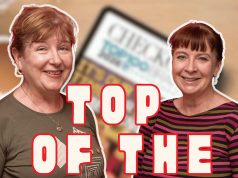












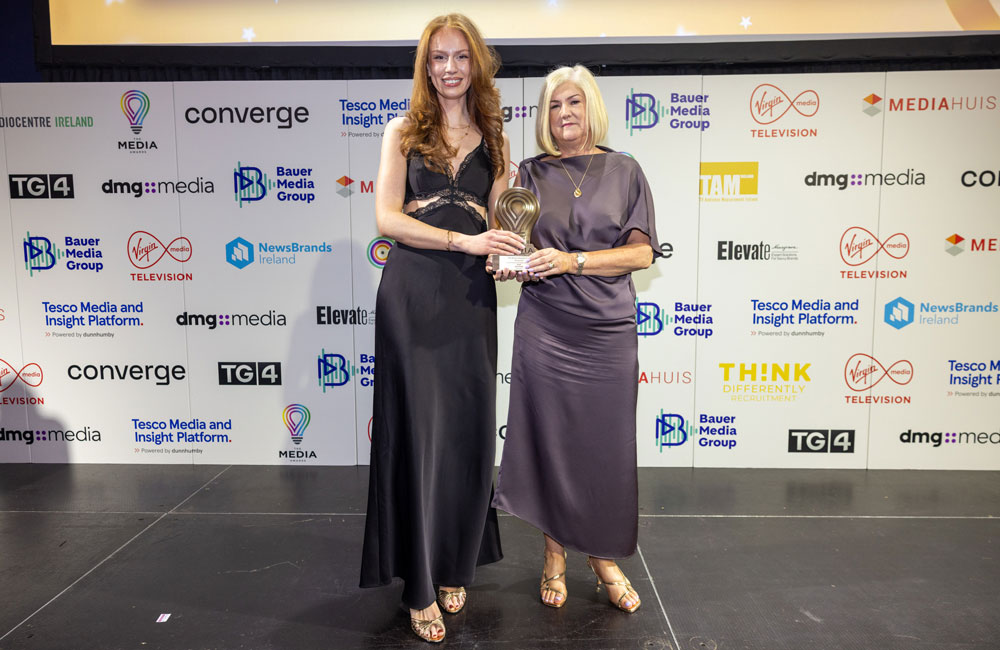
Passion, drive and ambition were just some of the words the judges used to describe Anna Forde, this year’s Rising Star winner at the recent Media Awards. They also concluded that she is “unquestionably a star of the future.” Now that she has descended back to earth again, Adworld caught up with Forde for a Q&A session.
What does being named Rising Star at the Media Awards mean to you personally and professionally?
Winning the Rising Star Award has been such a huge moment for me, personally and professionally. Personally, it validates the work I’ve put into building both my career and myself over the years to upskill, develop relationships and continuously learn more about the media industry. Like many people early in their careers, imposter syndrome can be very real. So winning this award is a massive source of confidence and motivation for me moving forward.
Professionally, the love and feedback I have received from all the teams I work with internally and externally, as well as new faces within the industry, has been overwhelming. As Clara Pryor said in our chat with MediaHuis, the people are what make the industry, and that could not be more true. Since being shortlisted, and since winning I have met so many people and continue to expand my relationships in the industry.
Looking back on your relatively short career to date, what have been the key moments or opportunities that have shaped your development?
Moments that called for me to step out of my comfort zone have been what really shaped me. I am a firm believer that action cures anxiety and you only grow by doing the things that you are not technically ‘qualified’ to do yet. Even if the outcome isn’t perfect, the experience itself is often the most valuable takeaway
The judges highlighted your ability to think beyond the boundaries of your role. Can you give an example of a project or initiative where you stepped outside your formal responsibilities to make an impact?
Over the last 18 months, Buymedia has grown and even scaled into the UK market. As Buymedia scaled into the UK market, it created a need to evolve our client success operations and processes. Our Client Success team oversees client account management, media strategy, planning, buying, execution and reporting. Making sure these processes are scaled with the business is imperative! I spearheaded the initiative to revisit how we were doing things to create a streamlined process that could scale with the business.
Another one of the themes in the judges’ citation was your willingness to take ownership of both the process and the outcome. Why is that mindset important to you?
I have always had that mindset, both inside and outside of my career. Instead of hoping for a good outcome, I prefer to take accountability for influencing the best possible outcome. I like to see things through from start to finish. Taking ownership of the outcome of a project definitely deepens your commitment to it from the start.
And without a strong process, you are unlikely to see a strong outcome!
Where would you like your career to be in five years’ time, and what are you doing now to help get there?
It’s easy to become consumed by day-to-day responsibilities and lose sight of where you want your long-term career to go. So, at the moment, I am doing my best to make time for additional learning, projects and developing other areas of my career and life.
As a client success manager, I operate across a vast range of industries, from hospitality to broadband to health and wellness. I would like to see my career in media expand into more industries, in particular the fashion and luxury industries. The fashion and luxury industries are undergoing a huge transformation driven by technology. Buymedia is an ad tech company, so everyday I am learning more and more about emergent technologies and how AI and innovation is shaping media within different industries.
The media and advertising industry is evolving rapidly. What developments excite you most and and where do you see the biggest opportunities for young professionals?
This was a topic we touched on as a group when in a conversation with Mediahuis, ahead of the awards. It was so interesting to hear everyone’s outlook on it. The key takeaway was the influence of AI and emerging technologies in the industry. While we are still somewhat at the early adopters stage of AI and other tech innovations in the industry, it is apparent that it is becoming increasingly prominent.
There is definitely a perception that AI might replace certain roles, particularly with the rise of generative AI in areas like creative and planning. But from my experience, it’s much more of a tool than a threat.
Having worked closely with Product and Engineering on developing AI media tools, I’ve seen how it can significantly improve efficiency.
It’s accelerating a lot of the more manual or time-intensive tasks, which means newer members can get to more strategic thinking much earlier in their careers.
However, it still relies heavily on human input — to guide it, interpret outputs, and make strategic decisions.
For newer members of the industry, I think it shifts expectations. Rather than focusing purely on execution, there’s a greater emphasis on thinking strategically and adding value much earlier in your career.
What has been the biggest challenge you’ve faced in your career so far, and what did you learn from it?
One of the biggest challenges I faced was stepping into a leadership role quite early in my career, while also managing a high volume of client accounts across different sectors.
At the time, it felt like a big step up, and there was definitely a learning curve in moving from focusing on my own delivery to supporting a team and managing priorities more broadly.
Over time, I adapted by putting more structure into how we worked — particularly around onboarding and campaign management — which helped both myself and the team become more effective.
Looking back, it was a really valuable experience. It came at the right time in my career and pushed me to develop skills that I wouldn’t have gained otherwise.
You may still be early in your career, but leadership isn’t always about seniority. How do you influence colleagues, clients or teams around you?
Leadership evolved naturally throughout my career. It evolved organically, rather than something I focused on achieving. Over this time, I would say that leading by example, asking questions (even if you think it is a silly question!) and focusing on active listening were some habits I developed over time. Active listening is a big one for me, as early in my career, I found myself thinking (and panicking!) about what to say next rather than fully listening and taking in the conversation I was in.
I believe in being solution oriented at all times, as it is definitely easy to focus on a problem, the magnitude of it or the potential implications. Instead of viewing it as a stressor, I like to look ahead and determine what the best course of action is to get a good outcome.
What advice would you give to someone entering the media and advertising industry today who hopes to build a successful career?
I started as an intern myself, so my main advice would be not to panic about how much you don’t know at the beginning. It’s a complex industry, and that’s completely normal.
The most important thing is to stay open and actively look for opportunities to learn — whether that’s through asking questions, getting involved in different areas, or just observing how things work.
It’s also very easy to fall into working in a silo, especially early on. I think it’s really important to step back and understand how the whole media ecosystem fits together — from ideation and creativity through to planning, strategy, and execution.
That bigger-picture understanding is what really helps you progress.
If we were having this conversation again in ten years’ time, what would you like to have achieved?
In ten years’ time, I’d love to see myself working at the intersection of media, marketing, technology, and the fashion and luxury industries. Fashion and luxury are sectors I’ve always been drawn to, particularly because of how rapidly they are evolving through technological innovation, AI, and changing consumer behaviour.
Working in ad tech has given me a strong understanding of how technology is shaping media and marketing across industries, and I’d love to apply that perspective within the fashion and luxury space in the future. Alongside that, I hope to continue developing as a leader, building high-performing teams, and contributing meaningful innovation within the industry.
Another area that’s become increasingly important to me is social impact. Through Buymedia’s Advertise for Good initiative, I’ve seen the positive role the media industry can play when used as a platform to support meaningful causes. I’d like to continue contributing to initiatives like that throughout my career, combining innovation, creativity, and social impact in the work I do.
What skills do you think will be most important for the next generation of media professionals?
As mentioned, AI and new technologies are a trend that will be around for the foreseeable. These can be great assets to an individual and a company. That being said, the skill needed here is not only how to leverage them effectively, but how to use these tools ethically and responsibly.
It’s no secret that we face a sea of media everyday and it’s becoming more and more reported that attention spans are lowering! Strategic storytelling and smart media placement are two skills that are critical in today’s media landscape. Not only do we need to reach the audience where they are in their media consumption, but we also need a story that will stop them in their tracks, both offline and online.
We are also constantly seeing the focus placed on upskilling and furthering ‘hard’ skills. Soft skills still remain as important as ever, even in an industry that can be digital first! I am a firm believer that strong interpersonal skills and the ability to build strong connections are key to a lasting career!
What’s one thing about the media industry that you would change if you could?
At times, it can feel like the industry evolves faster than you can keep up with. It can feel like you have just figured out and learned one thing and there is another trend to start learning about! That said, the pace of the industry is something that I do really enjoy.
It makes continuous learning essential, which keeps the role really engaging.
The media landscape is increasingly overlapping with technology, and that’s something I find particularly interesting. You’re not just working across five or six media channels anymore, you’re working across digital platforms, data, and increasingly AI-driven tools.