













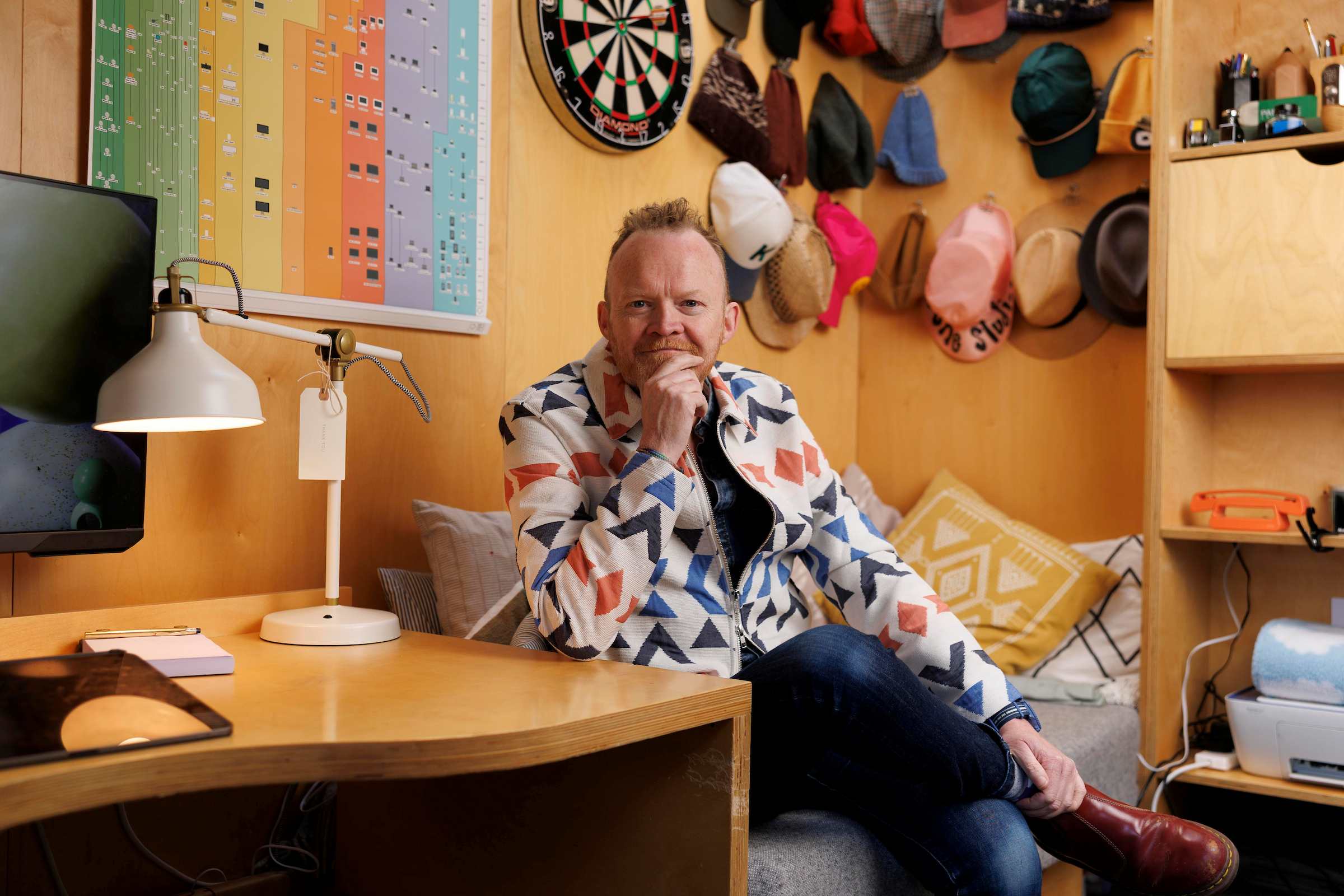
Dylan Cotter, managing director of ACNE Dublin, talks to John McGee about leaving the traditional agency world for Deloitte Digital, the Gen AI revolution rewriting agency and client economics, and why the creative task remains unchanged: ask better questions.
THERE was a moment, ten years ago, when the global advertising industry suddenly looked up from its mood board and noticed something unsettling: the consultants had arrived.
Not to their reception desks or even to their front lawns (that would come later), but to the main stage at the Cannes Lions International Festival of Creativity, the gilded gathering of the global advertising and marketing industry, held in the south of France every year.
Yachts bearing the logos of Accenture and PwC were moored beside those chartered by News Corp, WPP and Omnicom. Facebook and Pinterest commandeered their own piers while Snapchat and Spotify booked private beaches for the week.
Much to the bewilderment of the traditional agency holding companies, IBM rocked up with an early iteration of a new-fangled platform called Watson, an AI-powered “supercomputer.”
Just up the street from the famous Palais and set back from the rows of luxury Gucci, Prada and Moncler stores, Deloitte Digital had pitched up in a suite in the swish Le Majestic Barrière Hotel where it hosted a week of events focusing on the future of marketing.
As the rosé flowed between the various talks, presentations and awards nights, tongues were wagging about the presence of the big consultancy groups, and Deloitte Digital was topic du jour.
The Tipping Point
Only three months earlier, it had put down a sizeable marker when it acquired the San Francisco creative shop Heat, an 11-year-old agency that had won eight Cannes Lions the year before and was named Adweek’s Breakthrough Agency of the Year in 2015.
If a tipping point in the evolution of advertising and marketing had to be pinpointed on a timeline, 2016 ticks all the boxes, and Cannes that year provided a sneak peek into what the future might look like.
In the intervening period, the question of who, ultimately, would eat whose lunch became one of the defining anxieties of the last decade. It is a question that is still being asked, sometimes rhetorically, sometimes in earnest.
Fast forward ten years and the consultancy groups haven’t gone away. If anything, they are about to tuck into their second course.
In the case of Deloitte Digital, its rapid growth saw it ranked the fifth largest agency group in the world in Ad Age’s Agency Report 2025, with revenues of around $12bn.
Formally set up in 2012, Deloitte Digital sits within the wider Deloitte group, the largest of the Big Four global professional services networks, which itself reported global revenues of $70.5bn in its fiscal year to the end of May 2025.
Operating from 47 locations around the world, Deloitte Digital now employs over 17,000 professionals, from strategists and copywriters to animators, filmmakers, designers, data scientists and engineers. Its service offering, meanwhile, spans everything from brand, advertising, design and marketing strategy through to digital and service transformation, customer experience, e-commerce and, of course, artificial intelligence.
Global clients include Macy’s, Chipotle, Toyota North America, The Ritz-Carlton, Dolce & Gabbana and Jackson Family Wines, to name a few.
Deloitte Digital’s Irish operation has been quietly flexing its muscle in recent years, much of it under the radar, working with clients from both the private and public sectors.
Some of this growth is attributable to its creative agency ACNE Dublin, which is headed by Dylan Cotter, a former executive creative director with Irish International and BBDO Dublin (now part of TBWA\Ireland).
If Deloitte Digital set out its creative ambitions with the acquisition of Heat in 2016, it doubled down on them when it acquired ACNE, the multi-award-winning Stockholm-based creative shop, in 2017.
Now, as a standalone agency within Deloitte Digital, ACNE operates from nine locations in Europe and the Middle East with over 220 employees. Over the years, ACNE has worked with a wide array of blue-chip brands across consumer, retail, fashion and technology sectors. Past and present clients include IKEA, Polestar, Louis Vuitton, H&M, Spotify, Maserati, Stena Line, and Instagram.
From Dublin to Stockholm and Back
An award-winning veteran of the agency world, Cotter might have been seen in some quarters at the time as having committed an act of quiet apostasy when he made the move. For him, however, it was simple, and more a matter of time being up.
“Traditional agencies were getting a smaller and smaller slice of the pie, in terms of revenue and of influence. The old model was broken,” he explains.
“Google and Meta were winning at the expense of agencies. Agencies were astonishingly slow to react. I felt that it was time to try and move upstream of all of that,” he says.
“I was always interested in the decisions that happen in client organisations one or two steps earlier than where agencies traditionally get involved. Deloitte works with clients on transformation of all kinds, so that felt like a great place to be,” he says.
“An offer came along to launch an ACNE office here in Dublin and that was too good to resist. Like a lot of creatives, I had a long-term crush on Swedish creativity, and after a couple of visits to the HQ in Stockholm I was sold,” he adds.
As managing director of ACNE Dublin and practice lead for its EMEA business, Cotter still gets to experience the cut and thrust of the agency world, armed with the perspective, knowledge and support of a much bigger entity. This made his personal transition from the agency world a lot easier.
“ACNE Dublin has an experienced core team scaled with a range of specialists, and with AI, depending on the work involved. We also have the wider ACNE network at our disposal. And Deloitte Digital has over 160 talented people in Ireland. That’s an incredible resource to have,” he adds.
The transition was also helped by the absence of cultural speedbumps that might have needed to be overcome.
“Of course, there are nuanced cultural differences between a creative agency and a business consultancy, but that difference in perspectives is a value-add. Equally, there are differences between how an auditor sees the world and how a global trade specialist sees the world for example. Deloitte in general is underpinned by deep respect and curiosity for people who are expert in different things. Everybody feels enriched and everybody wants to help everyone else to thrive. I’ve never been happier in a workplace and I know it’s the same for many of us on the team.”
Understanding CMOs
When it comes to explaining the difference between ACNE and Deloitte Digital, Cotter’s pitch is simple.
“Deloitte Digital helps clients to win customers and to give them a brilliant experience as customers. That’s a large promise, and to fulfil it requires a variety of skills. So, in Deloitte Digital in Dublin, you’ve got a combination of commercial strategists, marketing experts both in creativity and in technology, digital product designers and developers, and customer service experts. It’s a diverse set of skills, that’s a lot of different flavours of nerd, but in a nutshell – it’s the full line-up that a client needs to run a truly customer-centric business,” he says.
“ACNE is a team of creative people inside Deloitte Digital. We do everything you’d want an advertising and content agency to do plus we have all these other disciplines in reach. And that’s what makes us different.”
“We understand a CMO’s entire remit better than other agencies and that makes us better partners to CMOs, regardless of the project. Some clients come to Deloitte Digital and ACNE and they want the whole end-to-end thing, including help to build a product, invent a brand, develop or create a story, do the marketing, manage the social or run a call centre. Others might come to us just for a new logo or brand refresh. We are better at the bits because we are better at the totality,” he explains.
The Clients
Clients of ACNE include the HSE, Calor, Zippay, Stena, Medihive, Paula Rowan, Arnotts and Brown Thomas.
Some of ACNE and Deloitte Digital’s recent client work includes Zippay, the person-to-person payment platform launched by the pillar banks in March and which is now in the pockets of 5 million customers.
According to Cotter, Deloitte helped to coordinate the collaboration from the early days, and project managed the journey for the stakeholders.
“Deloitte Digital helped to develop the product while ACNE helped to create the user experience, the brand and identity, the advertising and the content,” he says.
“The scope of that engagement would be difficult for a standalone agency to replicate,” he adds.

Cotter also points to other clients who have faced their own challenges, including the LPG distributor Calor, which supplies gas to residential homes, as well as many small and large businesses across the country.
“Creating tailored content for each of these audiences was not feasible until ACNE brought the magic of Gen AI into play and, since 2023, we have created a bank of stills and short films for Calor, targeting each segment,” Cotter says, adding that “producing content now costs exponentially less than doing it the old way and takes days instead of weeks.”
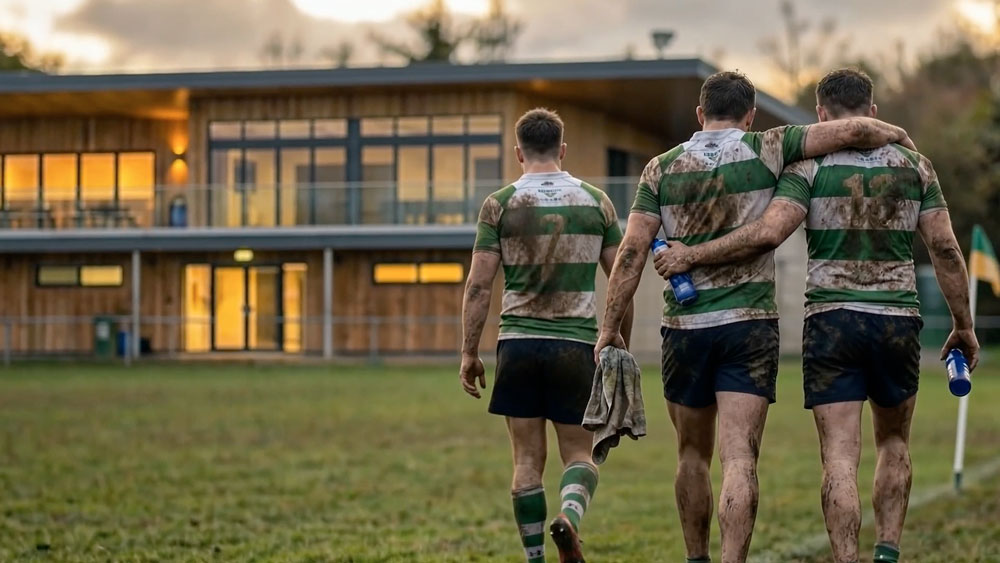
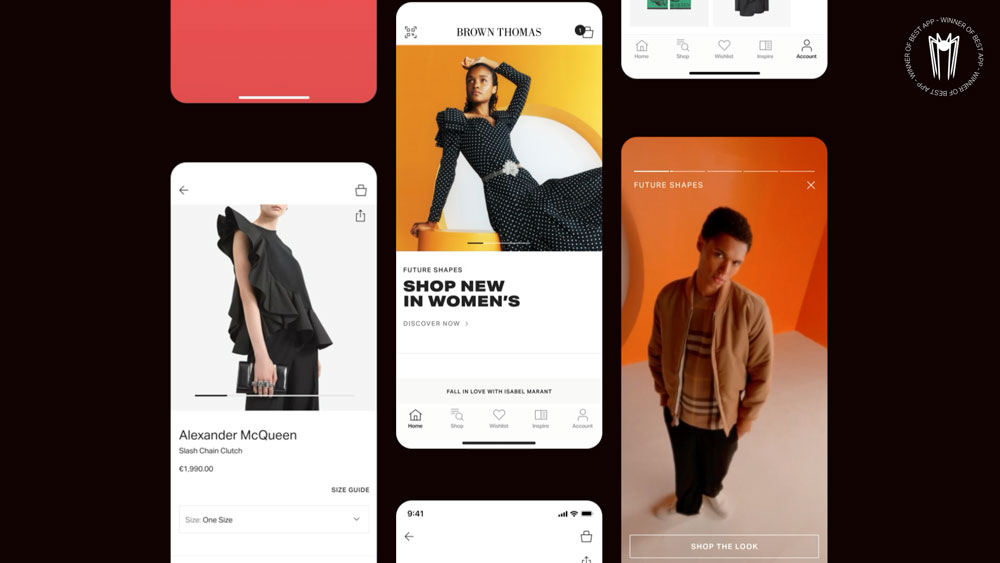
Deloitte Digital and ACNE have been working with retailers Brown Thomas and Arnotts for several years “to futureproof their digital ecosystem.”
“This involved designing and building new apps and sites to create a seamless luxury experience that lives up to the physical experience.” (The Brown Thomas app won the Spider for Best App in 2024.)
Anybody who has been following the recent release of The Devil Wears Prada 2 will probably have heard of Paula Rowan, one of the world’s most celebrated luxury glove makers. Apart from the fact that actress Emily Blunt wears them in the sequel, they are also cherished and worn by celebrities such as Lady Gaga and Taylor Swift.
“We had a big role in modernizing the brand identity, its website and its digital presence while using Gen AI to help create fashion-forward content that reflected the brand’s luxury positioning,” Cotter says.
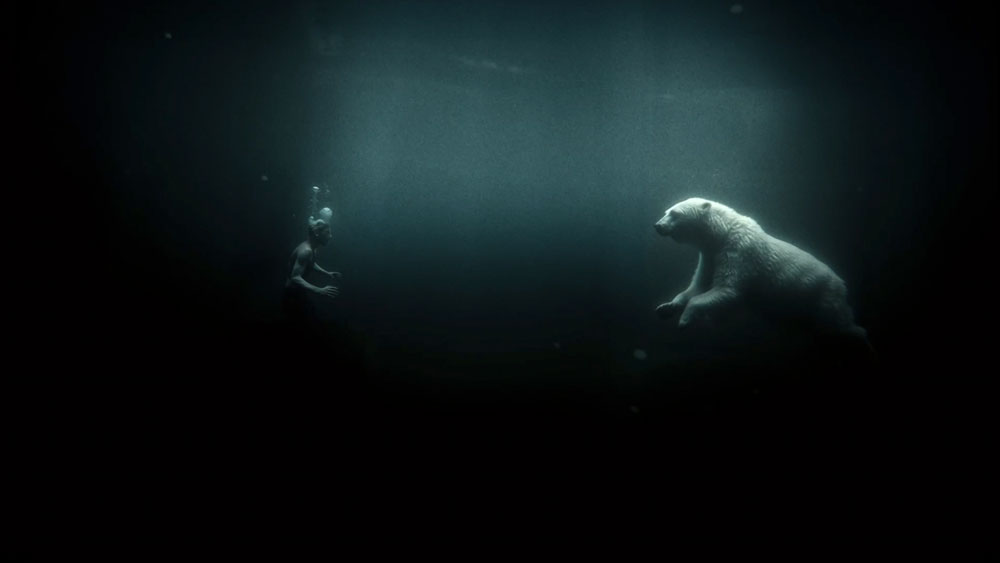
Closer to home, ACNE created a campaign for Deloitte, featuring Olympic swimmer Daniel Wiffen, Ireland’s first male Olympic swimming gold medalist. Wiffen is now a brand ambassador for Deloitte and the resulting work celebrates “leaders who continue to challenge themselves.”
“The campaign, which was generated entirely with AI, won Best Commercial Film at the AI Creative Festival in São Paulo in 2025,” Cotter proudly proclaims.
He says that approximately 70% of ACNE’s business comes from existing Deloitte clients, with the other 30% coming from pitching.

What’s the Story?
“Deloitte works with almost every client in the country in some capacity or other, and often we will get involved in an existing engagement and grow it from there,” he says.
“For example, one of our ACNE client propositions is ‘story as input’. So, a client might be working with Deloitte on its 5-year strategy for growth. ACNE will then come in and do a workshop where we put forward three alternative future stories—stories that the company could be telling the world in a couple of years, if it made some changes. One story will involve minimal change; one will be to change almost everything, and then one will be somewhere in the middle. This helps get senior leaders’ heads up and out of the present state by provoking bolder conversations. It’s also a great way for us to get to know the senior leaders of a business and what they want to achieve. And sometimes – cut to a year or two later – and we’re turning a version of the winning story into an ad campaign,” he says.
“But then we also pitch, because sometimes that’s the only way to get a decent chunk of work from a particular client,” he adds. “But I do share the frustrations that most agency people have. However, I have encountered some very healthy pitches lately. I think HSE for example runs a very robust but pragmatic process; they don’t demand the full kit and caboodle creative pitch, which is where it gets crazy and very costly.”
Not surprisingly, Cotter, ACNE and Deloitte Digital have embraced AI with open arms. Others, he says, may still have their heads in the sand.
“If I look at the work we are doing with clients right now to help them embrace AI, we’re helping them with the quick wins of Gen AI production, and we’re helping them with the longer-term shift, which is more around building agentic AI into their marketing workflows,” he says.
“In terms of the quick wins, we’re saving clients from 40% up to 85% on production costs by making images and videos with Gen AI instead of shooting them. We’re reducing the time it takes to produce that content by up to 90%. We’re raising the quality of the content, because with Gen AI if you can dream it, you can make it. And finally we’re making that content more adaptable – so you can quickly create variants for different audiences, regions, seasons, usage occasions etc. The old adage of ‘good, quick or cheap – pick two’ is gone out the window,” he says.
“This is not a hypothesis; these are based on real savings for our clients. And to put that in context, 60% of the ads and content we’ve created in ACNE Dublin this year so far have been made entirely with Gen AI.”
Special Agents
But the more consequential shift, he says, lies not in the quick wins of AI-assisted production but in the longer-term restructuring of how marketing workflows operate.
“The second bit is helping clients to introduce agents into their workflow. So, an agent is like a specialist version of Chat GPT or Claude. A client might like an audience-building agent for example, or a regulatory compliance agent. When you build these into the workflow, it saves time and money and often improves quality. And we’re doing this for real. For example, we’ve just completed a website content assessment for a big financial services client and we did it in days. A year ago, it would have taken a big team four to six weeks to complete. So, we’re helping clients get the quick wins as well as evolving their workflows and that’s a team effort between ACNE and the martech team in Deloitte Digital,” Cotter says.
Client Superpowers
A logical build on this, which ACNE and Deloitte provides, is end-to-end marketing-as-a-service. Now, much of what is on offer in the martech space involves clients owning, managing and constantly updating their own marketing stacks. He says that Deloitte Digital and ACNE are now offering CMOs the option of using their managed stack instead, or combining it with the client’s own tools, with Deloitte handling integration and ongoing optimisation.
“Our clients can focus more on what actions they want performed rather than what tech they want to carry,” he says.
The implication is significant: marketing infrastructure as a managed service, rather than a capital investment.
“So, the next question which we’re exploring with clients is, now that you have all these superpowers… now that you can have infinite content, and you can free up your marketing team from lots of tasks… what are you going to do with that new power?
“Some clients will settle for the efficiencies. Others will see this as a chance to make fundamental changes, like, making 20 brand ads and see which one flies. Or create personalised content for every single target customer. Or win in a tough category, by being the quickest marketer to spot signals and serve content that responds to them. Or why not swing the other way and be the brand that hand-makes everything,” he says.
When AI is discussed in the advertising world, the question of whether or not it ultimately commoditises creativity is one Cotter takes seriously.
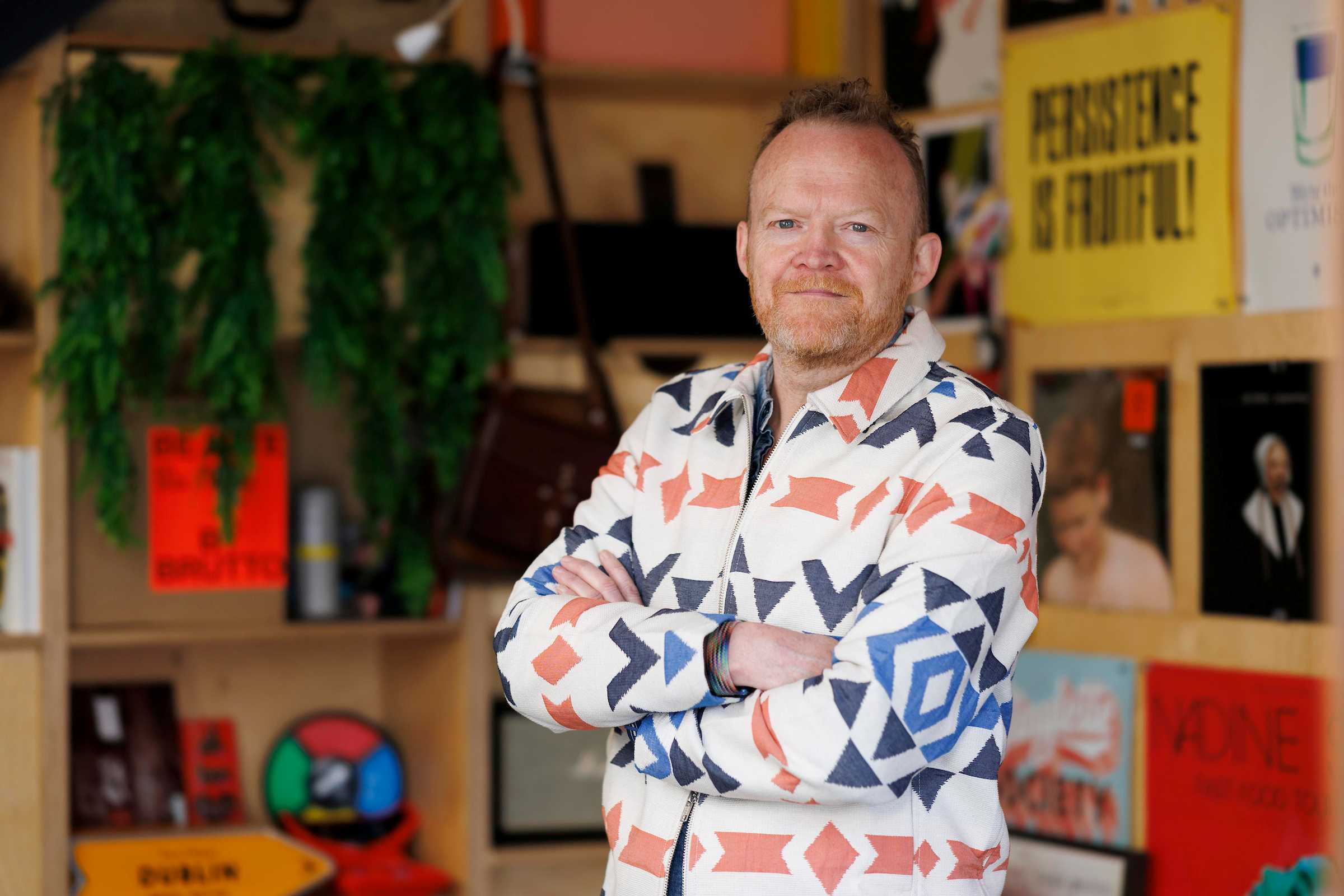
“AI left to its own devices is great at producing good category work, at replicating best practice and at creating highly competent sameness,” he says. “Differentiation, however, has always been the focus for ambitious brands and creatives. And that’s still a valuable thing, maybe more so. But when you take a great creative person, and empower them with great AI, amazing things can happen,” he says.
Harnessed correctly, AI has a bright future in advertising and marketing, in Cotter’s view.
“I see us helping clients to run very dynamic technology stacks, so that their machines run better than their competitors’ machines. I see us focusing on recognising signals and responding to them faster and better. And at the same time, I see us providing this layer of very human challenge and scepticism and insight, that creates differentiation and surprise and memorable human connection. But creatively, I think the task remains the same: ask better questions,” he says.
In a few weeks’ time, Deloitte Digital and ACNE will be returning to Cannes Lions in the south of France, this time as one of the festival’s sponsors and one of the marketing industry’s leading disruptors. With a presence in two locations, the Executive Loft in Journal House on the picturesque Croisette and the Deloitte Digital Apartment across the road from the Palais des Festivals, one can be sure that guests will have lots of questions and, most likely, some will be better than the rest.