
















Fewer than half of marketers expect business conditions to improve in 2027, according to a global research report from the World Advertising Research Centre (WARC) which has identified artificial intelligence, changing social media habits and the growth of short-form video among the forces that could shape 2027.
The research draws on a global survey of 1,000 marketing executives conducted in September and October 2026, including interviews with marketing leaders and analysis by WARC’s research team.
The marketing intelligence company’s “Marketer’s Toolkit 2027” found that 46% expect business to improve next year, marking a third consecutive annual decline in optimism and a fall of almost 20 percentage points when compared to three years ago.
However, fewer marketers anticipate budget cuts. WARC Media forecasts that global advertising expenditure will grow by 8.4% to $1.46 trillion in 2027, although the rate of growth is expected to slow.
Aditya Kishore, insight director at WARC, said: “The macroeconomic backdrop remains challenging – a fading middle market, mounting sovereign debt, and a cost-of-living crisis are all still weighing on marketer optimism. But beneath these pressures, important shifts are reshaping the industry. AI agents are starting to influence how consumers shop, algorithms are superceding social connections on social media, and the rise of the clip economy is changing how brands connect with audiences. Marketers who understand these emerging trends – and act on them – have a genuine opportunity to turn disruption into growth in 2027.”
AI delegation
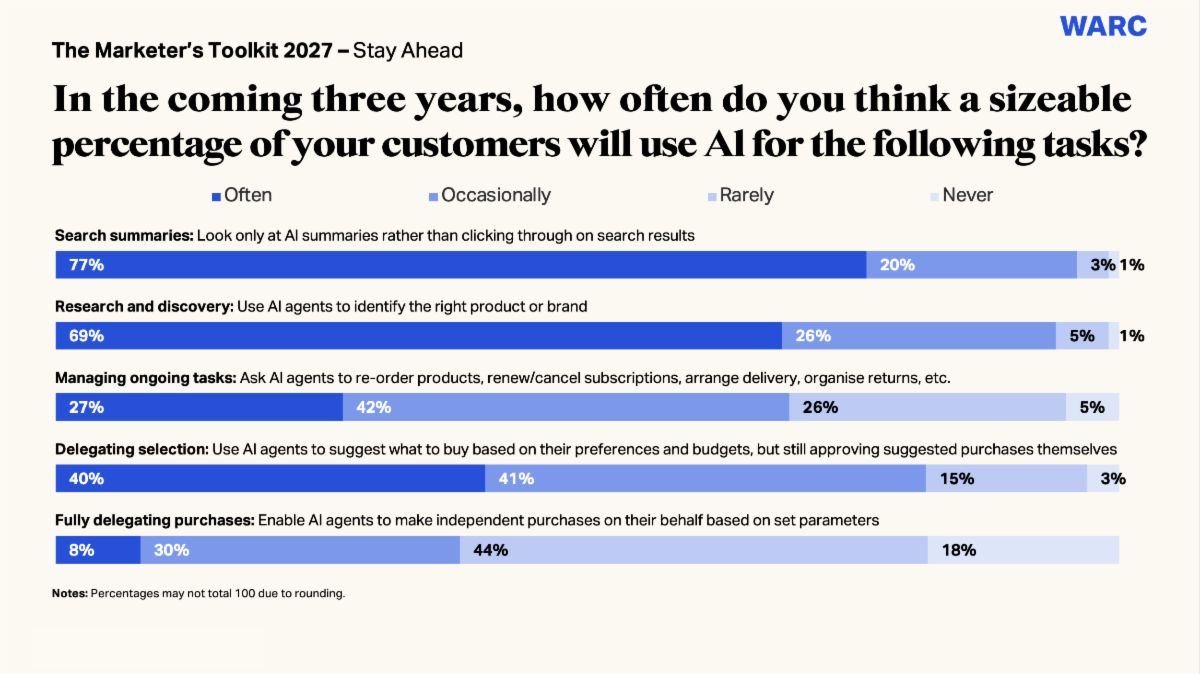
According to the research, almost seven in 10 marketers, or 69%, expect customers to use AI agents for product research within the next three years. However, just 8% expect consumers to delegate purchases fully to AI.
Separate forecasts from PHD and WARC suggest that consumer spending facilitated by AI agents could reach $944 billion in 2026 and $3.4 trillion by 2030.
WARC said the emerging “delegation economy” would require marketers to build brands that appeal to consumers while also considering how AI systems discover, assess and recommend products. It advised businesses to examine how quickly adoption could change their category and improve collaboration across internal teams.
The post-social era
Some 43% of advertisers surveyed by WARC believe social media advertising is becoming less effective while 58% say established buying practices make it difficult to remove platforms from media plans, even when traffic declines.
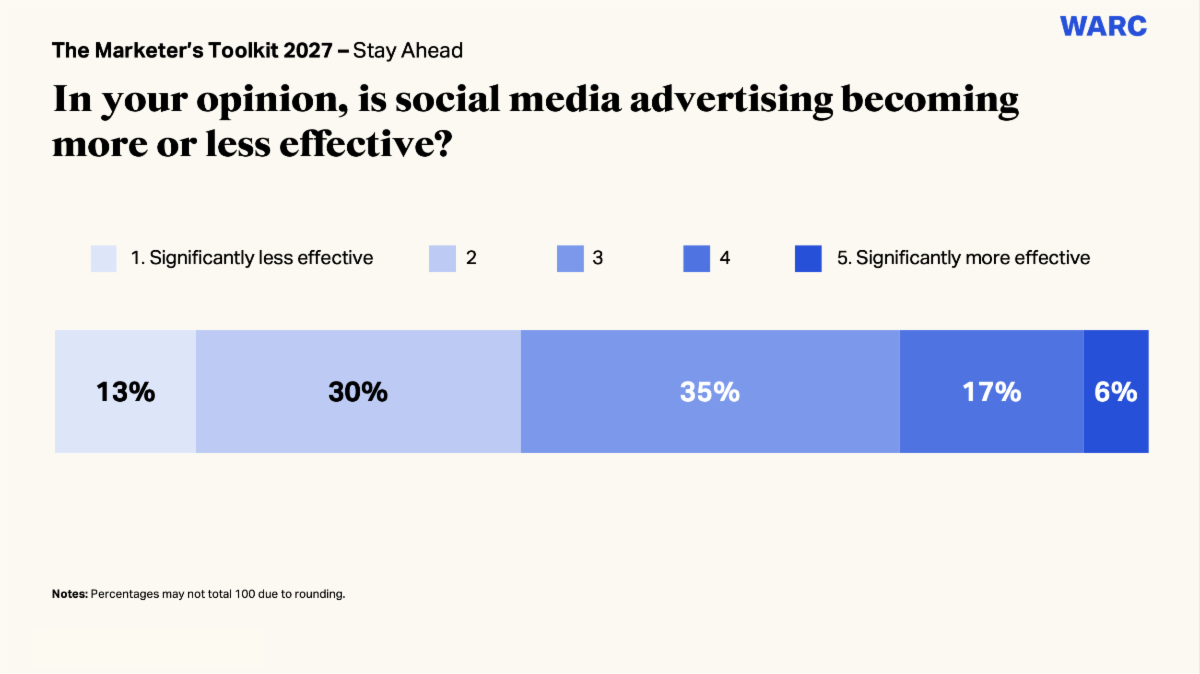
Despite those concerns, WARC Media forecasts that global social advertising expenditure will rise by 21.3% to $394.6 billion in 2026, the fastest growth across advertising channels.
The report describes a shift towards personalised, interest-based feeds, with algorithms playing a greater role than social connections in determining what audiences see.
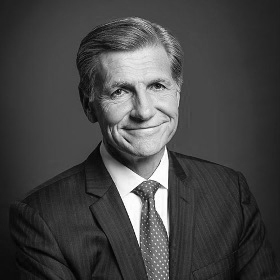
Marc Pritchard, chief brand officer at Procter & Gamble (above), who took part in the research, said: “You need to make sure that you create memory in the algorithm. What we’ve learned is that you need a much higher volume of content, a much higher variety of content, at a much higher velocity.”
The clip economy
The research also noted that short-form video is considered a popular consumer format by 83% of marketers, although 40% doubt it can deliver the same brand halo as television, film and events.
WARC said the growing importance of clips in discovery and engagement required brands to reconsider how content is produced and distributed.
It recommended incorporating distribution into creative briefs, involving creators as strategic partners and planning connected series in which individual clips build on one another.
Changing summer behaviour
With COP31 currently underway in Turkey, almost half of marketers, or 45%, have not seriously considered how rising summer temperatures could affect their category. Only 25% have taken action.
The report said extreme weather was changing when, where and how consumers spend, with implications for established seasonal campaigns and purchasing occasions.
Marketers were advised to assess the effects on demand, prices and supply chains, build greater flexibility into plans and identify opportunities arising from climate adaptation.
Balancing AI adoption and consumer trust
Views on AI’s contribution to marketing effectiveness remain divided. Some 42% expect a positive impact, a similar proportion remain unsure and 19% have negative expectations.
WARC said marketers would need to balance the technology’s potential for scale and personalisation with consumer concerns about its use.
It recommended assessing acceptance of AI-generated advertising by category, considering how to communicate AI use and retaining human judgement throughout campaign development.
Selina Sykes, global VP digital, social and AI transformation at Unilever, said: “You can’t just take the way you worked without AI and replace it with AI.”
The report, now in its 16th year, forms part of WARC’s Evolution of Marketing programme.