














 Aaron Poole, Marketing Insights Manager, PML Group, with this week’s Out \ Look on Out of Home
Fleadh Cheoil na hÉireann is in full flow in Belfast, where the city is hosting the event for the first time from the 2nd to the 9th of August. Around 800,000 visitors are expected across eight days of concerts, sessions, street performances, family events and cultural activity. At the heart of the week are more than 180 All-Ireland competition categories, with the main competitions taking place from Friday to Sunday.
The early footfall figures give some sense of what the Fleadh has brought into the city. Belfast One BID recorded 176,464 movements within the square mile around City Hall on the opening Sunday, 95% higher than on the comparable Sunday last year. A further 165,077 movements were recorded on Monday, an increase of 75%, giving a sense of the scale of the uplift even before the competition weekend.
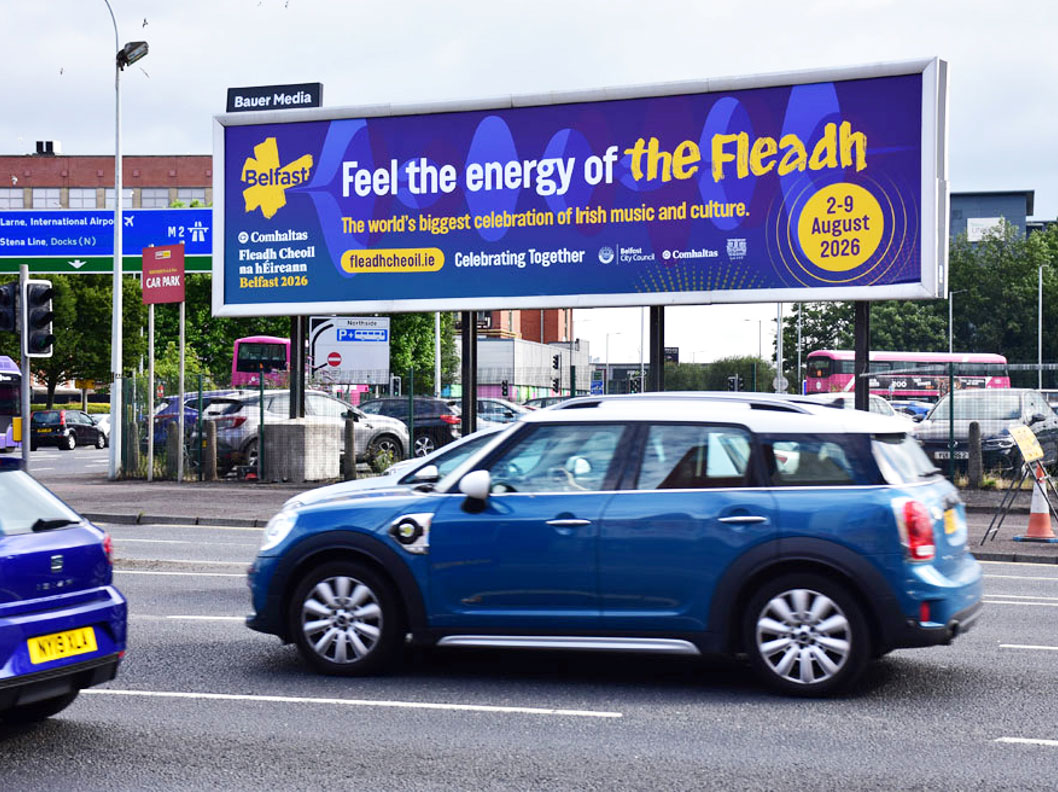
The event had already become part of Belfast’s streets well before the opening ceremony. Across activity supplied by PML Group NI, OOH has carried the Fleadh through roadside, transport and city-centre environments, while activity in the Republic brought the invitation north.
Recent Media Impact research gives some context to that role. Nearly four in five respondents said they were interested in attending live outdoor music events Ireland this summer, while 66% agreed they pay more attention to advertising when it refers to an upcoming event. For the Fleadh, that gives OOH two connected jobs: building anticipation around a major cultural week and turning that interest into a journey north.
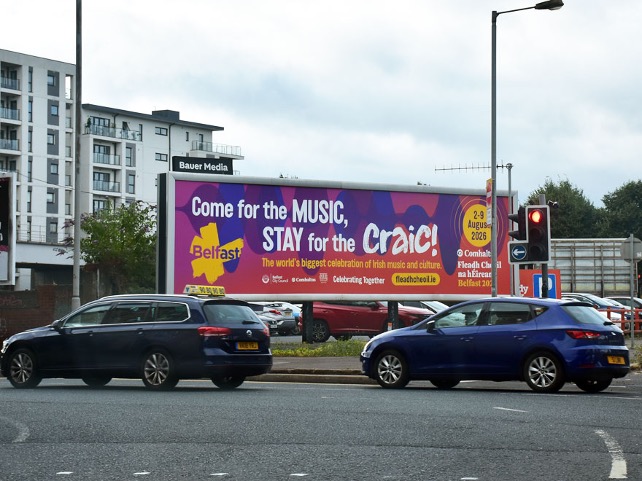
Belfast City Council worked with Ardmore Advertising on the main campaign, which does not underplay the significance of the occasion. The purple and yellow identity appears across large roadside, digital formats and bus wraps, with lines that shift between civic pride and a direct visitor welcome. “This is our time” marks Belfast’s first year as host. “Small City. Big Heart.” speaks to the welcome around it, while “Come for the music. Stay for the craic!” makes the trip itself part of the message. The shared event identity gives Belfast a recognisable Fleadh look as visitors move between the city centre, venues and neighbourhood activity.
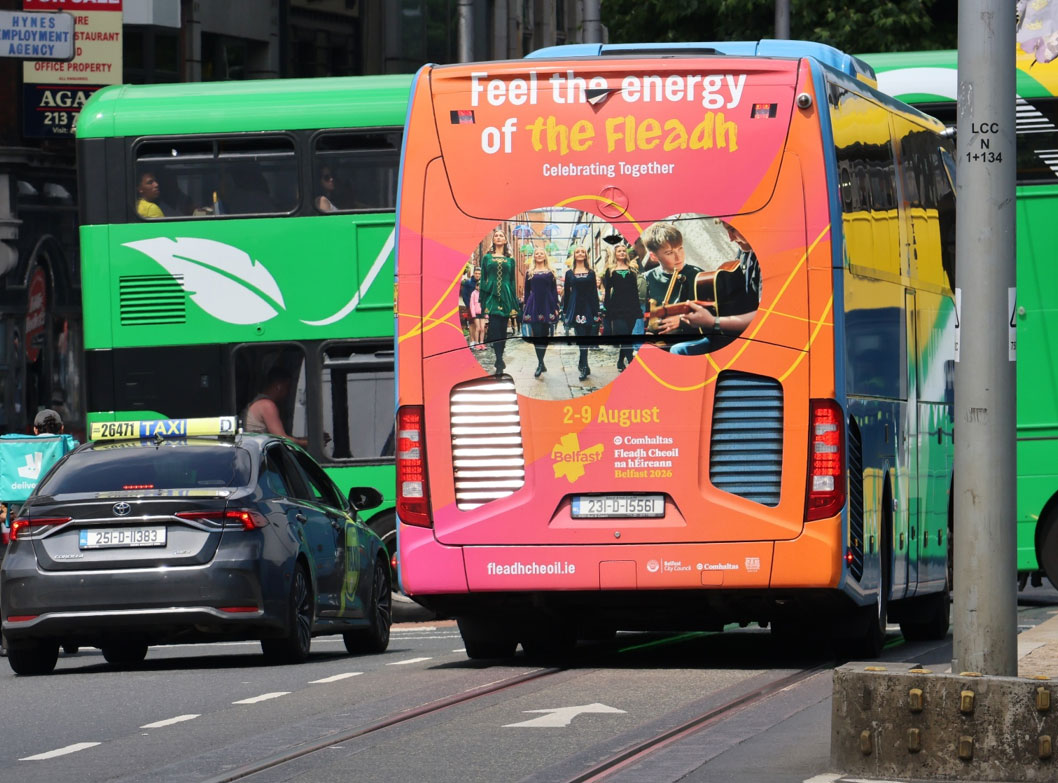
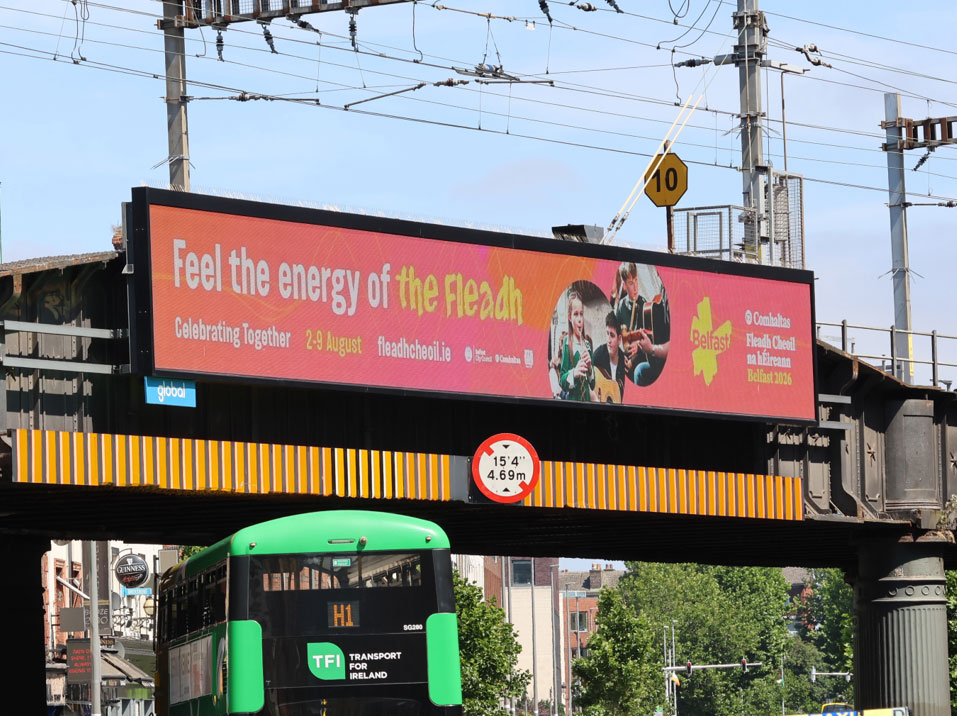
The invitation was also visible across the Republic, where Visit Belfast worked with Mammoth on activity across 6 Sheets, Metropoles, Aircoach MegaRears and Digital Bridges. The mix brought “Feel the energy of the Fleadh” into everyday journeys and gave the Belfast event a presence beyond its host market. Translink’s “Better Connected to the Fleadh” activity added a more practical layer, using Digital 6s to direct audiences towards bus, train and park and ride journey planning. That transport presence is particularly relevant around live music and festivals. Among those interested in attending outdoor music events this summer, 47% selected rail, bus or coach as their most likely way of travelling.
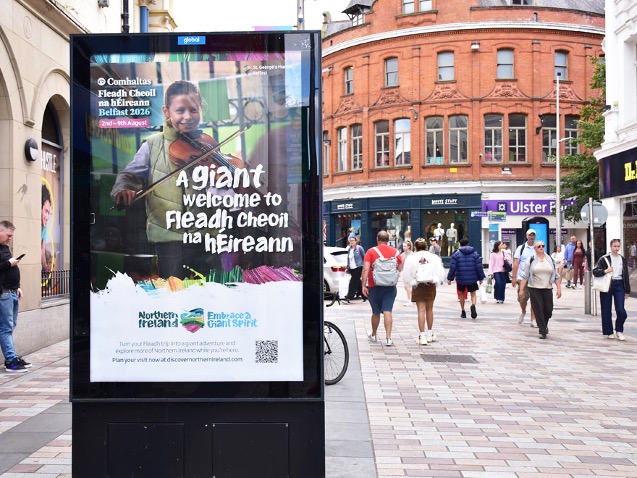
Tourism NI, working with TBWA\Ireland, widens the picture once the audience reaches Belfast. Its “A giant welcome to Fleadh Cheoil na hÉireann” creative pairs musicians with the wider Northern Ireland destination offer and encourages visitors to turn the event into a longer stay. That reflects the stated aim of Tourism NI’s wider campaign, which is to promote the Fleadh while encouraging people to explore more of Northern Ireland during their visit.
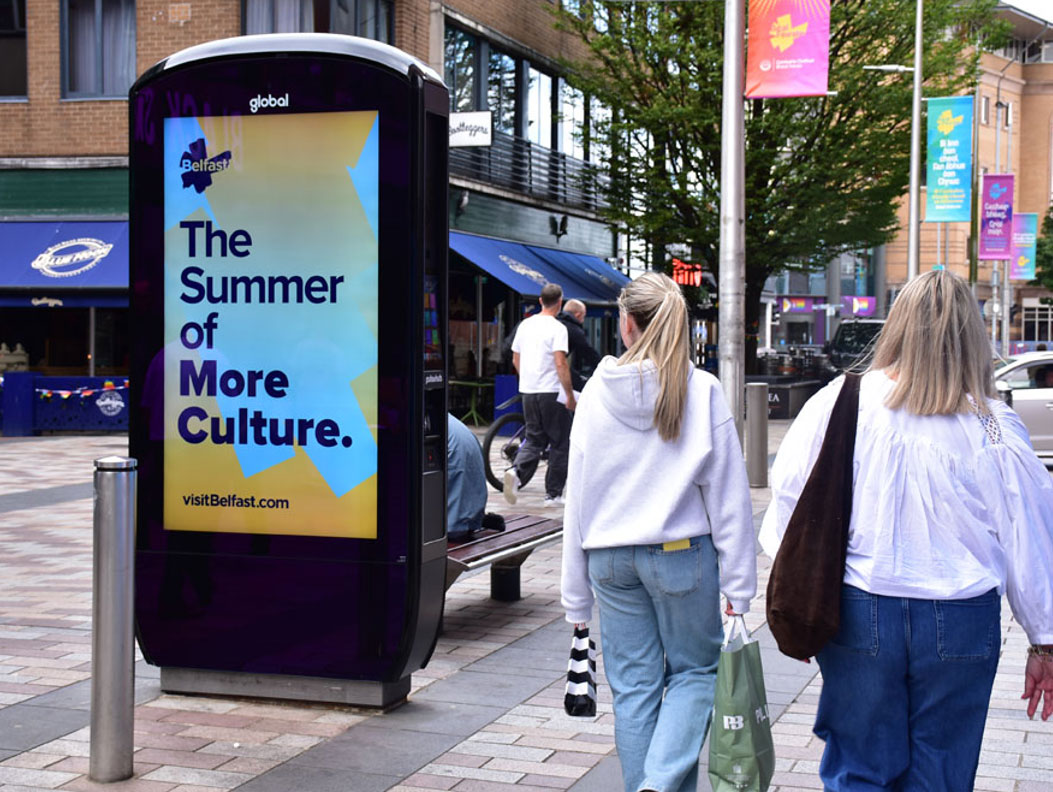
Visit Belfast’s separate “Summer of More” activity continues that destination story without trying to make every message about the Fleadh. Culture, events, stories and fun are used to show what else the city can offer, positioning the festival as a starting point for more time in Belfast.
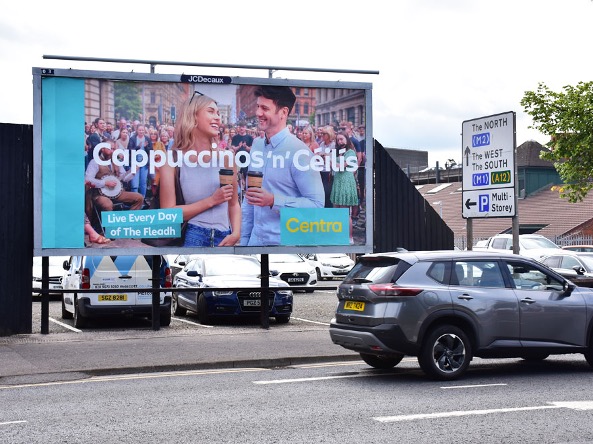
The wider advertiser response became more immediate once the week got underway. Centra, working with Gone Rogue, has tied its campaign to the small moments around a day at the Fleadh. “Breakfast ‘n’ Bodhráns”, “Cappuccinos ‘n’ Céilís”, “Jambons ‘n’ Jigs” and “Rolls ‘n’ Reels” connect familiar store occasions with the music and movement around the city. The supporting line, “Live Every Day of the Fleadh”, keeps the link simple and specific.
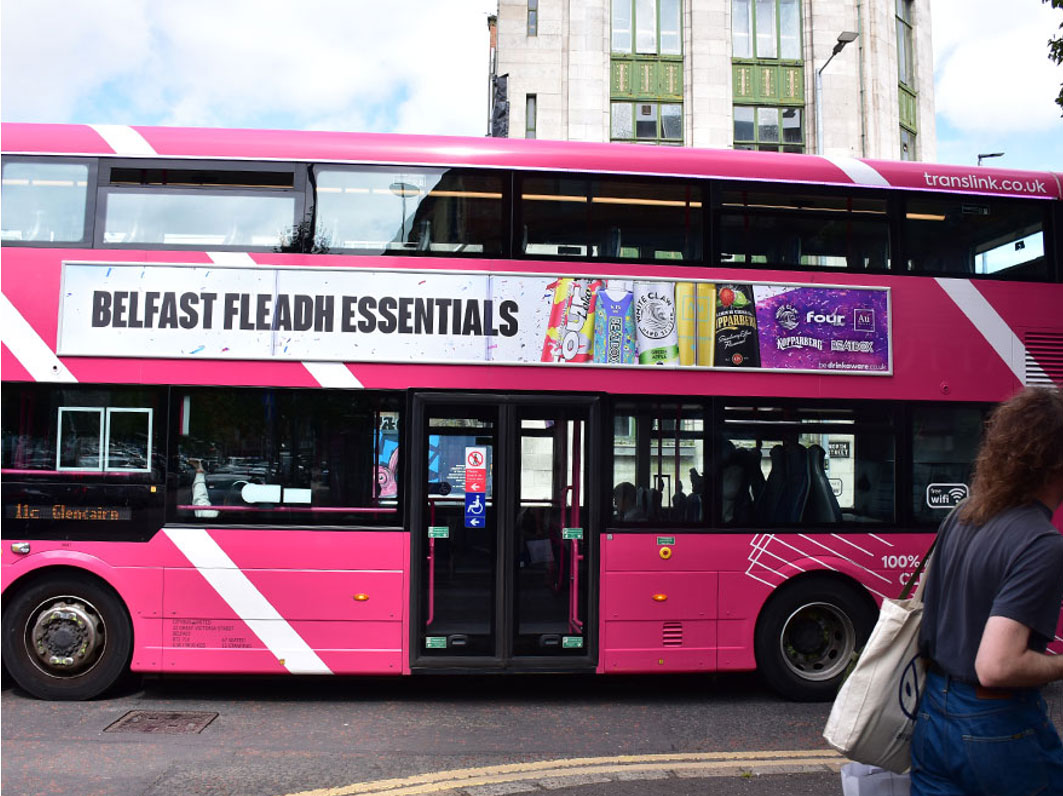
Richmond Marketing, also working with Gone Rogue, has taken a broader portfolio approach through “Belfast Fleadh Essentials”. The creative brings several drinks brands together across city-centre digital formats and bus advertising, speaking to people who are already in Belfast and moving through the event.
TG4 and Zenith have used Belfast Grand Central to connect the physical event with the audience following from elsewhere. The station activity promotes Fleadh26 across digital screens and the building frontage. TG4’s coverage runs from 6 to 9 August, combining daytime competition streams with four nights of live television from Belfast at 9.30pm.
Dublin City Council and Spark Foundry have used the same setting in the opposite direction. Digital panels and on-the-ground ambassadors at Belfast Grand Central promote the Dublin City Fleadh later in August, reaching an audience whose interest in traditional music is already evident. It is a neat handover from one city event to another rather than a message placed on general footfall alone.
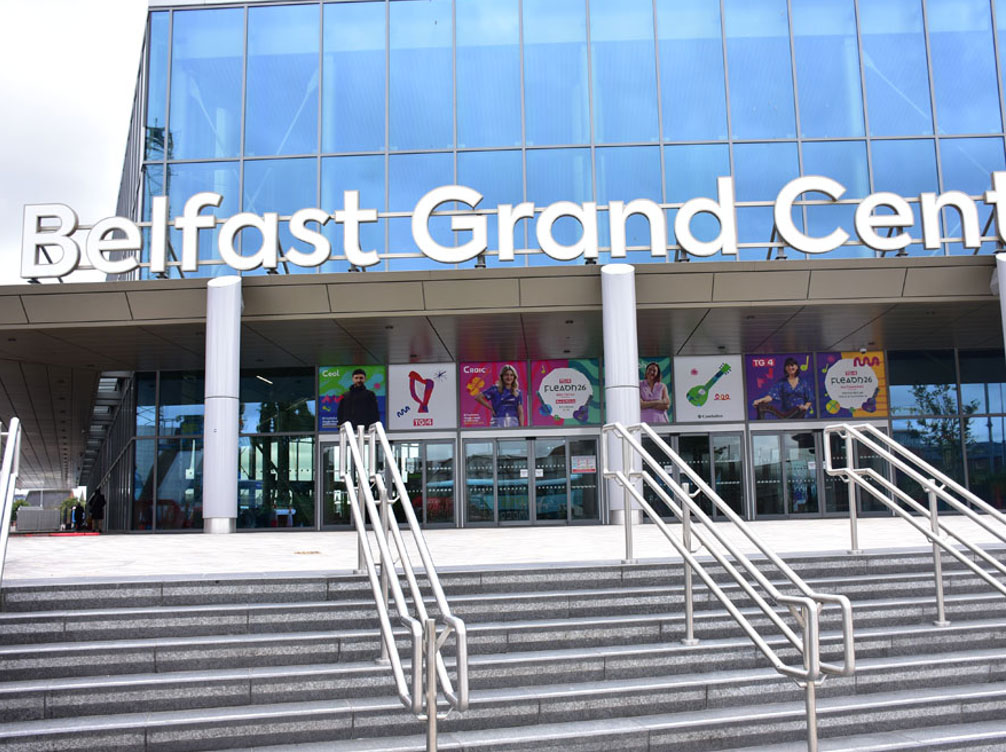
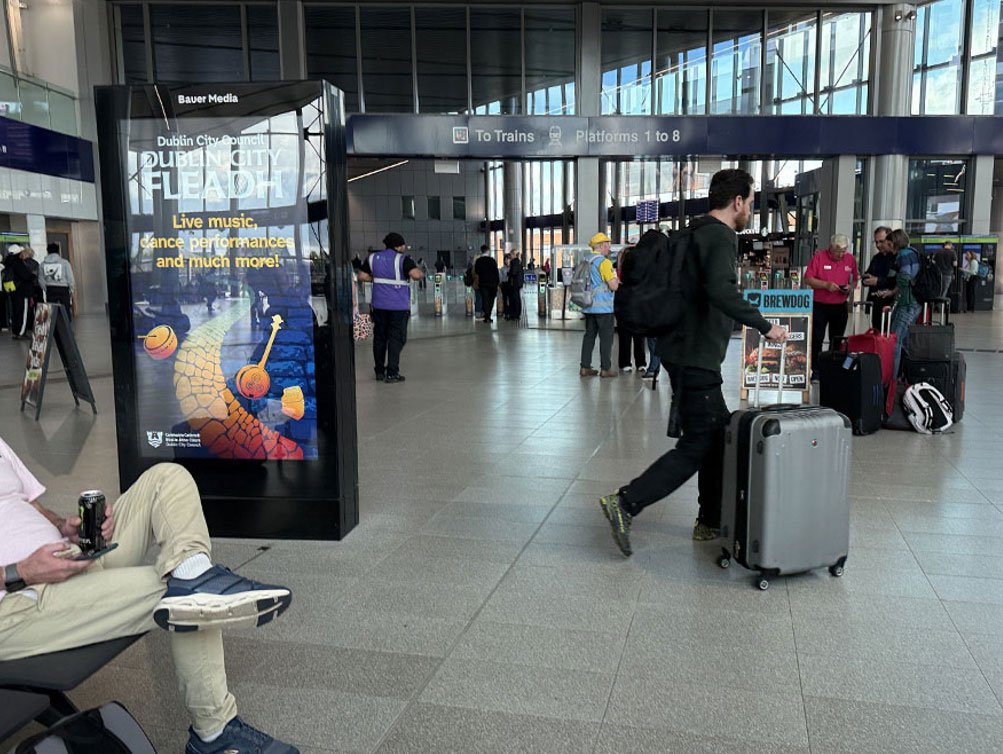
By the time the first session began, Belfast already looked like a Fleadh city. The work in the Republic had carried the invitation north. The activity around Belfast met people when they arrived, while Centra, Richmond Marketing, TG4 and Dublin City Council gave the week a wider commercial and cultural life. With the main competitions running from Friday to Sunday, the busiest part of Belfast’s first Fleadh is still to come.
Back-to-School Moves Into View
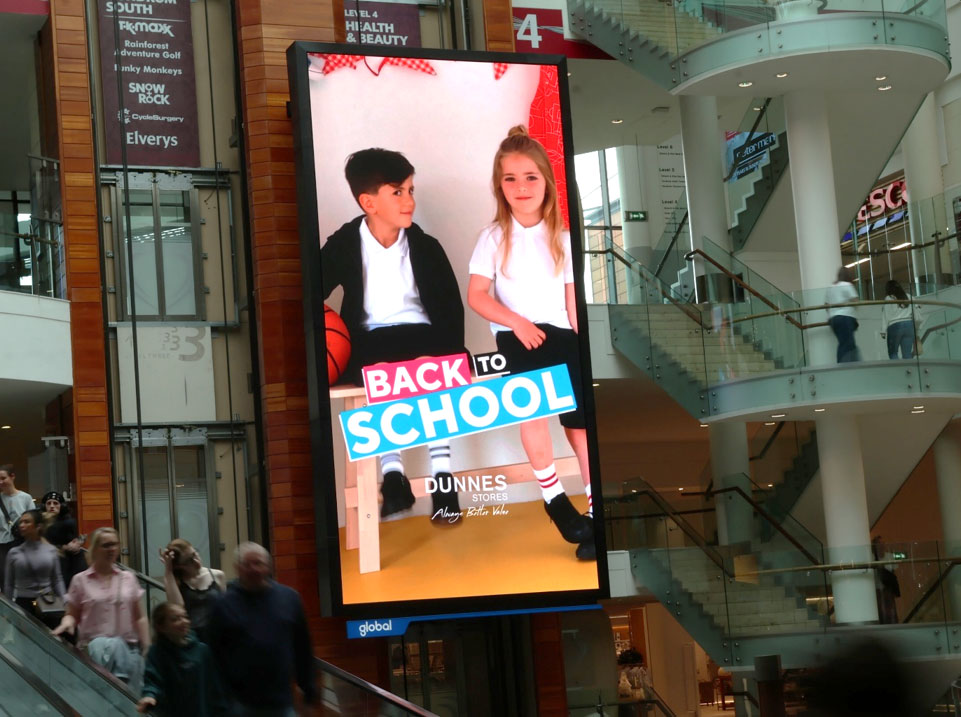
The August bank holiday is often the point when Back-to-School stops feeling distant. Uniforms, shoes, stationery and college supplies move higher up the list, bringing one of the year’s most important retail periods firmly into focus.
ROI TGI 2026 R1 estimates that 767,000 adults spend at Back-to-School time, with around four in five of them classed as OOH consumers. Our latest iQ research, conducted with Ipsos B&A across two waves among Dubliners aged 16-54, takes a closer look at how that spending period unfolds, what matters to shoppers and the part OOH plays in deciding where they buy.
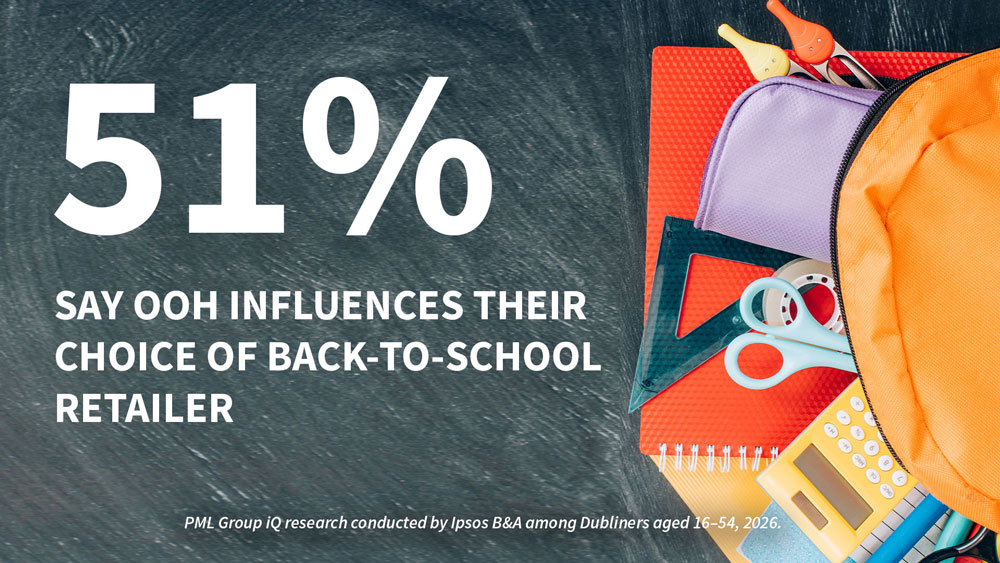
More than half of respondents, 51%, say OOH influences their choice of retailer for Back-to-School purchases. This rises to 58% among 35-44s and those who identify as the main household shopper, while 54% of people living with children under 15 say the same.
That puts OOH in a meaningful position as shoppers decide where that spending will go. With families and students comparing prices, checking availability and making several different purchases, a campaign can introduce a retailer early, keep it familiar as the list grows and bring an offer or product back to mind when people are ready to buy.
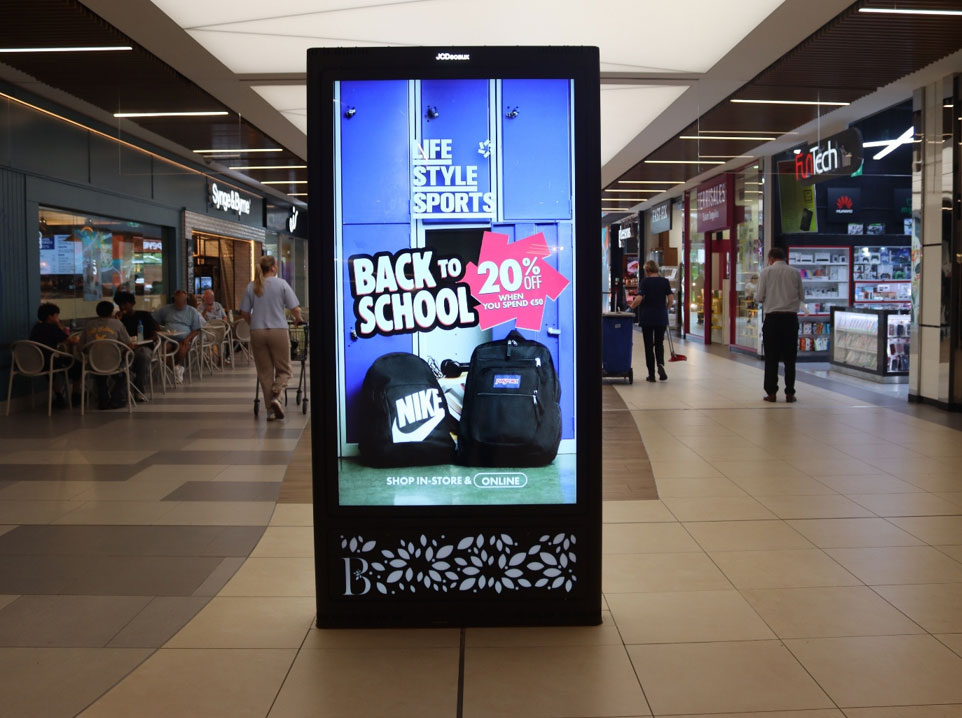
The buying window itself is broad, although the weight of activity sits increasingly towards the return date.
One quarter of respondents make most of their purchases six weeks or more before school or college begins. The two largest points arrive four weeks before the return, when 24% do most of their shopping, and two weeks before, selected by 25%. A further 8% make the majority of their purchases during the final week.
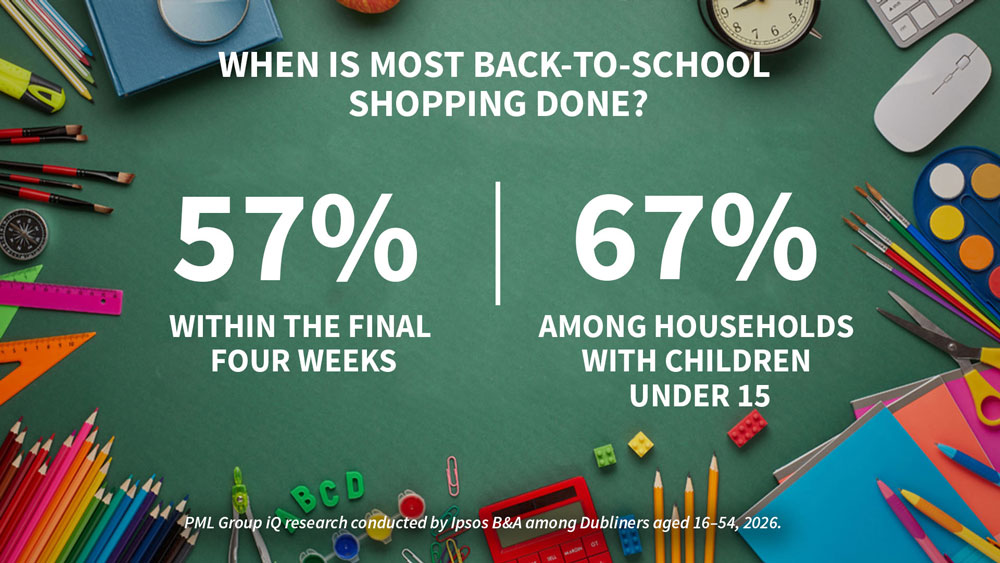
Overall, 57% do most of their Back-to-School shopping within the final four weeks. Among those expecting to buy supplies, that figure reaches 69%. The pattern is even more pronounced in households with children under 15, where two thirds expect to make most purchases during the same four-week period.
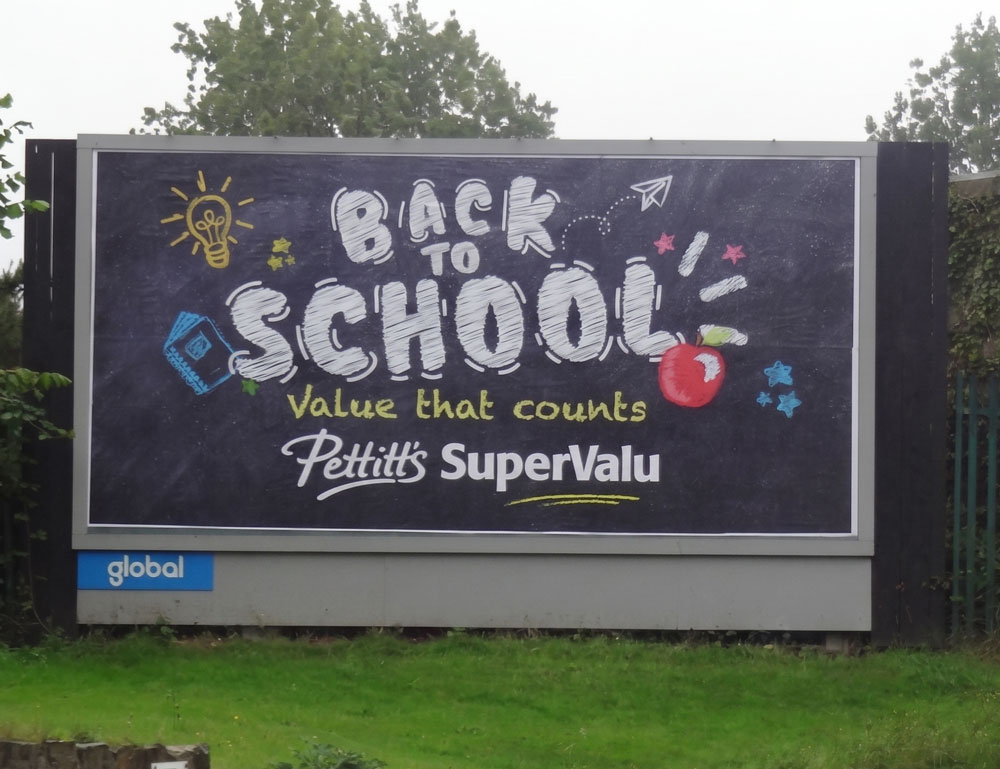
The season starts early, but gathers pace quickly. That favours a campaign with enough time to build recognition before becoming more immediate as the new term approaches. A retailer might begin with a broad Back-to-School message, then shift towards price, individual products, availability or ordering deadlines.
Digital OOH gives that message room to change as the return date comes closer, bringing current offers, store information or location-led copy forward when they are most useful.
The places where people notice Back-to-School advertising show how OOH can carry that build-up from the everyday journey through to the shopping trip.
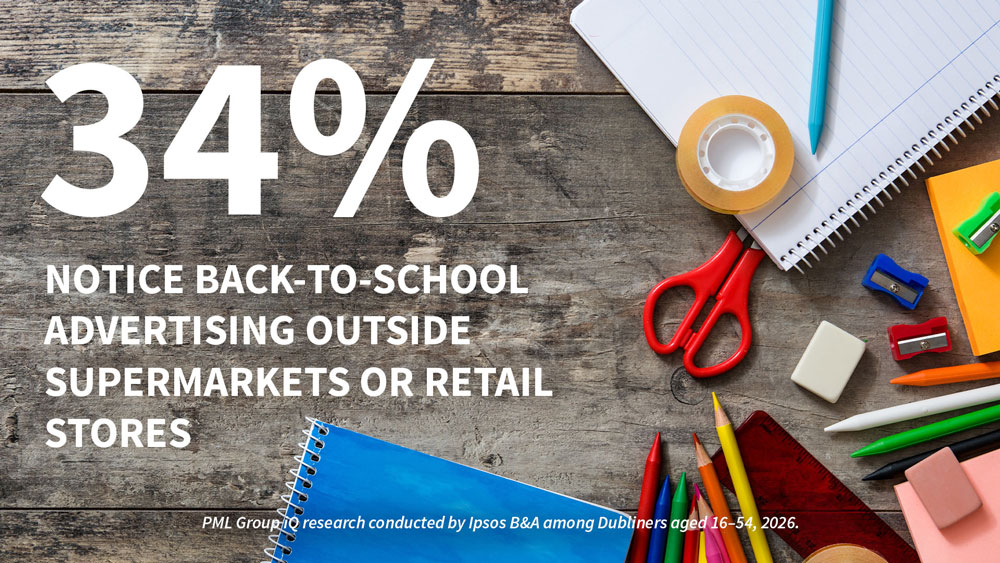
More than a third of respondents, 34%, notice Back-to-School advertising outside supermarkets or retail stores. Shopping-centre screens are noticed by 26%, with bus shelters and bus sides reaching 25% and billboards or roadside posters 23%.
Together, those locations cover both the everyday journey and the shopping trip. Roadside and transport formats build familiarity across the city, while shopping-centre and retail sites reconnect the message with the task at hand.
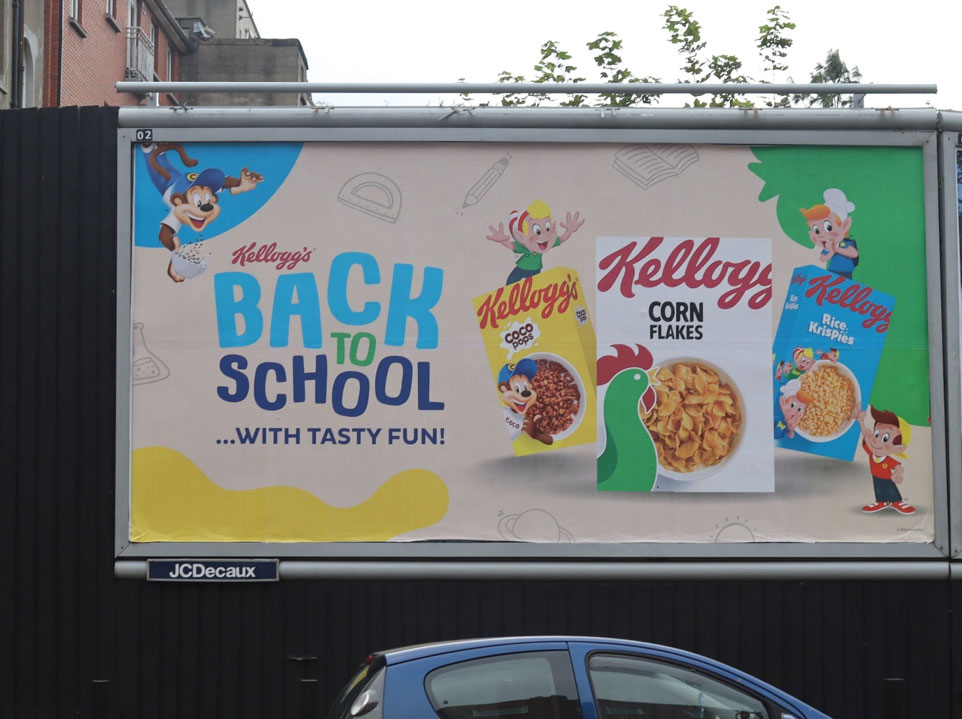
The list itself is rarely completed in one trip. Clothing and shoes may be bought at one point, with stationery, technology and lunchbox staples picked up later. A message seen during a commute can therefore be reinforced closer to a store, keeping the retailer present between purchases.
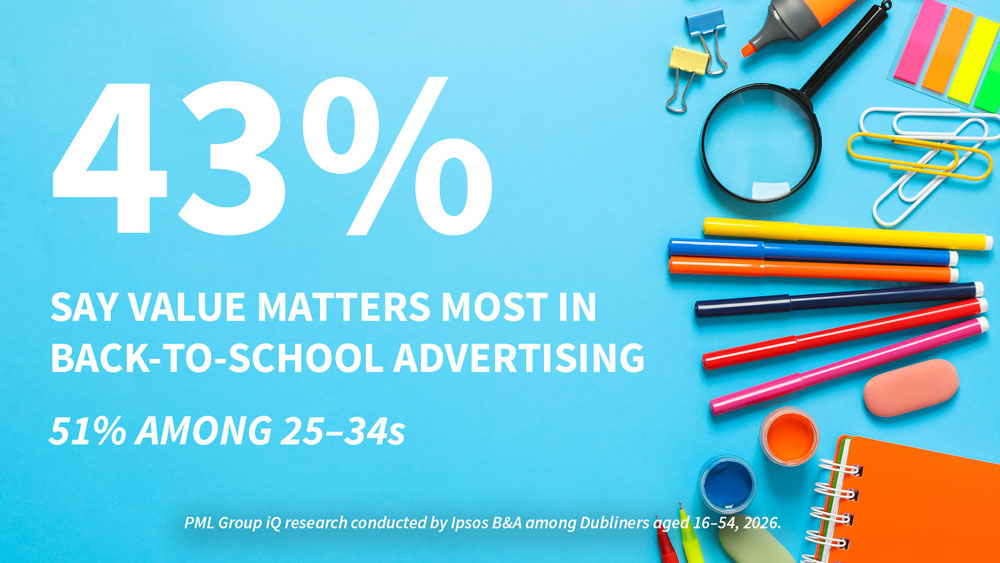
What the campaign says once it has attention is just as important. Value carries the strongest pull overall, selected by 43% of respondents as the most important element in Back-to-School advertising. Quality follows at 24%, ahead of product range at 14% and convenience at 11%.
Value is particularly important among 25-34s, rising to 51%. The balance changes among other age groups. Quality reaches 32% among 35-44s, while product range rises to 24% among 16-24s, almost matching quality for the youngest respondents.
Value earns the lead, but quality and range give campaigns more to work with. Price can bring shoppers into the conversation, while durability, choice and availability help one retailer stand apart. A broad value proposition may work early in the period, with product-led creative becoming more useful later. For some audiences, quality will carry greater weight; for younger shoppers, showing the breadth of what is available may have more influence.
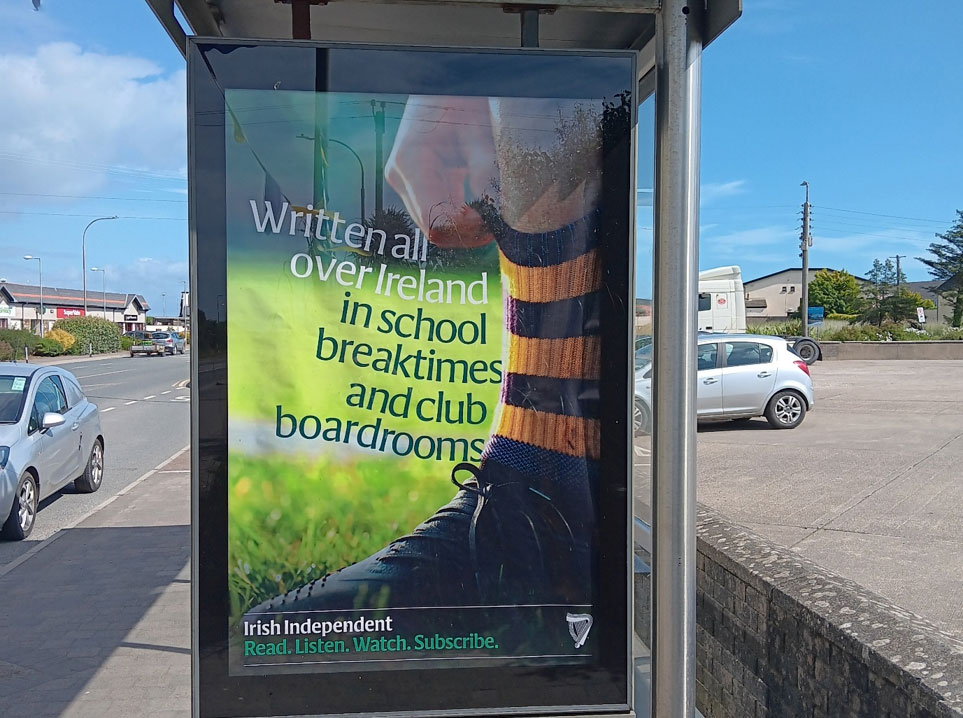
The most concentrated phase of Back-to-School shopping is now underway. With most active shoppers entering their main buying window, the opportunity is to remain visible from the everyday journey through to the point of purchase, with value leading the message and quality or range helping retailers stand apart.