
















 Misinformation and disinformation, AI slop and extremist content are just some of the problems polluting the daily news cycle. But an erosion of trust in journalism has become an even bigger challenge for many news organisations and not just amongst readers but advertisers too, writes Peter Vandermeersch.
The most important issue in journalism today is not to have that scoop or to have the sharpest analysis. It’s not AI or the use of video. It’s not the number of our readers or the quality of our video-views. It is clear and simple: trust.
Everything else flows from it. Our democratic role, our business model, our relationship with readers and advertisers — all of it depends on whether people believe us, and believe in us. Without trust, journalism loses its authority. And when journalism loses authority, democracy becomes more fragile.
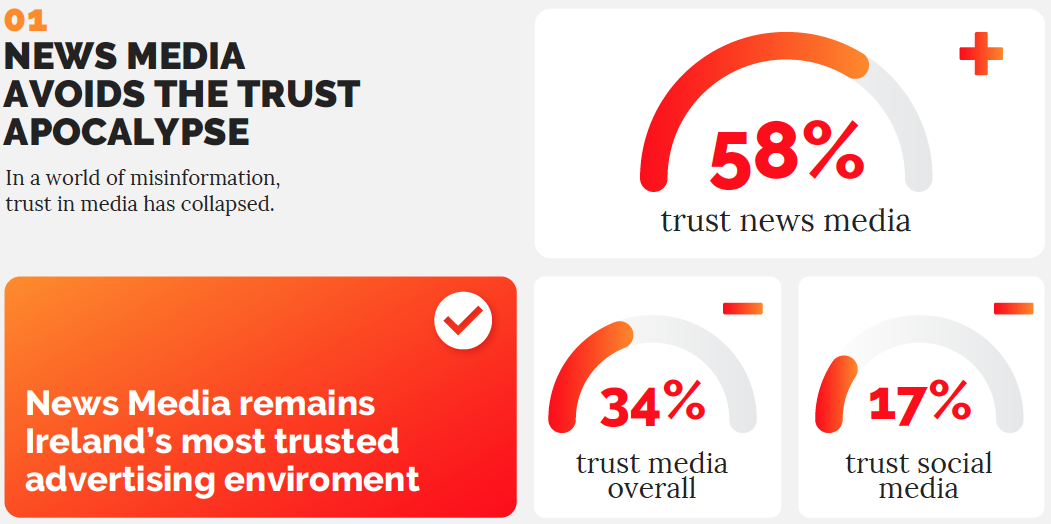
A functioning democracy depends on citizens having access to reliable information. An independent press is meant to provide that. But when trust erodes, people begin to doubt not just the news, but institutions more broadly — elections, courts, science, expertise. We are seeing what happens when there is no longer a shared backbone of facts. Public debate becomes polarized, emotional and detached from reality.
At the same time, trust is not just a civic issue. It is the foundation of our sustainability. Readers only pay for journalism they value and believe in. The relationship between emotional trust and willingness to subscribe is direct and measurable. If people feel that a news organization is fair, independent, and genuinely committed to serving the public, they are prepared to support it financially. If they doubt our intentions, they walk away.
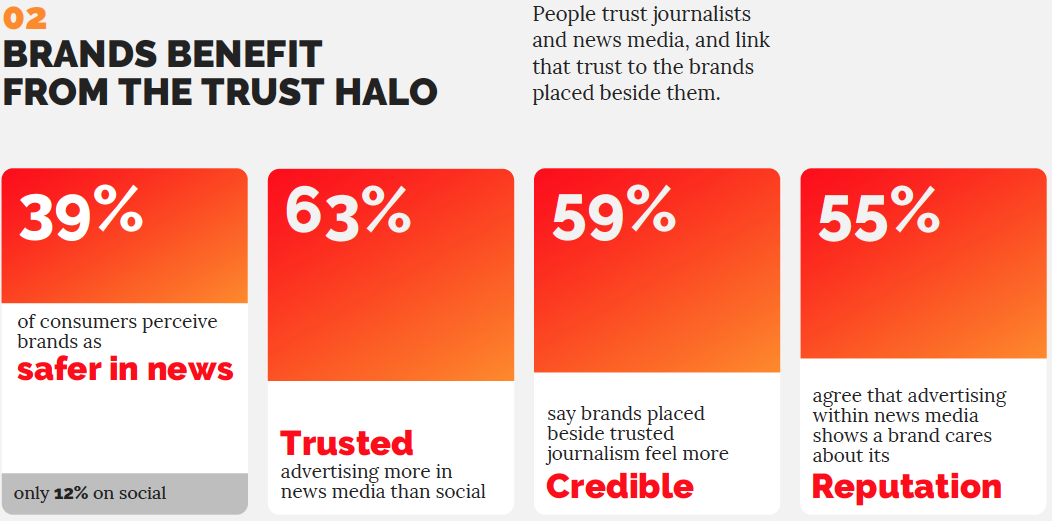
The same is true for advertisers. Strong brands do not want to appear in unsafe or low-quality environments. They are deeply concerned about brand safety and brand suitability. They do not want their message placed next to misinformation, extremism, or what is often called “AI slop.” Context matters. Credibility matters.
When advertisers choose trusted news brands, they are not just buying reach. They are buying association. An advertisement placed in a respected newspaper or on a trusted news platform benefits from the reputation of that environment. There is a transfer of trust. Research consistently shows that ads perform better in high-quality journalism environments than in chaotic, unregulated digital spaces. Engagement is stronger. Brand perception improves. Trust in the medium positively influences trust in the message.
In that sense, trust underpins both pillars of our revenue model: reader revenue and advertising revenue. It is the economic engine of independent journalism. Without trust, both weaken.
The decline in trust we are witnessing is not simply about factual accuracy. It is deeper. Many people still believe that mainstream news organizations are capable of reporting accurately. What they increasingly doubt is our intention. They suspect bias, hidden agendas, or indifference to the societal consequences of our reporting.
Political polarization has intensified this dynamic. Journalism has been pulled into a binary logic: if you are not with me, you are against me. Reporting that challenges a particular worldview is quickly labeled hostile or partisan. In this climate, neutrality itself can be interpreted as opposition.
We are also living in an age of information overload. The digital ecosystem produces an endless stream of content where verified reporting competes with rumor, opinion, manipulation, and now large volumes of AI-generated material. The boundaries between fact and fiction are blurred. Many people feel overwhelmed and exhausted. News avoidance is rising, not necessarily because people do not care, but because they feel powerless.
Meanwhile, alternative voices — podcasters, influencers, online personalities — have gained significant audiences. They often operate outside traditional journalistic norms but project authenticity and emotional connection. For many, that feels more trustworthy, even when it is less rigorous.
So what can we do?
First, we must strengthen our relationship with the communities we serve. Journalism cannot feel distant or detached. We need to listen more actively and explain more clearly how and why we do our work. Transparency about editorial choices, sourcing, and verification processes reduces suspicion. When people understand how journalism is made, they are more likely to trust it.
Second, accountability must be visible. Mistakes are inevitable in any human endeavor. The key is how we respond. Clear, prompt, and honest corrections demonstrate commitment to truth. Paradoxically, acknowledging errors can increase trust, because it signals integrity.
Third, we need clear and human-centered standards around AI. Artificial intelligence can support journalism — in research, data processing, and production — but it cannot replace human judgment, curiosity, or moral responsibility. Audiences are understandably cautious about automated news. We must ensure that humans remain in control and that we are transparent about when AI is used.
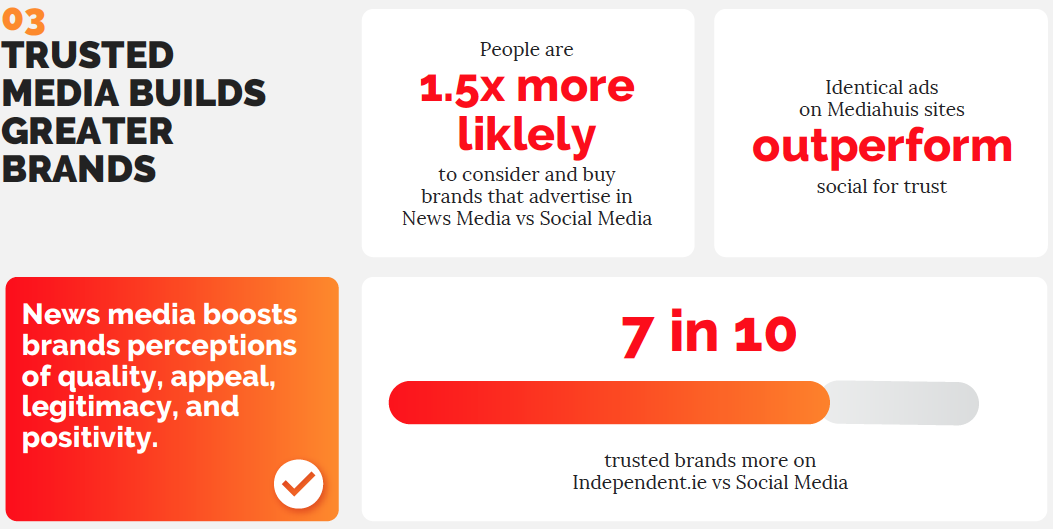
Finally, we should recognize the enduring importance of strong, trusted media brands. In moments of crisis or confusion, people still turn to established news organizations to verify what is real. These brands serve as anchor points in a fragmented information landscape. They provide a hierarchy of validation that social platforms and algorithms cannot replicate.
Journalism is, at its core, a profoundly human craft. It requires empathy, critical thinking, and the courage to ask difficult questions. Technology can assist us, but it cannot replace the ethical responsibility that defines our profession.
The decline in trust is a serious challenge. It affects democracy, our relationship with readers, and our attractiveness to advertisers. But it is also an opportunity. By investing in transparency, accountability, community engagement, and strong ethical standards, we can rebuild the contract between the press and the public.
For me, that is the central task of journalism today. Without trust, we have no sustainable future. With trust, we can secure both our democratic mission and our economic independence.
Peter Vandermeersch is “Mediahuis Fellow Journalism and Society”. He writes about media in his Substack newsletter “Press and Democracy”