












 Aaron Poole, Marketing Insights Manager, PML Group, with this week’s Out \ Look on Out of Home
A reminder becomes more useful when it has something to attach to. A product on a shelf. A shopfront on the way home. A match day route. A lunch decision. A cinema poster outside a mall. A cold drink considered on a warm evening.
These are the small, ordinary moments where advertising memory can move from passive recognition into something more active.

That is the focus of the second wave of PML Group’s Reminder Effect research. Last week, we looked at how repeated campaign encounters help brands stay in mind. This week, the question moves closer to the point of behaviour: when does advertising come back to mind, and what makes that memory more useful?
The answer is context.
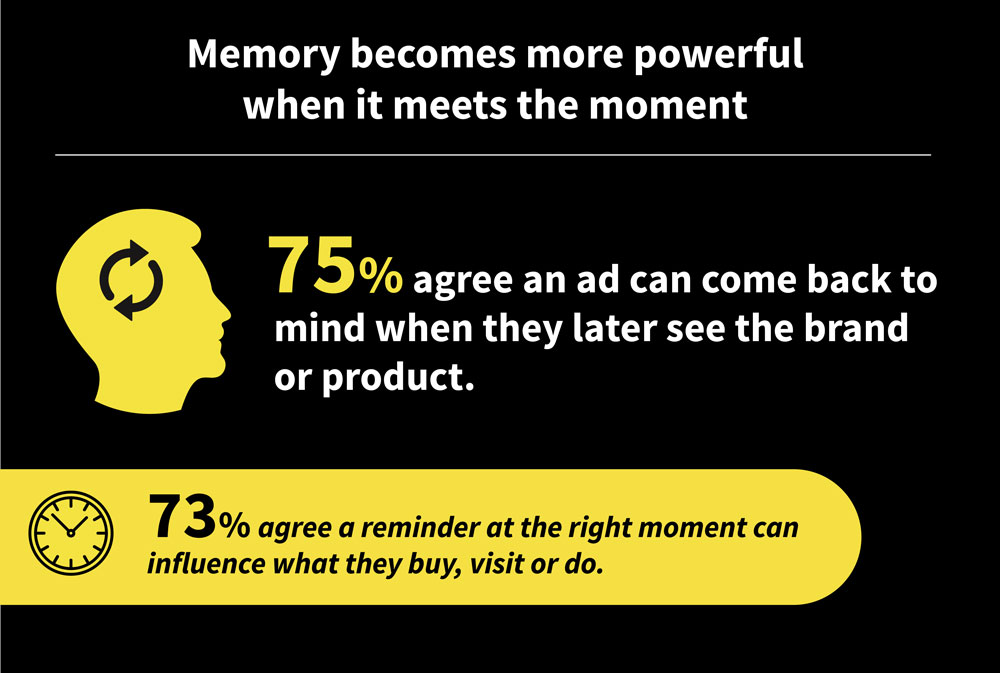
Among Dublin respondents aged 16-54, 75% agreed that an ad can come back to mind when they later see the brand or product. Seven in ten agreed that an ad can come back to mind when they are near somewhere they can buy or use it, while 68% said they are more likely to notice an ad when it relates to what they are doing at the time.
Most significantly, 73% agreed that a reminder at the right moment can influence what they buy, visit or do.
That finding moves the Reminder Effect from a memory idea into a planning idea. It suggests that the value of a campaign is not only in being remembered later, but in being remembered when the brand has renewed relevance.
This is where Out of Home has a distinct advantage. OOH is encountered in motion, in public and close to the environments where decisions are forming. It can sit between awareness and action, between seeing a message somewhere else and being reminded of it again on the commute, near a store, outside a venue, in a retail environment or during a social occasion.
In other words, OOH does not simply add another exposure. At its best, it gives memory somewhere to land.
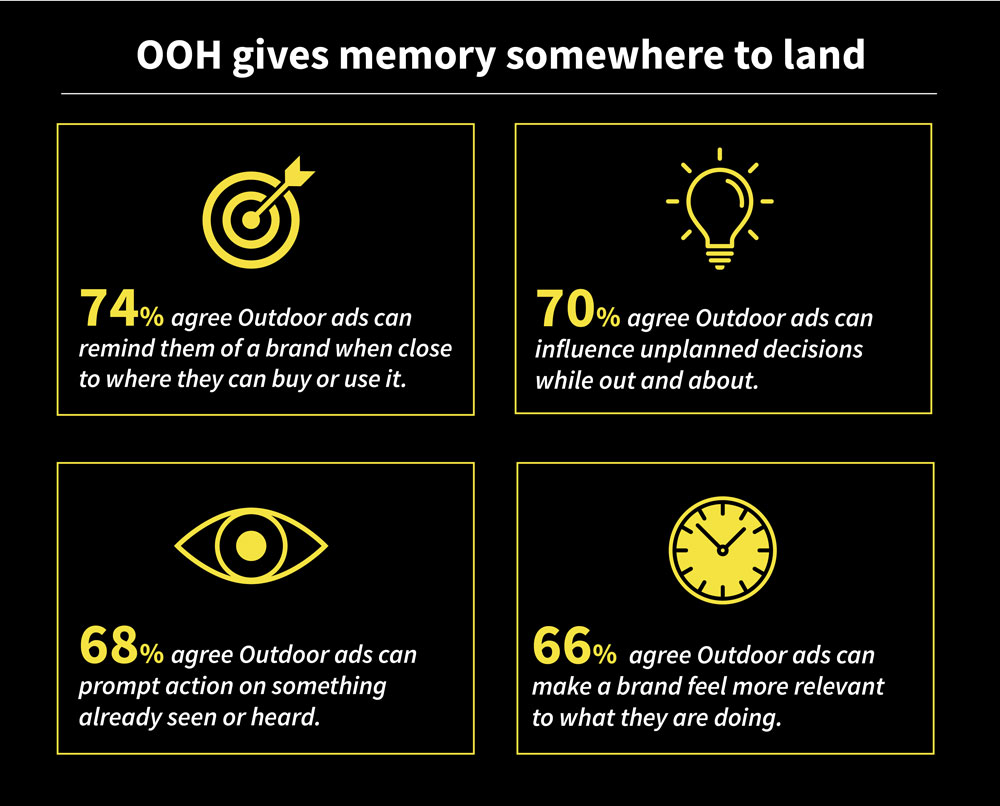
The OOH findings from this wave support that role clearly. Almost three quarters of respondents, at 74%, agreed that Outdoor ads can remind them of a brand when they are close to where they can buy or use it. Seven in ten agreed that Outdoor ads can influence unplanned decisions while they are out and about. A further 68% agreed that Outdoor ads can prompt them to act on something they had already seen or heard about, while 66% agreed that Outdoor ads can make a brand feel more relevant to what they are doing at the time.
These are not small distinctions. They point to the way advertising works in real life. People rarely move through the day as passive audiences waiting to receive a message in isolation. They are shopping, commuting, making plans, meeting people, travelling to events, choosing where to eat, thinking about what they need later and responding to the environments around them.
A brand impression created earlier in a campaign can sit in memory until something in the real world makes it useful again. Seeing the product, passing a store, entering a shopping environment, heading to a venue or simply being in the right mindset can all bring the message back into play.
That makes the planning opportunity more precise. The question is not only where an audience can be reached. It is where the message is most likely to return to mind with purpose.
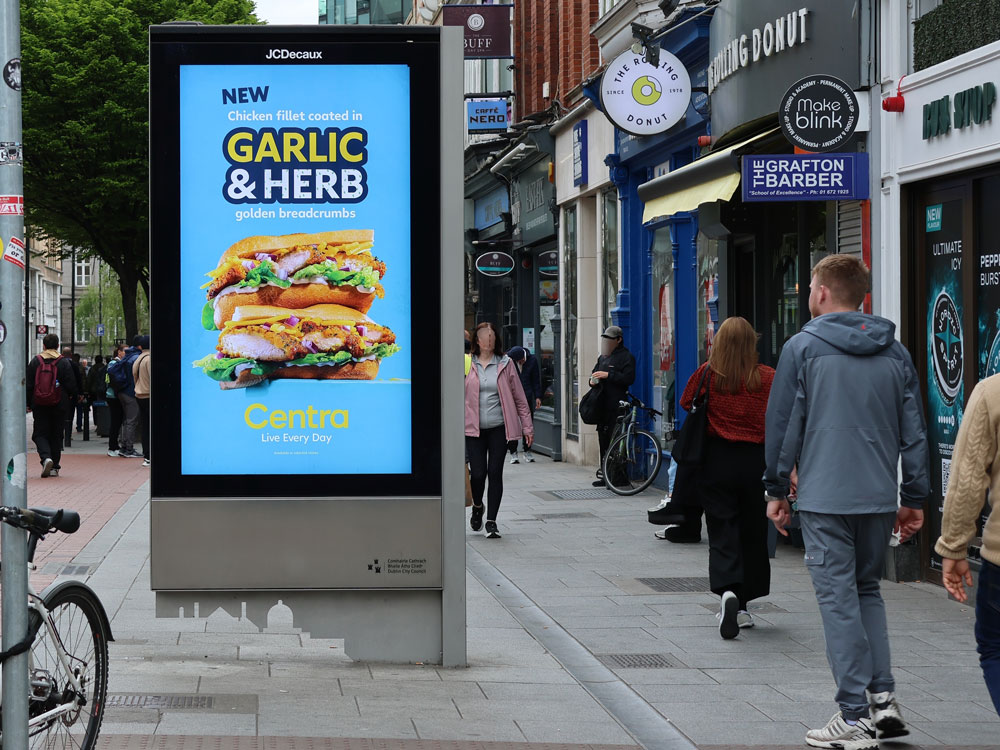
For grocery, that could mean presence close to retail and convenience decisions. For entertainment, it could mean visibility around cinema, leisure or event environments. For food and drink, it could mean reaching people when social plans, meal occasions or weather conditions are already shaping demand. For travel, it could mean appearing along routes where people are moving between intention and action.
The same principle applies across formats. Roadside OOH builds presence across everyday journeys. Transport formats carry brands through the movement of towns and cities. Retail and mall environments place messages closer to shopping and decision-making. Digital OOH can add timing, location, weather, events and other contextual triggers that make a message feel more immediate.
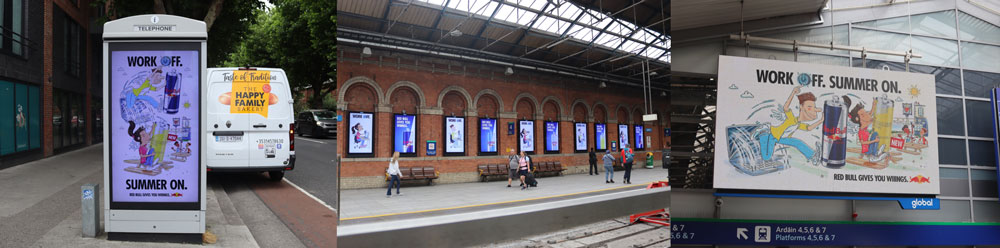
That is where PML Group’s wider planning ecosystem becomes especially relevant. Our audience understanding and mobility data help identify how audiences move, where they spend time and which environments matter most, while LIVEPOSTER enables digital creative to flex around live context, from time of day and weather to location, events and other triggers. Together, these capabilities help turn the Reminder Effect from an interesting finding into a practical planning approach.
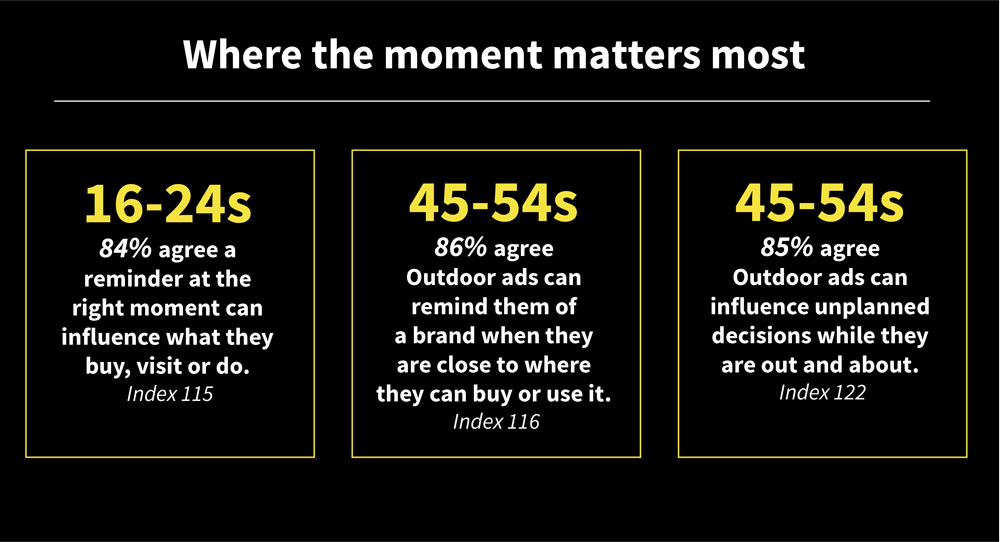
The demographic patterns add further texture. Younger adults were particularly responsive to timing, with 84% of 16-24s agreeing that a reminder at the right moment can influence what they buy, visit or do, indexing at 115 against the total sample. Both 16-24s and 25-34s also over-indexed on ads coming back to mind when they are near somewhere they can buy or use the brand.
Among older respondents, proximity appears especially powerful. Agreement that Outdoor ads can remind people of a brand when they are close to where they can buy or use it reached 86% among 45-54s, indexing at 116. The same group also over-indexed strongly on Outdoor’s ability to influence unplanned decisions while out and about, at 85%, indexing at 122.
This suggests that the Reminder Effect does not work in one uniform way for every audience. For some groups, the strongest trigger may be timing. For others, it may be proximity, familiarity, relevance or the visibility of a brand in the right environment. The planning opportunity is to understand which trigger matters most, then use OOH’s mix of scale, location, format and context to make that reminder more effective.
This is not a narrow point-of-purchase argument. OOH’s value is broader than that. It can build presence, reinforce messages from other media, create public familiarity and help brands remain mentally available. What this wave adds is the reminder that memory becomes more valuable when it is reactivated in context.
The Reminder Effect is not just about adding frequency. It is about building campaigns that can travel across media, places and moments, then return to mind when the consumer is closer to action.
Out of Home is well placed to deliver that role because it lives in the public spaces where people are already moving, choosing, shopping, socialising and planning. It can make a brand feel present before a decision is made, familiar when the product is seen again, and relevant when the moment arrives.
In the final phase of the series, we will move from moments into cues, exploring what makes a reminder easier to recognise, connect and act on when people encounter a campaign again.
Vodafone Marks 25 Years of Business Connections
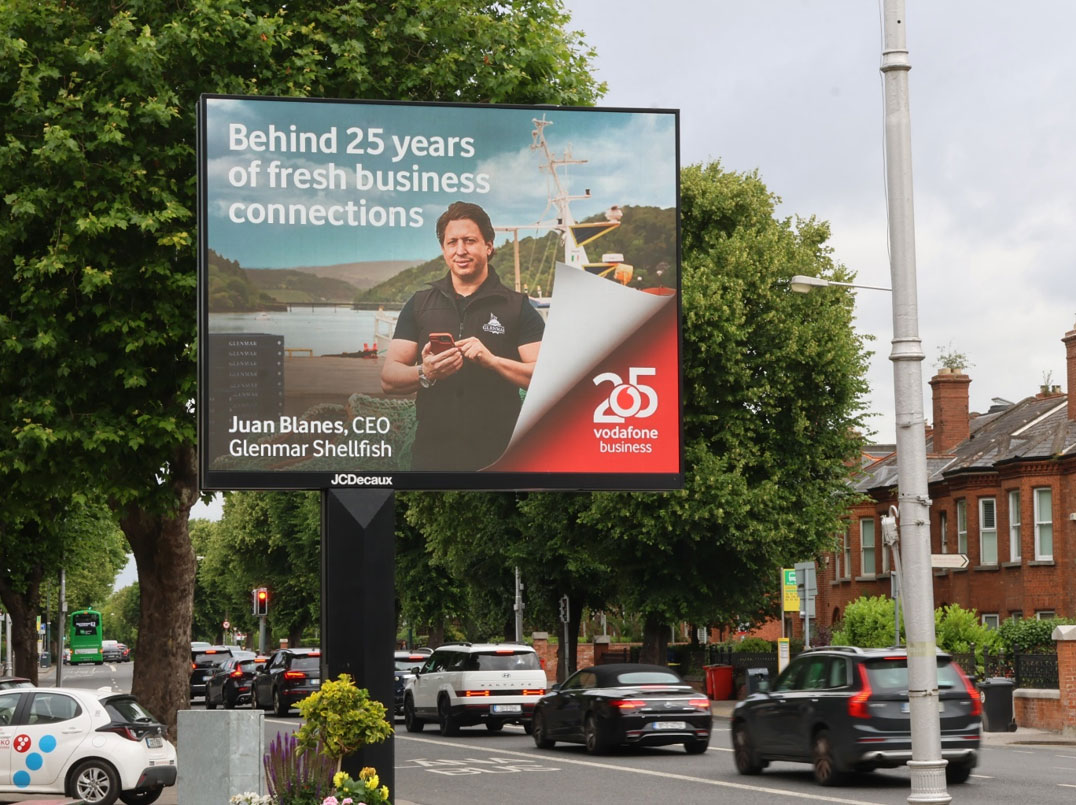
The strongest milestone campaigns do more than mark time. They use the anniversary as a lens through which a brand can show what it stands for, who it serves and why its experience matters.
As Vodafone Business reaches 25 years, the brand has used the moment to celebrate the relationships, customers and sectors that have helped give that milestone meaning.
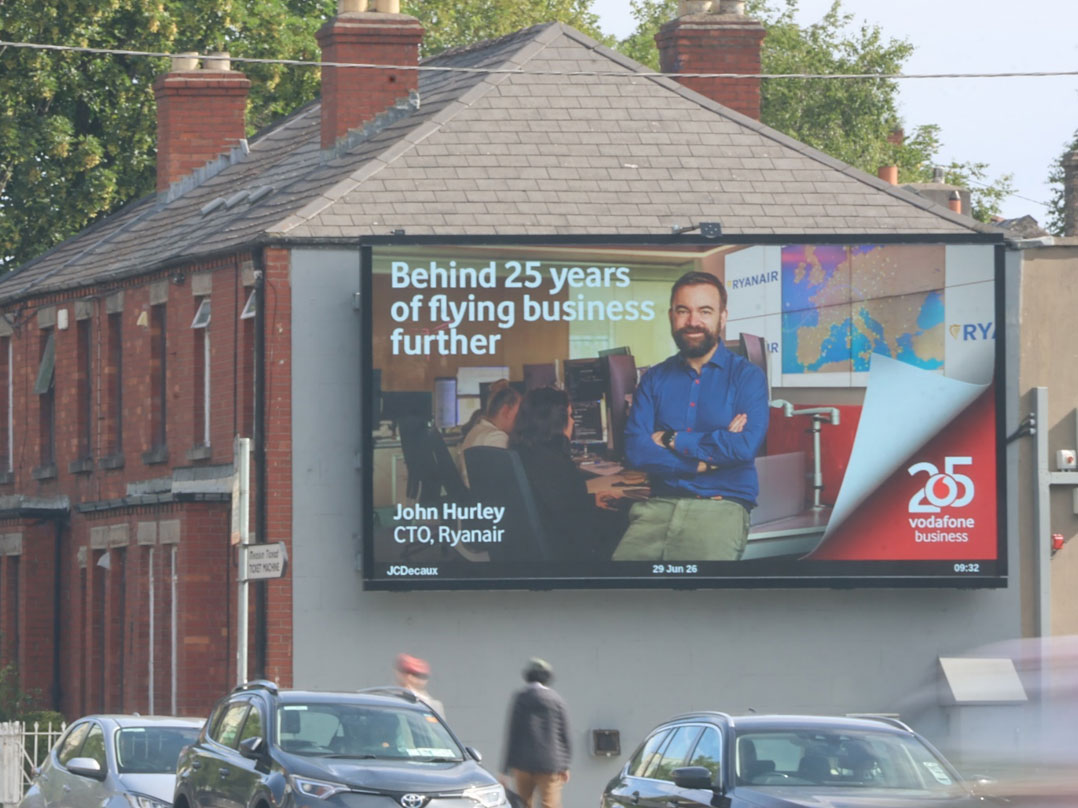
The campaign is running across a broad OOH format mix, including Green Screen, Golden Square, Digital Golden Square, Digital 48 Sheet, Digipole, Digital Portrait Panel, 6 Sheet, 48 Sheet and 96 Sheet formats. Large-format placements give the anniversary stature, while street-level, roadside and digital formats bring the customer stories into everyday movement.
For a B2B brand, audiences are not only found in narrow business environments. Decision-makers, employees, partners and prospects are also commuters, shoppers, parents, sports fans, restaurant-goers and city dwellers. OOH allows Vodafone Business to place its anniversary in the shared spaces where business reputation is built beyond the boardroom.
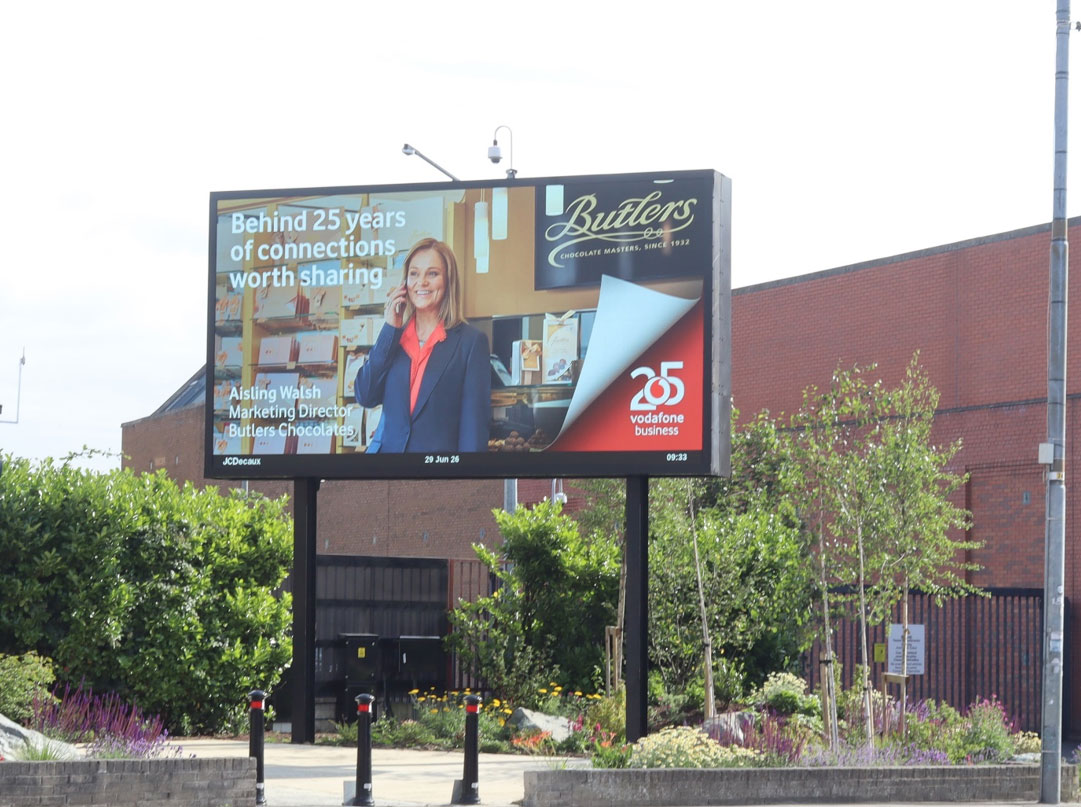
That is what gives the campaign its strength. The line “Behind 25 years…” creates a simple platform for a series of customer stories, each showing a different side of what business connection looks like in practice.
Across the creative, familiar Irish names help bring the milestone to life. Weir & Sons, Sisk, Ryanair, Butlers Chocolates, Glenmar Shellfish and others each give the campaign a distinct expression, from precious connections and fresh business connections to flying business further, building business connections and connections worth sharing.
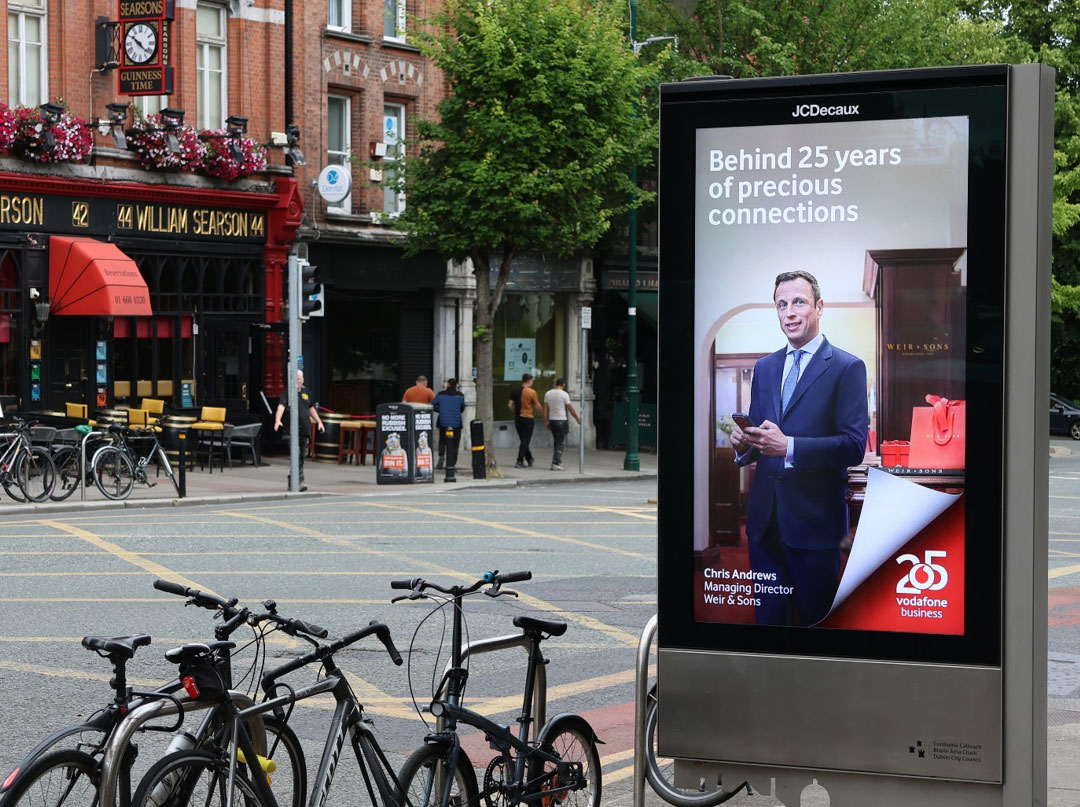
OOH is a natural environment for this kind of message. A 25-year anniversary becomes more powerful when it is made public, visible and present across the places where people move, work, shop and do business. It is not confined to an owned channel or corporate update. It becomes part of the city.
PML Group’s recent research around anniversary-centric creative reinforces that point. Among Dublin 16–54s, 71% agreed that a birthday or anniversary is a good reason for a brand to advertise, while 70% said advertising around a milestone makes a brand feel more established. A further 63% said it stands out more than a normal ad, and 56% said it makes them feel more positive towards the brand.
Those findings point to the value of making milestones visible. Anniversaries can give brands permission to speak, but the strongest examples also give audiences a reason to care. They help translate time in market into something more meaningful: experience, familiarity, resilience and relevance.