













 Aaron Poole, marketing executive, PML Group with this week’s Out \ Look on Out of Home
Some OOH campaigns meet the moment. A rare few end up becoming part of the story.
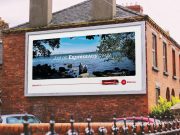
Carlsberg’s contextual panel on Phibsborough Road, planned by PHD, Source out of home with creative and ideation from The Tenth Man, landed firmly in the second category after Ireland’s remarkable 2–0 win against Portugal last night.
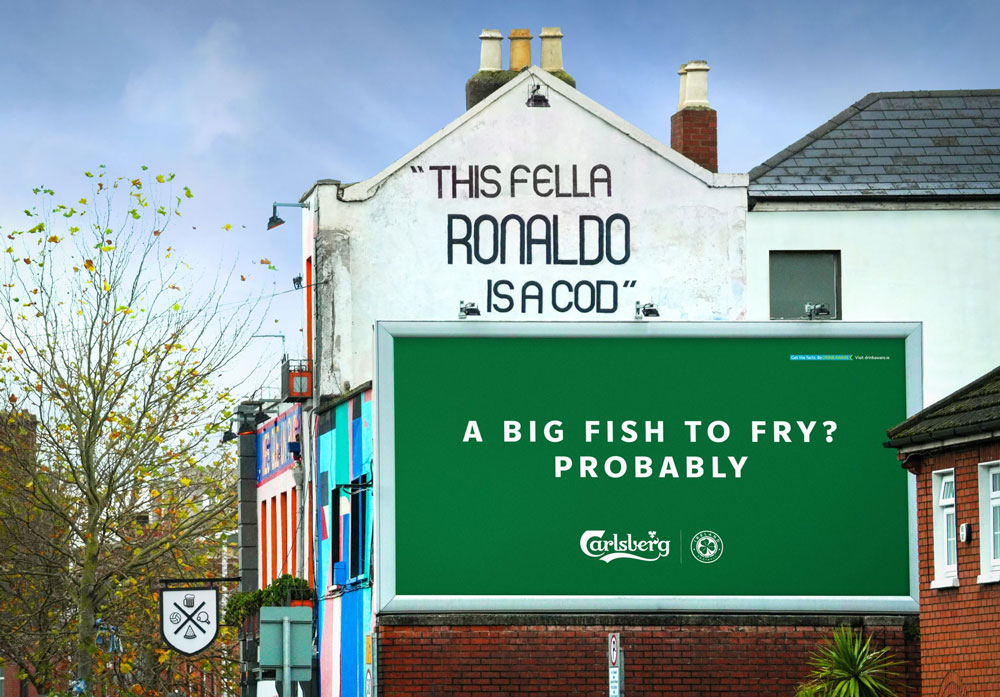 The panel was originally conceived as a light touch of pre-match humour, pairing its “A Big Fish to Fry? Probably” line with the well-known mural above it outside Dublin’s Back Page sports bar, quoting Eamon Dunphy’s famous remark: “This fella Ronaldo is a cod.” Ahead of kick-off it worked as a knowing nod to nerves, hope and the usual swirl of national expectation. By sunrise, it had taken on an entirely new life.
Ireland’s performance, punctuated by Troy Parrott’s two goals and a second-half sending-off for the visiting captain, reshaped the meaning of the creative in real time. What had been a clever set-up became unexpectedly prophetic. The word “Probably” took on a sharper edge, echoing the disbelief and delight that carried through the stadium and into the city.
As Carlsberg Omnichannel Marketing Leader David Jameson mentioned on LinkedIn last night, the strategic site delivered “earned media, press, social chat and the all-important WhatsApp groups”. It became a case study in cross-platform amplification led out by smartly planned and creative OOH, with the physical location acting as the spark for how the moment travelled.
This is where OOH shows its unique strength. The medium does not just mark the moment. It absorbs it. Panels positioned within the fabric of the city shift in meaning as events unfold around them. When the environment changes, the work changes with it, taking on cultural weight that no other medium quite replicates.
Our iQ and IMPACT research consistently highlights how contextual relevance boosts both recall and emotional impact, with sports occasions among the clearest examples. Shared anticipation turns into shared memory, and the streets become part of the story. By this morning the panel was more than a piece of creative. It had become a timestamp on a night Irish football will talk about for years.
Rockshore pours support behind the FAI Cup Final
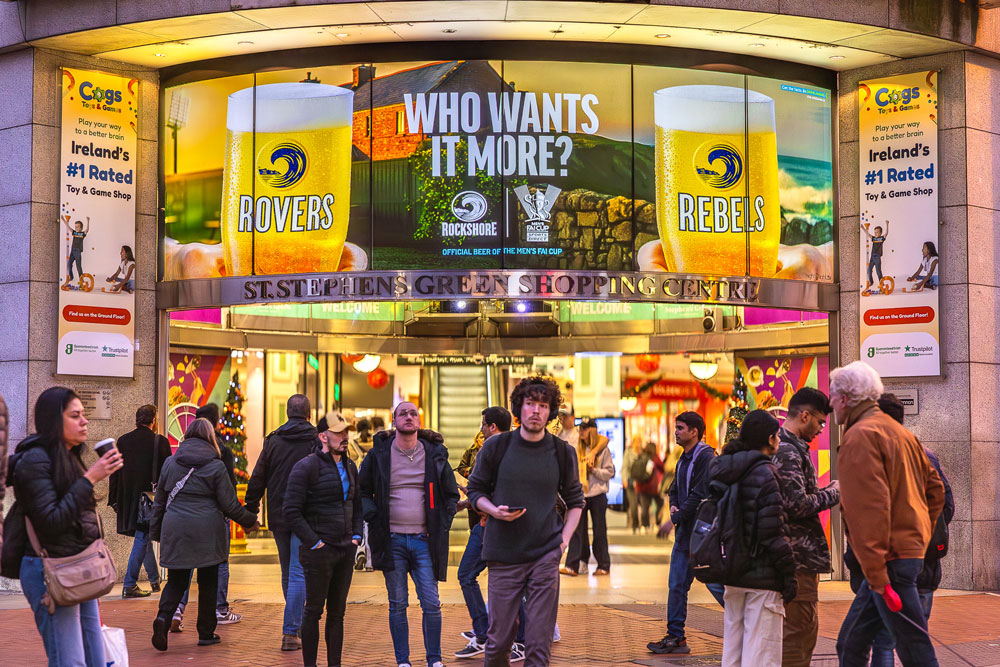
Diageo’s contextual content extended across the football landscape over the past week. As Shamrock Rovers completed the double with a 3–1 victory over Cork City in this year’s FAI Cup Final, Rockshore was once again front and centre of the action, both on screen and on the streets. The beer brand’s “Who Wants It More?” creative rallied fans ahead of the match, bringing colour and competitive spirit to life through a nationwide OOH push.
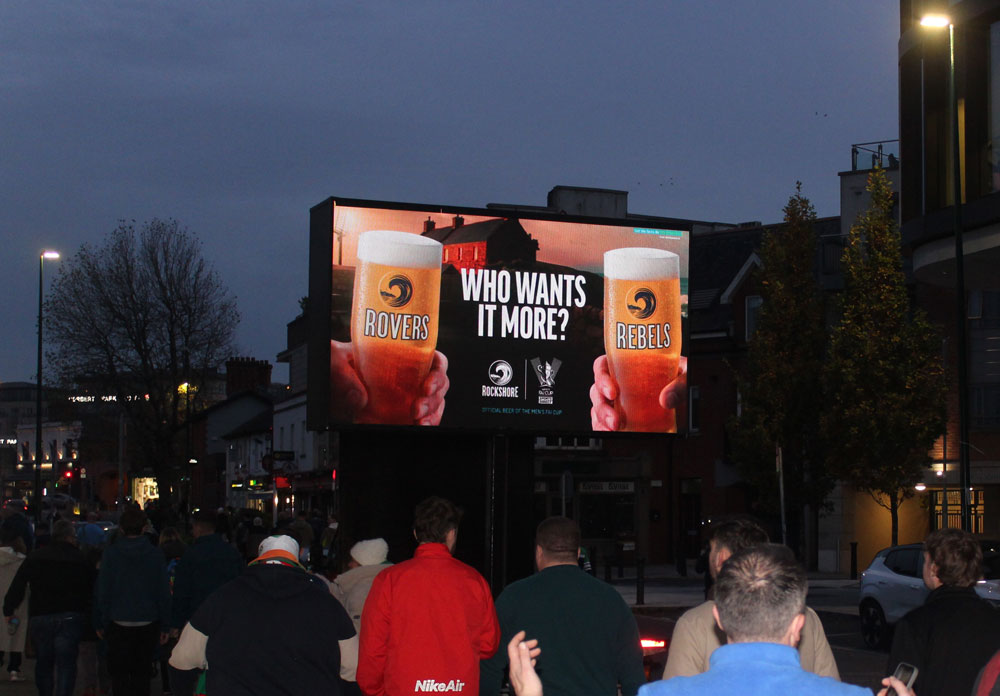
The campaign spanned Tesco Digiscreens, Digipanels, Orbscreens, Urban Screens, Adshel Live Roadside, Green Screens and Digipoles, while a dedicated Digivan outside the Aviva Stadium on match day amplified presence exactly where supporters gathered. Planned by PHD Media and Source out of home, the activation formed part of Rockshore’s ongoing support of Irish football and its continued use of event-led OOH to tap into moments of shared anticipation and celebration.
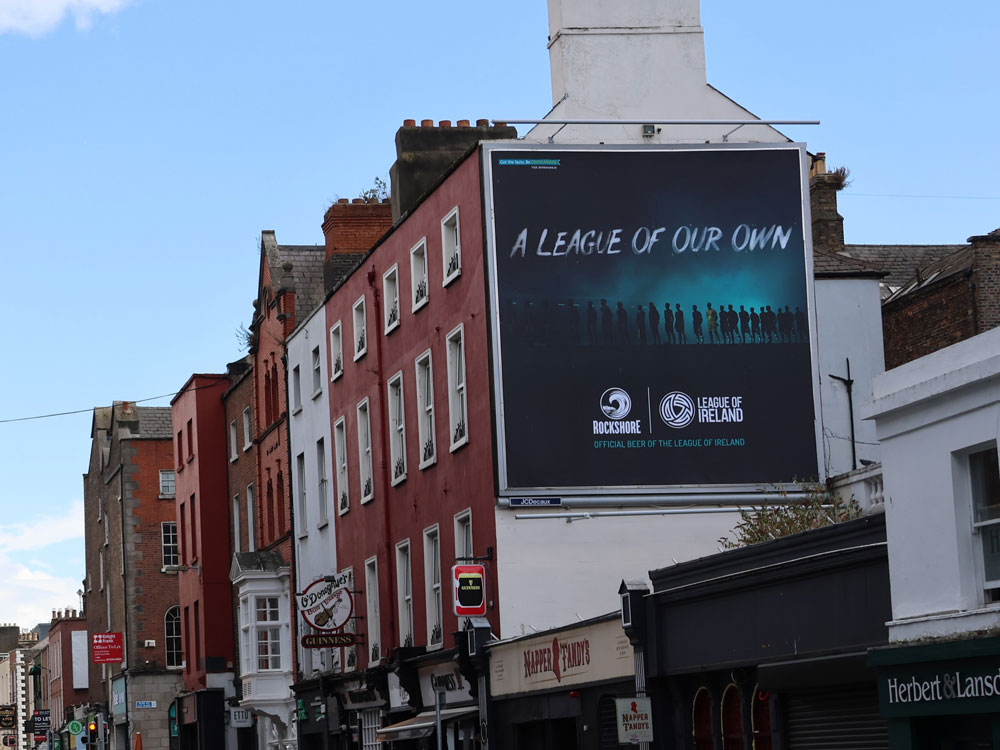
The activity builds on Rockshore’s four-year partnership with the League of Ireland, announced earlier this year, which spans both men’s and women’s football. Continuous OOH throughout the tournament helped generate awareness around fixtures and lifted the atmosphere of key moments across the competition.
Recent PML Group research reinforces the strength of this approach. Our Sports Sponsorship Sentiment study with Ipsos B&A found that audiences overwhelmingly see brands advertising around major sporting events as more relevant to the occasion. Attention to Portable Formats research highlighted how mobile OOH formats like Digivans deliver exceptionally high levels of noticeability and positive emotional response, especially when tied to live events. Together, they show how real-world presence and contextual timing combine to make OOH a powerful driver of engagement during sporting moments that unite fans nationwide.
Cadburys’ Heroic Start to Christmas Season
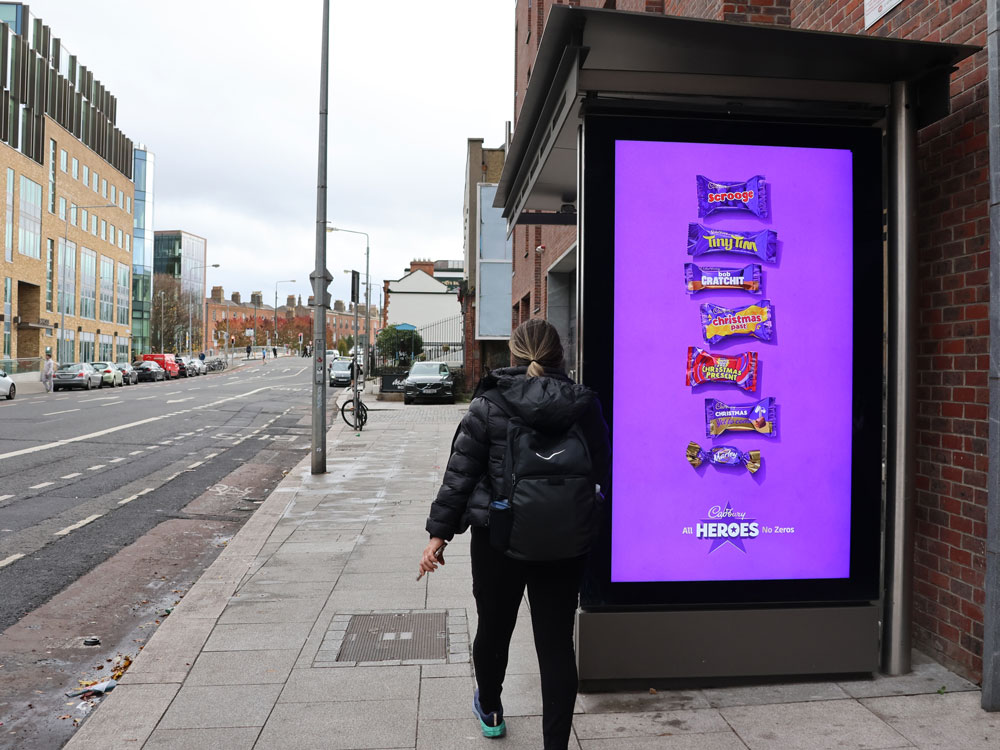
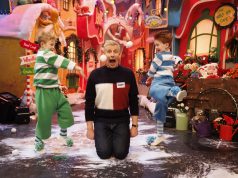
You can tell Christmas is coming when the streets start to turn purple. Cadbury’s Heroes seasonal chocolate selection has made a return to store shelves and OOH, bringing humour, nostalgia and a touch of Dickens to the early weeks of November. The campaign reimagines the miniature selection as the cast of A Christmas Carol, from Scrooge to Tiny Tim, in a creative that feels unmistakably Cadbury and unmistakably Christmas.
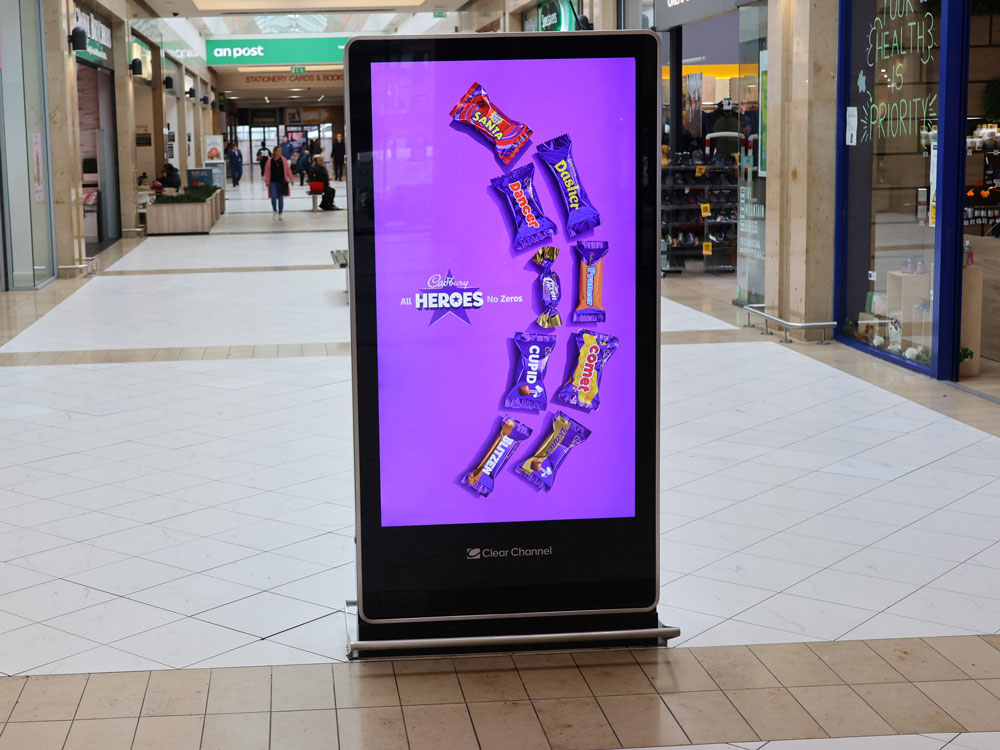
Planned by Spark Foundry and booked through PML Group, the campaign runs across digital roadside, retail and commuter environments including Adshel Live, iVision and Tesco Digiscreen. It appears in those everyday spaces where Christmas first begins to take shape, in the journeys, routines and shopfronts that quietly signal the season’s return. Outdoor captures that shift in real time, turning familiar surroundings into the backdrop for anticipation.
“We’re so excited to launch a new Cadbury Heroes campaign, just in time for Christmas,” notes Carla Reynolds, brand manager for seasonal chocolate at Mondelēz. “This campaign celebrates the iconic groups where everyone’s a hero – because just like a box of Heroes, there are no ‘zeros’ in this mix! Some things are brilliant alone, but truly iconic together.”
Outdoor works best when it feels part of the environment rather than competing with it, and at this time of year that sense of connection matters more than ever. Our IMPACT Attention research supports this, showing that 67% of consumers discover new or returning favourites through Outdoor advertising. In moments like these, OOH helps bring the familiar back into focus, reminding people of the small rituals that make the season feel like Christmas.
Christmas is coming
Kantar data shows that 81% of Irish adults bought a Christmas gift in the past year, spending a combined €751 million. More than a third spent €300 or more, with many beginning their planning as early as autumn. These early indicators highlight the influence of OOH at the start of the seasonal mindset, when awareness and intention start to build.
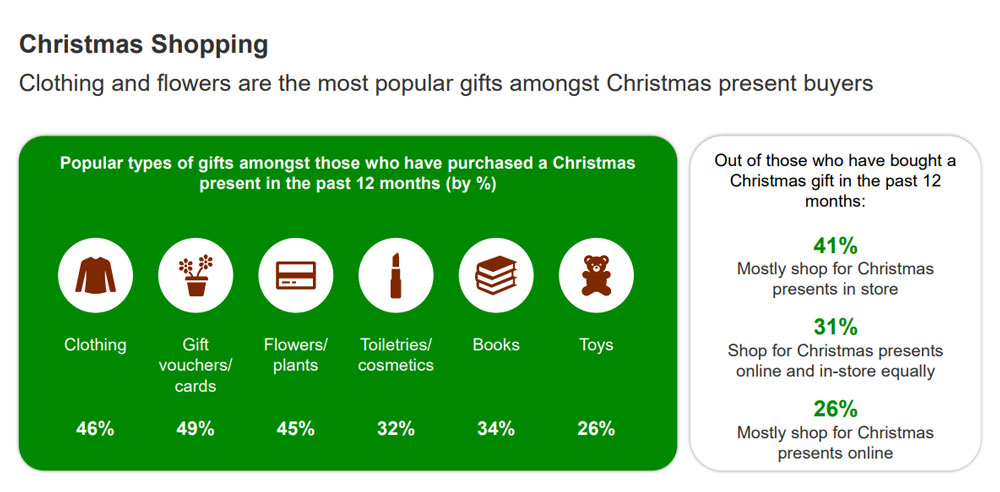
Among OOH consumers, 69% identify as Christmas shoppers and 70% spend over €150 on gifts during the season. Almost seven in ten shop mainly in-store, with 42% of higher spenders also buying their presents in physical retail. That alignment between movement, mindset and medium positions Outdoor as a natural driver of both discovery and purchase in the run-up to Christmas.
Moods on the Move: Leisure & Retail
Last week’s findings traced the emotional rhythm of the working day, from the quiet focus of the morning commute to the relaxed optimism that builds as evening approaches. This week, our Moods on the Move study with Ipsos B&A turns to what happens beyond the office, when people step into more social, recreational and retail environments. It is here that moods become lighter, attention widens and Out of Home once again meets audiences in moments of openness.
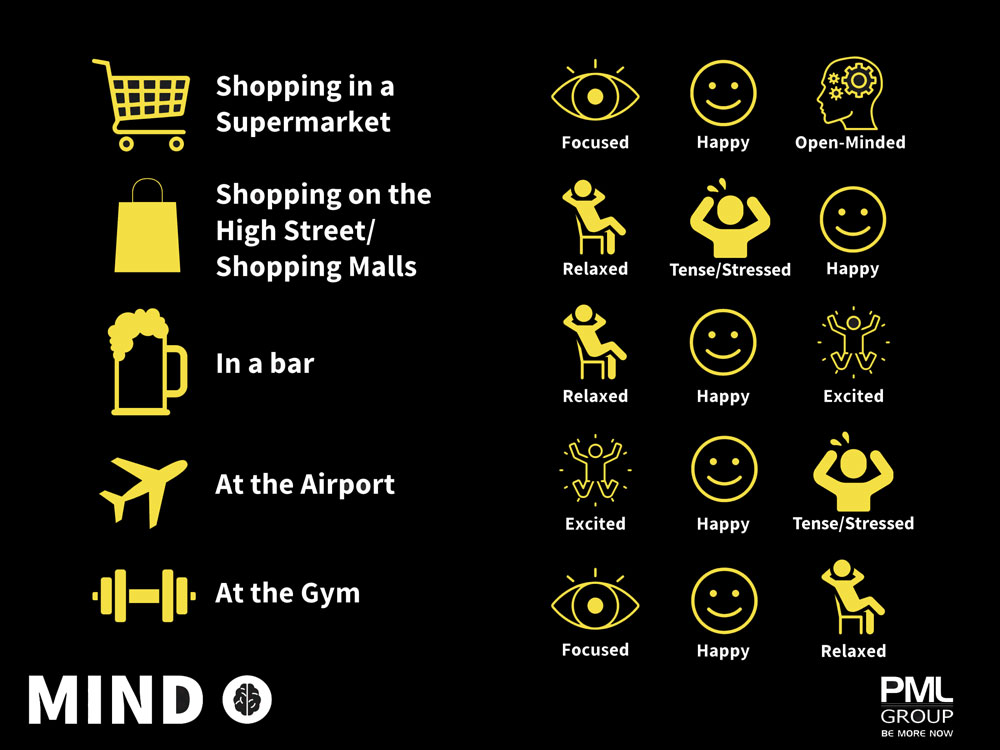
The research shows a clear swing from tiredness and focus to excitement and happiness once people step into shopping, social or travel settings. Shopping on the high street or in a mall sparks an emotional lift, with 27% associating the experience with excitement and similar shares describing happiness or relaxation. That blend of positivity and energy aligns perfectly with how OOH operates in retail spaces. The creative is not competing for attention but amplifying it, meeting people at a time when they are already curious and open to inspiration.
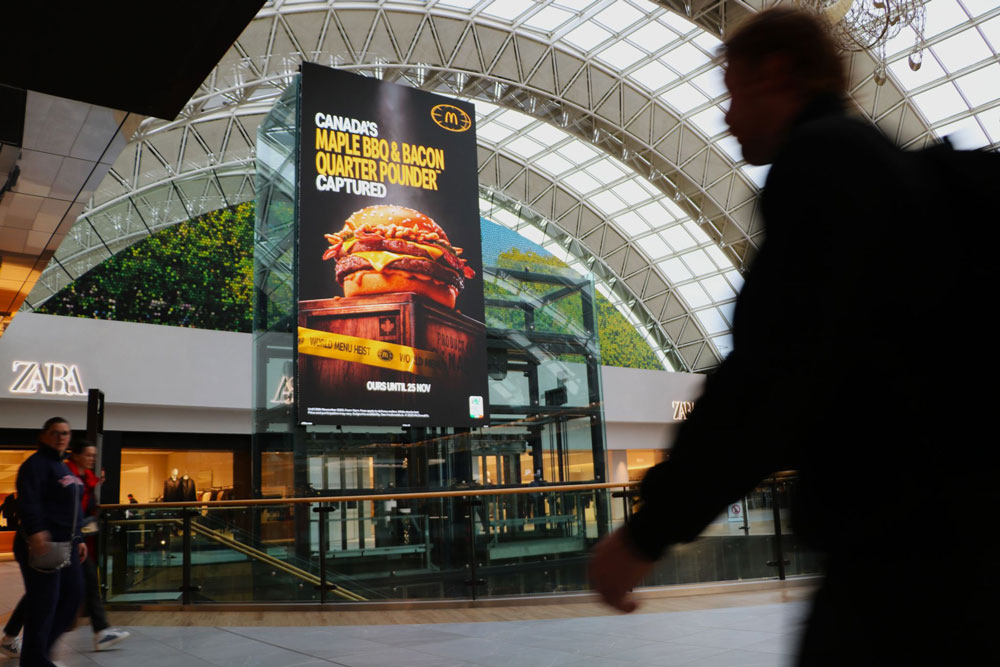
Shopping centres and supermarkets tell a more grounded story. Here, 21% feel open-minded, 18% happy and 15% relaxed. It reflects the headspace of people balancing routine with discovery, where OOH can guide impulse decisions and reinforce brand familiarity. It is a space where the message feels useful rather than intrusive, nudging the shopper without breaking their flow.
Social environments push those emotions even higher. In bars, 45% of people say they feel relaxed, a further 25% feel excited and 22% feel happy. It is a mood mix that rewards creative that connects rather than commands, the kind of light-touch storytelling that becomes part of the evening rather than a break from it.
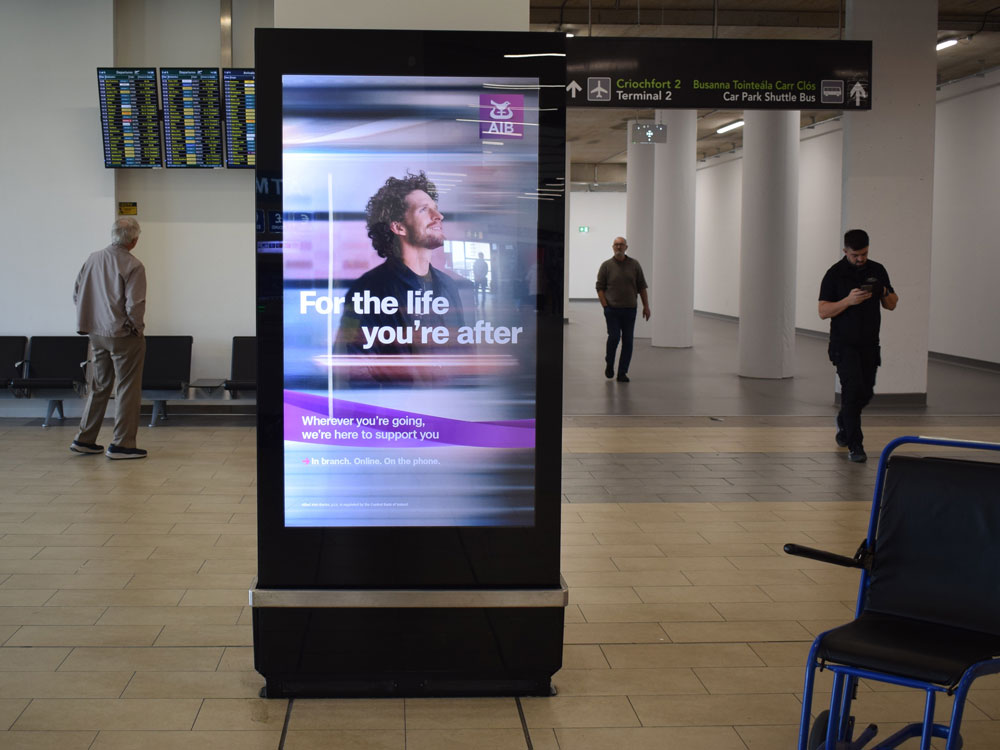
Airports top the excitement scale, with almost half of travellers describing that emotion, followed by open-minded and relaxed states. Few settings combine anticipation, time and dwell in quite the same way. Airport OOH has always traded on that balance of adventure and patience, where people are both waiting and ready for what comes next. Even at the gym, a location often associated with effort and routine, feelings of focus, energy and positivity emerge. For lifestyle and performance brands it is an environment of intent, not distraction.
Across all these spaces one constant cuts through: positivity. The further we move from obligation and closer to leisure or reward, the more open, excited and relaxed we become. That is where OOH naturally fits. It is seen, not sought out, yet it enhances rather than interrupts. What this tells us is that mood and medium are inseparable. The emotional climate of a setting can determine whether an ad is absorbed or ignored. When creative is matched to environment, OOH stops being background and becomes part of the experience.
Recent iQ findings reinforce this connection, with seven in ten consumers saying contextually relevant OOH makes an ad easier to remember and 68% saying it makes the message feel more relevant to them. In these moments of movement, purchase and play, the connection between mindset and message defines success. Brands that understand how people feel in the real world can meet them with relevance, optimism and attention.
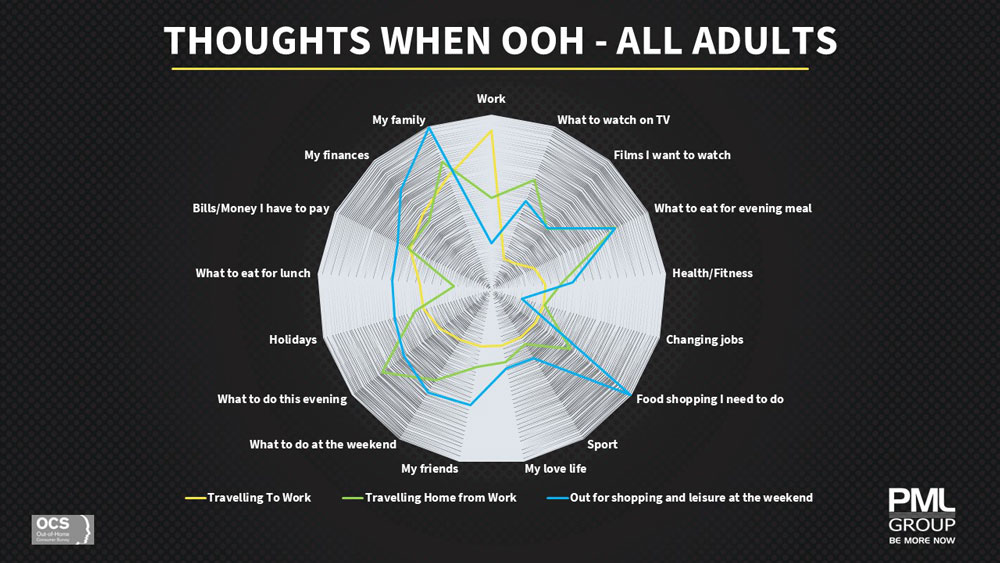
Our own OCS data strengthens this further. By tracking the thoughts people have while moving through different OOH environments, OCS shows that audiences are already thinking about everyday decisions, purchases and plans in these settings. It creates a clear alignment between what people are doing, what they are feeling and what they are considering in the moment. When real-world behaviour, emotional openness and contextual creative meet, OOH becomes part of how people navigate their day.