
















 While Google is still by far the dominant platform for search, marketers need to keep their eye on Chat GPT and understand how and why users are turning to AI before it’s too late, writes Brendan Almack.
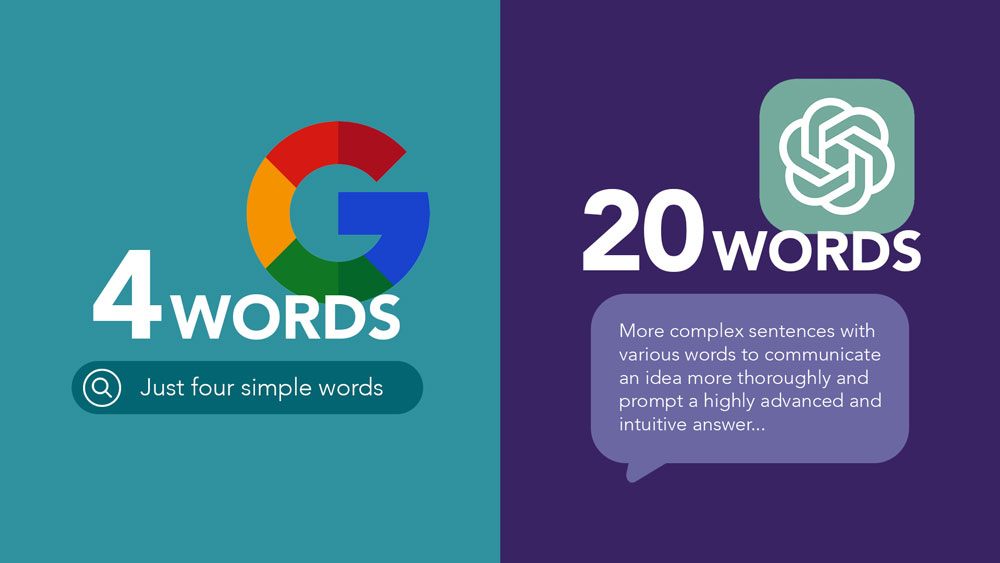
We analysed over 3.6 million Google searches recently via the search terms report in Google Ads. What we found is that the average number of words used per Google search was 4.06. Out of curiosity, we then looked at the Wolfgang Chat GPT account with its history of every prompt across the last year, and what we found was that the average number of words used in a prompt was 20 (5 x Google searches).
What’s happening here? Well, we’re witnessing a shift and an upending of search as we know it. The big difference is now ‘context’. Anyone using Chat GPT will understand the importance of feeding the machine rich context that allows you to get a better outcome. While Google search retrieves relevant information for short queries, ChatGPT requires rich context to solve problems conversationally. It’s by no means a perfect like-for-like comparison, but it does give us a window into how user search behaviour might be evolving.
Google search is phenomenal. 20 years ago, those of us old enough will remember using the Yellow (Golden) Pages. Then Google came along, and we haven’t looked back. Without us realising, Google has conditioned us over the years on how to use search most effectively. We use shortcuts, like adding our location to a product search or appending free shipping to search terms. Savvy Googlers will jam in a ‘voucher code’ after a brand name they’re searching for.
These are techniques we have almost subconsciously acquired to help us deal with the sheer volume of search results (millions of results returned for 1 search).
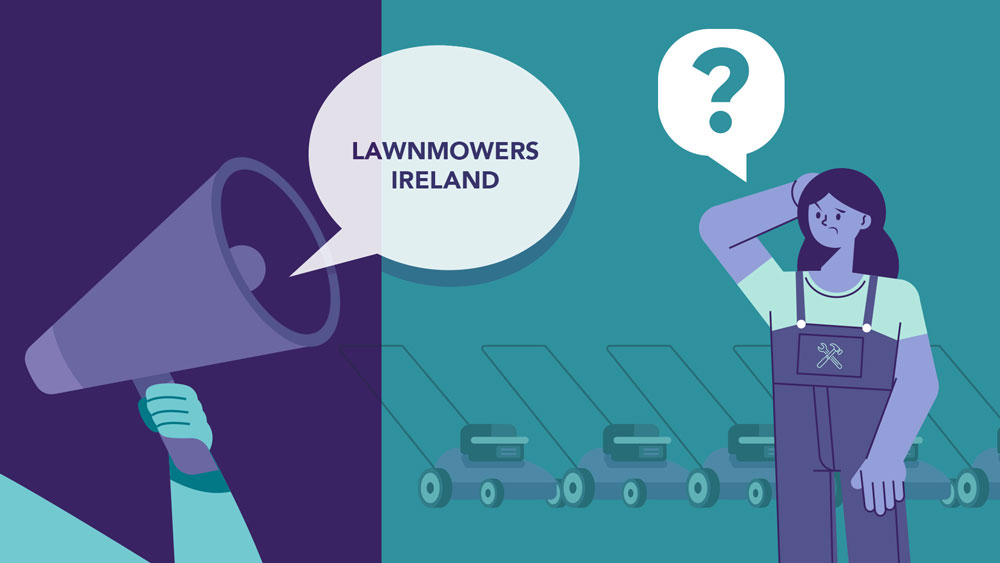
Now, bear with me here, but imagine walking into your favourite shop or department store. A smiling sales assistant walks over and asks, ‘Can I help you with anything?’. In this example, let’s say we’re in a DIY store in Ireland.
We look the sales assistant dead in the eye, and we shout ‘Lawnmowers Ireland’ straight into their face.
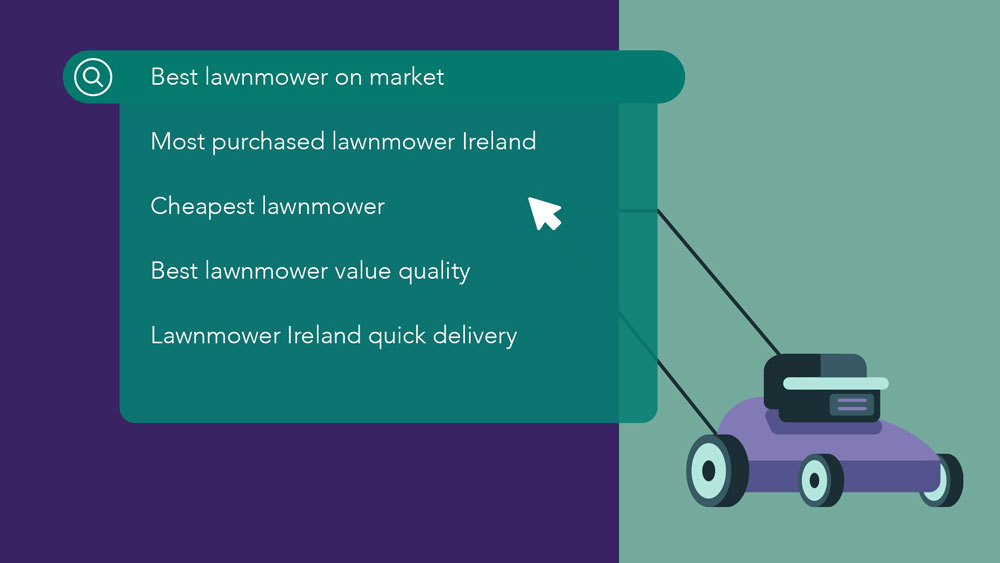
We might then have to follow up with an ‘Electric Lawnmower Free Delivery’. As the sales assistant points nervously at various lawnmower options, we might finally say ‘Rechargeable Flymo mower’. Now we’re getting somewhere.
The example illustrates the inefficiency built into search and the way we have been conditioned by Google to use shorthand search queries. We don’t expect to find what we’re looking for after 1 single search. We know it will take a number of searches, and each result that Google provides becomes a clue to what our next search should be as we narrow in on what we’re looking for. In fact, Google’s entire economic model is the beneficiary of this inefficiency. More searches equal more ad clicks, which equals more revenue for Google.
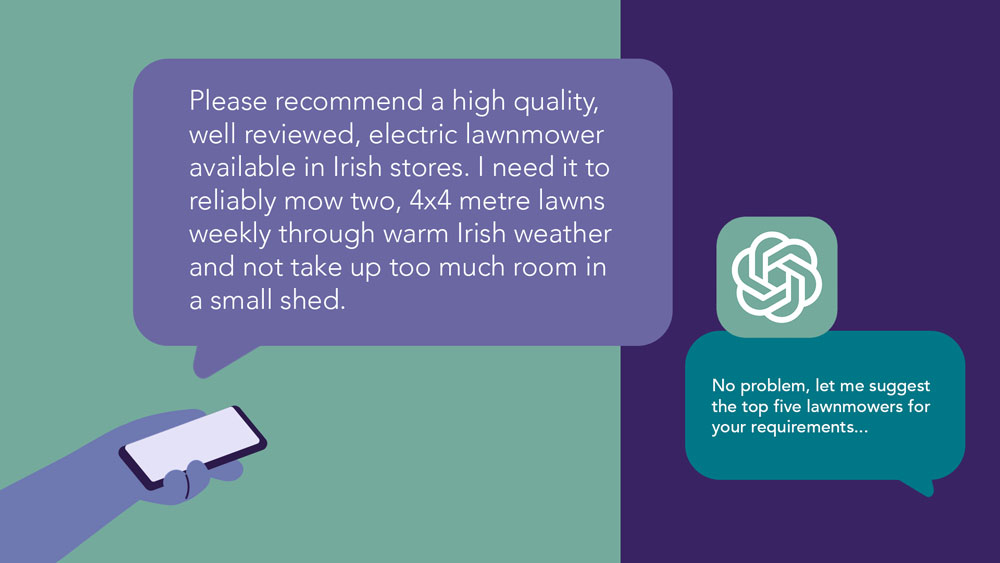
Chat GPT is the opposite. We provide a rich amount of context at the outset, and this context allows us to set the LLM up for success straight away. Kind of like how we’d actually respond to a sales assistant asking, ‘Can I help you with anything?’.
If you are typing ‘Lawnmowers Ireland’ into Chat GPT, you are doing it wrong! If you are telling it the size of your garden, how often it would get used, where you are able to store it, etc., you’ll get to a better outcome much quicker.
Today, we look back at the Yellow Pages and laugh at how primitive it seemed. How long before we’re giving search, as we currently know it, the same side eye? I’m not suggesting that Google won’t continue to be the dominant search engine. That would be a crazy bet. I do think how we search is evolving, and I’m curious to see how Google, already integrating generative AI into its search results, will deal with the Innovator’s Dilemma it now faces. How will they balance a generative search experience with their traditional ad-driven business?
As marketers, we need to:
- Add a new layer of focus beyond four keywords to much larger, context-rich, prompt strings.
- Understand how people are prompting relative to our brands.
- Quantify how visible our brand is on ChatGPT.
At Wolfgang, we’re working on this right now, so stay tuned.
Brendan Almack is the Managing Director of Wolfgang Digital.