















 The last two network revolutions empowered people to have a voice, communicate with each other, create their own networks and ultimately challenge the existing hegemony. The next revolution, brought about by AI, will free cognition and creativity, while collapsing the barriers to expertise. Ultimately, it will also turn consumers into creators and brands need to pay attention to this, writes Viv Chambers.
In his monumental book “The Square and the Tower,” historian Niall Ferguson shows how history swings between these two forces: hierarchies seeking order and networks spreading ideas.
Power used to belong to hierarchies. Kings and empires ruled. Corporations commanded. Broadcasters spoke from a height (The Tower).
In a less networked and pre-modern age, it took the bubonic plague four years to traverse the spice routes from the East to Europe. The spread of Covid, as we all know too well, took weeks.
Modern and Postmodern networks have changed all of that. They emerge from below. They spread faster. They work around the centre and sometimes bypass it entirely (The Square).
Ferguson argues that the world has already lived through two great network revolutions – the printing press and the telecommunications age. Both sparked revolutionary periods of change and disruption.
The First Two Network Revolutions
The printing press broke the monopoly on information. Ideas could move sideways for the first time and authority was no longer the only voice in town. Literally new minds on paper entered the public square to challenge the centralized authority narrative of ‘the tower’ (or the establishment).
The second revolution, the telecommunications age, collapsed distance and accelerated network power. Radio, telegraph, TV, and eventually the internet created mass audiences overnight. It weakened traditional gatekeepers and strengthened communities that had never been heard before.
Both revolutions made networks stronger than hierarchies. Both changed how culture moved. Today, something new is unfolding.
The AI Network Revolution
AI is not just another tool in the telecommunications lineage. It is a different kind of revolution. If the printing press freed information, and the internet freed communication, then: AI frees cognition and creativity.
It gives individuals and small groups the creative and analytical power once held by institutions. It collapses the barriers to expertise, and it turns consumers into creators.
This matters for brands because it changes where power lives. It shifts influence to the edges. It makes culture faster, deeper, and more participatory. And it means brand meaning will increasingly be created by the network – not delivered to it.
But there is another shift happening beneath the surface – one that makes the network era even more consequential for brands.
A Society of Choruses
A major study published by ESOMAR last year, Unveiling the Chorus of Modern Society,’ found that societies have fractured into distinct micro-communities of belief, each with its own values, language, and cultural emotional triggers. There is no longer a single mainstream audience. Instead, there are choruses – tight, self-reinforcing groups who hear the same message in wildly different ways.
This fragmentation matters, because in an AI-powered world these micro-communities are not just passive clusters. They are also production engines. AI gives each group the ability to create, remix, mobilize, and spread meaning at scale. Culture no longer flows from the Tower down – it flows laterally, from one niche to another, carried by creators, subcultures, and aligned belief networks.
The implication for brands is profound: network brands will be disrupted – or supercharged – by the micro-communities that surround them. If a brand empowers these creator-choruses, it gains momentum. If it ignores them, the network simply routes around it.
Here are examples of three already advanced ‘network brands and what AI may mean for the micro-communities that drive them:
LEGO: Fandom as the Innovation Network
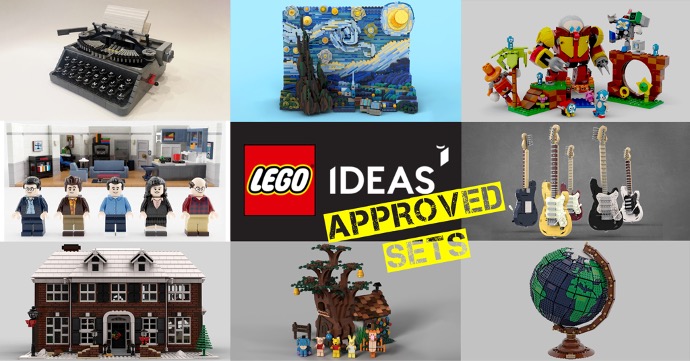 LEGO shows that even legacy brands can shift from hierarchy to network. When sales stalled, the company opened up. Through LEGO Ideas https://beta.ideas.lego.com fans could submit concepts and see them turned into real products. The brand’s community became its innovation engine.
When enthusiasts become co-creators, it turns brand building into a participatory system. A tall tower becomes a thriving network.
In the AI Network Age: AI gives every LEGO fan a virtual design studio and a global stage. Ideas can be prototyped, visualised and stress-tested in hours, then amplified by networks of makers and streamers. LEGO’s future power lies in orchestrating thousands of AI-augmented fan micro-studios, not in any single corporate roadmap.
This is next-level creator economy.
Corteiz: Streetwear Culture at Network Speed
 Corteiz operates in a different space – a streetwear label that is raw, fast, and underground. Even Vogue magazine has asked “Why Is Everyone Talking About Corteiz?”
Born in London, Corteiz spread through WhatsApp groups, insider drops, and coded messages. No billboards. No big-spend media.
Founder Clint – full name Clint Ogbenna (aka Clint 419) – built a brand that behaves like a movement. It rewards loyalty through scarcity drops. It values community and status as committed membership. It creates heat from the inside out. Corteiz did not chase scale. It built allegiance, one connector at a time.
In the AI Network Age: Corteiz’s coded drops and insider logic become even more potent when fans can spin up endless riffs, edits, and narratives with AI. The brand does not just move at network speed; it lets the community continuously rewrite the mythos. AI turns every loyal follower into a potential culture producer inside the Corteiz universe.
Athletic Brewing: A Movement, not a Marketing Plan

Athletic Brewing, the champion of moderation in beer land, is another sign of the future. In a recent episode of the On Strategy Showcase podcast, CMO Andrew Katz said, “We’re helping people live without compromise.”
But it is how they grew that reveals the new rules. Athletic embedded itself in active communities – running clubs, trail races, gyms, climbing groups, cycling scenes, and wellness networks.
Each cluster is a small community. Together they form a movement. The brand did not buy mass attention. It used micro-ambassadors inside real communities: coaches, club leaders, and local organisers – to spread the word. Athletic Brewing acted like a hub at the centre of a set of lifestyle networks and let the community carry the story.
In the AI Network Age: Each local running club, gym, trail crew or cycling Discord can now design its own content, challenges, and rituals with AI. All flying the Athletic flag – should the brand choose to cultivate the culture.
Instead of a single brand story pushed from HQ, you get thousands of AI-boosted local stories, all compounding into a bigger movement around “living without compromise.”
Why Network Thinking Wins in the AI Age
In The Square and the Tower Ferguson’s pattern is clear. Networks beat hierarchies because they: move faster, spread meaning organically, build trust peer-to-peer, adapt instantly, and generate momentum from the edges
And in the AI era, networks become even stronger. AI makes creation instant.
It makes participation easy. It makes cultural production accessible to anyone with a device.
So, the brand of the future will not dominate from above. It will thrive in the square – where people gather, create, and connect.
Three Network Habits for Modern Brands
Think like a Hub: Help your community talk to each other, not just to you.
Design for Flow: Create ideas people can adapt, remix, and carry. All AI powered.
Reward participation: Give status, access, or recognition to the people who build the network with you.
The Future Belongs to AI Network Brands
AI amplifies the power of networks because it shifts creativity to the edges. It moves meaning away from hierarchies and into communities.
The strongest brands will not be the ones with the tallest towers. They will be the ones that act like networks: fast, open, adaptive, and culturally alive.
Because today, the ‘square’ is where the power lives. And the brands that thrive will be the brands that step into it.
Viv Chambers is MD & Head of Strategy, Bricolage, the Dublin-based cultural strategy agency.