
















 With the debate about AI’s impact on the advertising and marketing worlds still ongoing, its impact on the market research industry will be hugely beneficial with the technology expanding the possibility but it will be people who continue to provide meaning, writes Richard Colwell.
The market research industry is entering one of the most exciting periods in its history. New tools incorporating AI and advanced analytics are expanding the boundaries of what is possible. These tools are enabling faster insight generation, smarter decision making, and delivering a much richer understanding than ever before.
But as the industry modernises, one truth remains stronger than any technological shift, real insight and true understanding still comes from real people.
The future of research will be defined not by replacing human input but by elevating it, with AI as an accelerator, not a substitute.
It is clear that AI intelligence is transforming how research is run, by automating time-consuming tasks, speeding up analysis, identifying patterns that might otherwise be missed, and helping teams test ideas quickly.
It’s becoming an incredible accelerator, allowing researchers to focus more of their time on creativity, interpretation, and strategic thinking.
Yet, even as AI grows more powerful, it cannot replicate the learnings we can gather from talking to real people. The human nuance, empathy, emotional context, cultural meaning, unexpected or contradictory behaviours all provide context and discovery far beyond stated behaviour and understanding.
AI can try to model and replicate audiences. It can even simulate expected behaviours with some success. But it cannot be an audience. It cannot replace authentic voices, lived realities, or the subtle cues that only emerge through genuine human interaction.
Likewise emerging forms of synthetic or machine-generated data can be useful for “good enough” decision making such as early-stage ideation, stress-testing hypotheses, or rapidly exploring scenarios. They offer a quick, low-risk way to experiment, but they will never replace the real human interaction, both by getting views of real people and by having the data interpreted by a person who knows the customer, knows the business and understands the importance of informing accurate strategic decisions.
Testing of synthetic data by members of the WIN Network, a network of leading independent market research companies across the world of which RED C is the member in Ireland, shows that using synthetic data in multi-country surveys can have significant limitations, even with large datasets from real people.
The WIN synthetic data investigation concluded that while synthetic data can complement traditional methods, it is not yet a reliable substitute. Hybrid datasets, those combining real and synthetic responses, offer a middle ground, but even these require careful planning and robust validation.
This suggests again that synthetic data can have value as an accelerator or for early testing, but it’s not a panacea. Its use demands rigour, transparency, and a deep understanding of its limitations.
It needs real human data to be accurate and work, even as an accelerator. It requires accurate representative data in the first place, or it will simply provide answers based on biased input data. There is also a real risk of exclusion and missing insight, as synthetic tends to default to the average, and loses the nuance of marginal voices or opinions.
Synthetic data reflects models, not messy human truth. It smooths over edges, averages out differences, and chases patterns rather than meaning. It certainly isn’t a replacement for brands to keep themselves truly connected to real people, to understand how they think, act and behave. Synthetic data therefore is not a reliable base from which strategic decisions can be made.
The companies that will win in the future are those who continue to listen to consumers, citizens, customers, users not those who rely solely on machine-made simulations of them.
So, what does this mean for research agencies and the people who work in them? The most successful future researchers will be those who blend AI’s speed and scale with the depth, empathy, and judgement that only people can provide.
Far from diminishing the role of researchers, new tools are amplifying it. As automation handles the heavy lifting, researchers are stepping into more strategic, advisory, and creative roles.
In the future, researchers need to develop further into trusted consultants and key decision partners.
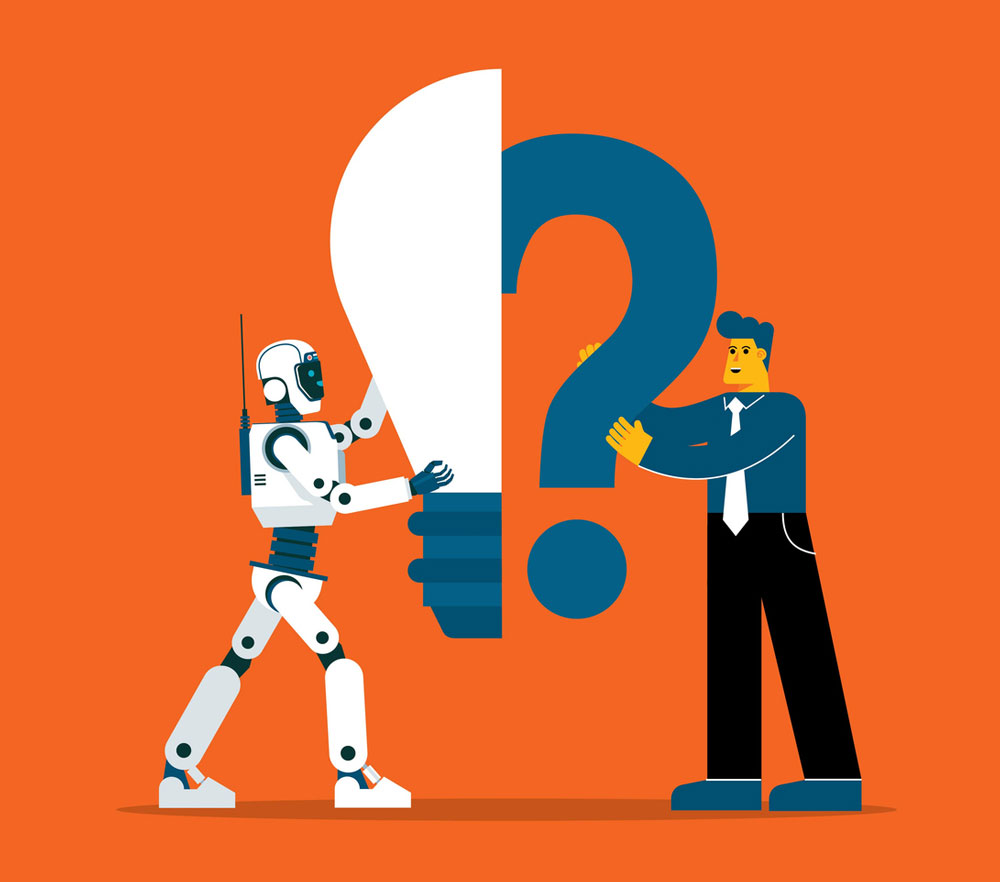
The future of market research is not a battle between machines and humans. It is a partnership, where technology expands possibility, and people provide meaning.
Businesses that stay connected to real human experience will innovate better, act faster, and build stronger relationships with their audiences. They will avoid the trap of relying solely on clean, convenient, machine-generated data, and instead invest in understanding the beautifully messy reality of the humans they serve.
The industry is poised for growth, reinvention, and renewed relevance. With the right balance of technology and humanity, the next decade of market research will not only be more efficient, but it will also be more strategic, more creative, and more deeply connected to the real people who shape the world.
Richard Colwell is Group CEO of RED C Research