















 Inhabit Ireland’s advertising professionals live in a markedly different media reality- perhaps even in a parallel universe- when compared to the general public, according to new research from TAM Ireland that compares lifestyle patterns, device ownership and viewing behaviour between “Adland” and the wider Irish population.
The Adland v Ireland Survey 2025, conducted by TAM Ireland, set out to measure the extent to which industry professionals’ own habits diverge from those of everyday consumers and to find out whether those differences risk skewing planning decisions.
The findings reveal a consistent pattern: Adland is younger, more urban, more digitally native and far heavier in its use of social platforms than the general population.
A Younger, More Concentrated and Less Diverse Cohort
The TAM Ireland research shows that nearly half (44%) of respondents in Adland work in media planning or buying roles, placing them at the front line of campaign decision-making.
Demographically, the contrasts with Ireland at large are stark. Adland skews significantly younger, lives predominantly in Dublin and is notably less diverse than the national population, according to comparisons with the 2022 Census. These demographic differences raise foundational questions about whether industry practitioners’ own consumption patterns colour their assumptions about audiences.
Adland Owns More Devices — and More of Everything
The research shows media professionals are far more heavily equipped with technology than the average Irish household. Adland homes are more likely to have multiple TVs, game consoles, smartphones and tablets, and are also more inclined to invest in smart TVs specifically. In every major device category, industry households outpace national averages, reflecting a tech-heavy lifestyle that diverges from how the public equips itself for media consumption.
A Social Media Bubble
Adland’s relationship with digital platforms is another point of dramatic separation. Industry respondents report extremely high usage of social media across platforms like Facebook, Instagram and TikTok.
By contrast, general population data shows more modest levels of engagement. One surprising overlap: neither group expresses much interest in online dating platform-a rare point of alignment in an otherwise divergent landscape.
Video Viewing: Perception vs. Reality
A core focus of the study is to find out how Adland perceives national video habits compared with actual measurement. Not surprisingly, the gap is significant.
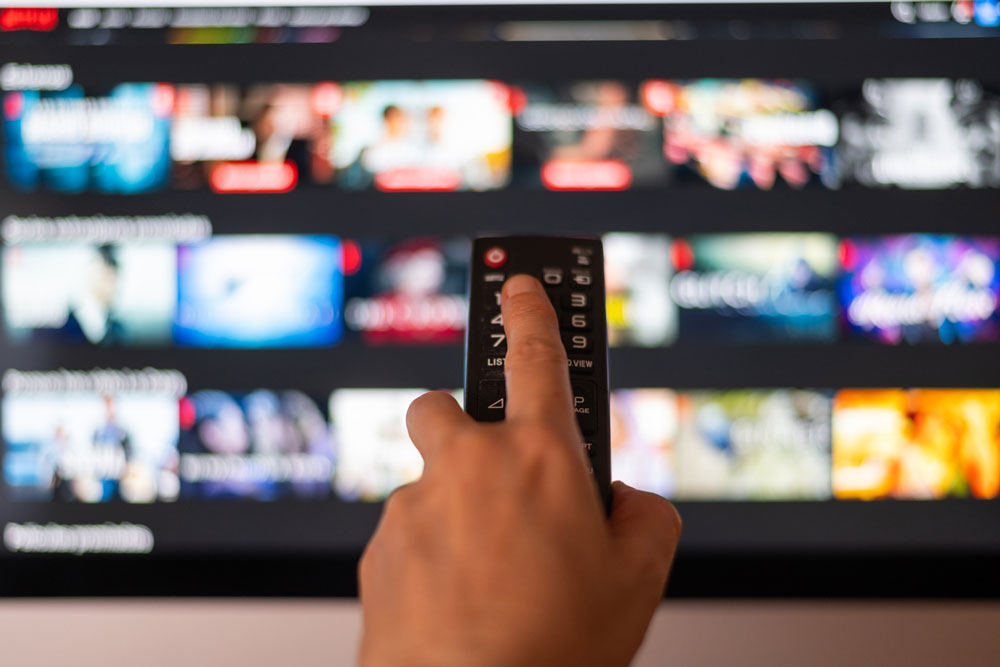
Adland reports that 69% of its own video viewing occurs on a TV screen, but it underestimates how much the general public watches on traditional television. According to Nielsen data, 79% of all video viewing among Adults 15+ still takes place on a TV set—far higher than Adland assumes.
The discrepancy widens when looking at time spent, according to the research. Adland believes Irish adults watch roughly 128 minutes of TV daily but in reality, the national figure is 150 minutes.
Meanwhile, Adland says it watches less than two hours per day—well below what the public behaviour.
The study notes that industry professionals watch a greater share of content via catch-up services rather than live broadcasts, but assumes the public behaves similarly. The data shows otherwise: live TV continues to dominate national viewing habits.
Overestimation of Digital Video
Across YouTube, SVOD and social video platforms, Adland consistently overestimates the time the average Irish person—especially younger viewers—spends watching digital content whether it’s YouTube, streaming services like Netflix, Meta platforms or TikTok, Adland’s estimates exceed measured reality, sometimes by wide margins.
The report warns that this overestimation risks misallocating budgets toward digital video channels at the expense of platforms that still command the bulk of public attention.
Attitudes Toward Technology and AI
The TAM Ireland survey also explores sentiment toward emerging technologies. Adland, for example, shows higher levels of concern about artificial intelligence, the pace of digital change and broader technological impacts compared with the general public, using data from the Ipsos B&A TechScape study. Industry respondents appear more apprehensive about potential harms and societal implications than the population at large.
A Call for Awareness of Unconscious Bias
The report concludes with a clear message: Adland must recognise how its own habits differ from those of the people it aims to reach. Misperceptions about how the public consumes media-especially regarding TV versus digital video-can lead to planning decisions that do not reflect actual behaviour.
“Adland overestimates the public’s consumption of digital video content,” the authors note, urging the industry to recalibrate its assumptions. They also highlight that Adland underestimates the enduring strength of TV viewing and the amount of time Irish adults spend watching live programming.
With media fragmentation accelerating and audience attention harder to map, the report argues that planners must rely more heavily on empirical measurement than personal experience.
“It’s important to plan for our target markets’ actual media consumption and not what we think they consume,” the study concludes.
To download a copy of this TAM Ireland research click HERE