












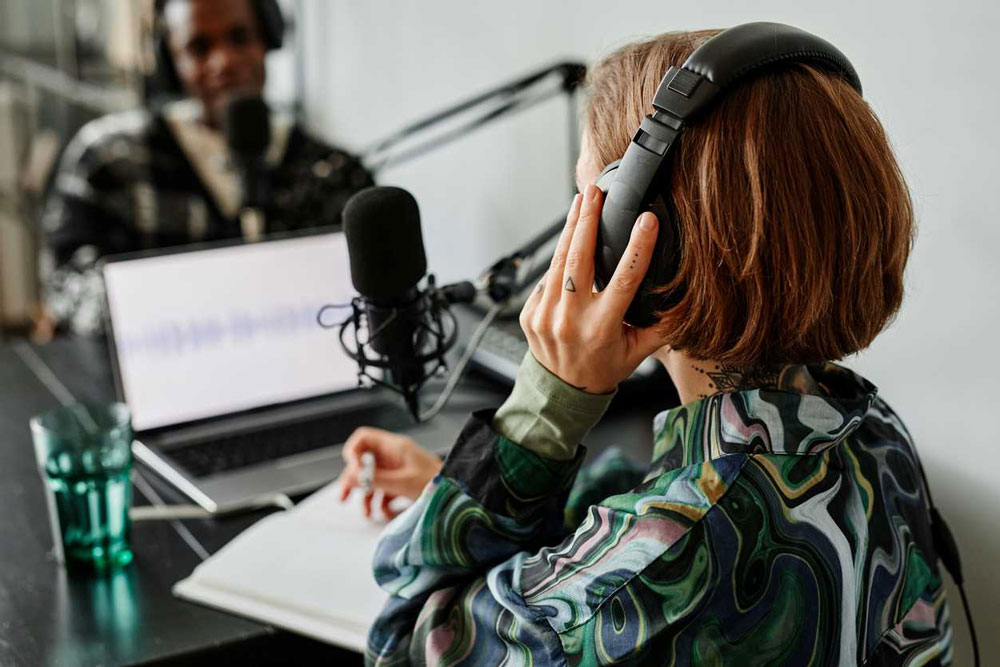
 Daryl Moorhouse goes under the hood and examines what it takes to create a good podcast and, more importantly, how guests should up to make it a good experience for listeners.
The Irish Marketing Podcast has been in production for nigh on three months now. Over the course of that time, it’s featured more than 20 guests and requested interviews from countless others.
Although, at this point, I’m starting to wonder whether the word interview is really the right terminology—implying, as it does, assessment, analysis, or even interrogation. In fact, the words conversation or chat are far more apt, encapsulating more accurately what we’re really shooting for.
I say we because it’s important to note that both presenter and guest share a common goal. Our interests are aligned in pursuit of fickle masters; our combined output will be dispersed into the ether to many ear-budded, would-be friends.
Because the audience is the arbiter, it’s important to view everything through their lens. How, then, can we work together to present the best version of ourselves—together building a bridge they’ll want to cross?
Let’s start with the reality: two people who may never have spoken before meet up for a period of 30 minutes, enter an isolated, padded, sound-proofed room, and endeavour to have a conversation crackling with banter, rapport, and all that is entertaining.
So far, so normal.
Any wonder people might feel nervous? Accepting and understanding that, here’s what I’ve learned—and, more importantly, how it might help.
For starters, preparation does help, but only in recommended doses—less being more. As a courtesy, we’ll send a brief with suggested questions to most potential interviewees. But on the day, I’m happy for a guest to pass on a question if they’re not comfortable or clear on the detail. That’s far better than the alternative: being over-prepped with voluminous notes which tend to clog the conversational gears. Prep if you feel it, but it’s better to bring tweets, not tomes.
Remember, what you’re really doing is having a conversation, albeit to tape. The tape bit can be off-putting, and we’re learning to avoid the malady of what I’m coining “Green Room Gold”, where great chats happen before or after the mics are live. In pursuit of that conversation, it’s important to know that the thing you think you “should” say is rarely the most interesting thing. It’s much better to go with the thing you “want” to say. The thing you think you should say rarely comes off as genuine or authentic, whereas the thing you want to say opens up a whole world of windows.
One of my favourite moments to date was a senior agency MD elaborating on a leftover-biscuit dilemma involving a junior intern. It’s the kind of story that illuminated what she called the “pride and peril” of managing a large creative organization—and the minutiae that inhabit all our lives. Instructive though it was, it would never have made anyone’s pre-record prepping notes.
Many of our interviews to date might range from 30–40 minutes, but the final edit will typically top out at 5–8 minutes. That gives us the comfort of the edit, where everything is cut down and assembled into orderly form. Information is never pushed out of context, but we will edit for brevity and clarity—anecdotes may be truncated, “uhs” and “ems” will be expelled—so we are best dressed for the audience at large.
It’s in everybody’s interest to make sure it’s “best guest feet forward,” and we try to seamlessly segue what might be an unnatural scenario into an enjoyable experience. Of course, if all else fails, you do have a final fallback: it would be entirely reasonable to blame the presenter, who will, in turn, blame the researcher.
When not interviewing guests for the Irish Marketing Podcast, Daryl Moorhouse is an experienced media producer, copywriter, voiceover artist and production manager as well as the managing director of Tinpot Productions.