















 Believe it or not, many consumers are already thinking about their Christmas grocery shopping, making it an important part of the year for both grocery stores and the many food and drink brands vying for consumer attention, writes Ciara Gibney.
I’ve worked in media long enough to know that Christmas campaigns start earlier every year. By the 1st of November, the shelves are stocked, the ads are live, Mariah Carey has defrosted, and if you’re not paying close enough attention, you’d be forgiven for thinking the moment has already passed.
But it hasn’t.
We’ve just entered November – Cycle 23 for those of us who live our lives in two-week cycles – and what I’m seeing in our latest grocery behaviour insights is that the biggest decisions and biggest spends are still ahead.
This piece builds on our last article, “Why OOH Can’t Be Ignored”, which looked at overall Christmas behaviour. Now, we’re zooming in on how Irish consumers shop for Christmas groceries – the what, when, and why – and why the final two weeks of the year, are anything but quiet.
So, How Do We Actually Shop for Christmas Groceries?
It’s not one big shop. It’s a series of phases, each with its own mood, its own logic, and its own trolley content, and if you’ve ever found yourself panic-buying cranberry sauce on the 24th, you’ll know exactly what I mean. In fact, Irish households made 23 trips in December last year, that’s six more than the UK average of 17. (Source: The Journal and Kantar)
It starts with planning. Quiet, considered. People thinking about who they’re hosting, what they’ll cook, how much they’ll spend. It’s early, but it’s not urgent.
Then comes stocking. The pantry fillers, the drinks, the staples. It’s when your mum buys the tin of roses and hides them above the kitchen counter for all to see, while simultaneously warning nobody to touch until the big day. It’s the first wave of spend, and it’s where we start to see a shift in behaviour. 31% of shoppers say they treat their families by buying more confectionery and other brands they wouldn’t usually go for.
But the main shop is where things really shift. It’s mid-to-late December. Loading up on fresh produce, meats, desserts. The fridge is full, and the trolley is heavier than it’s been all year, and not just figuratively, 29% of shoppers estimate their Christmas grocery budget to be over €300. This is when 81% of shoppers are making their grocery list – not weeks in advance, but the final days before the shop. In fact, 39% make it 2-3 days before, while 42% make it the same day.
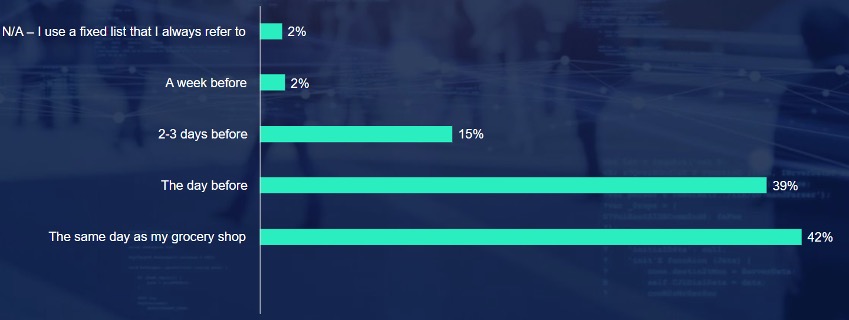
Q: You mentioned you write a list prior to your grocery shop. When do you write your shopping list?
And let’s not forget hosting. We’ve all been there, the phase none of us planned for, but everyone shops in. Forgotten cranberry sauce, more Brennans for the sambos. The “we need more of that” moment. It’s reactive and high value.
But Why Does This Matter?
Last year, December 23rd was Ireland’s biggest grocery shopping day, with €107 million spent in just 24 hours. 71% of Irish shoppers are doing their Christmas grocery shop in-store, and to earn a place in the basket, brands need activation in that environment. The Christmas shop has become an institution. It’s the late-night dash to the 24-hour supermarket, it’s the trolley traffic jam, the moment when the “just in case” items start piling up, and it’s happening when many brands have already gone quiet. If you’re not live, you’re invisible.
So, What’s Our Takeaway?
The Christmas grocery shop isn’t one moment, it’s many, and the final phase, the one that happens after the 15th is one of the biggest.
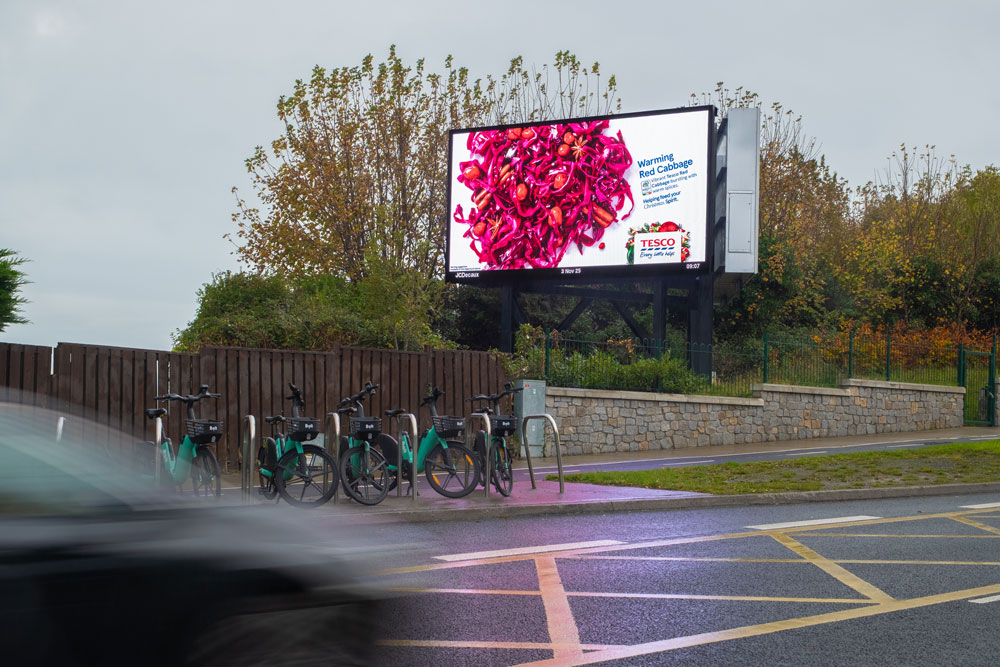
Consumers are still shopping, deciding, being influenced, and 17% agree that OOH influences them most for groceries. While many brands start to wind down, our consumer behaviour insights tell us that audiences are still very much switched on.
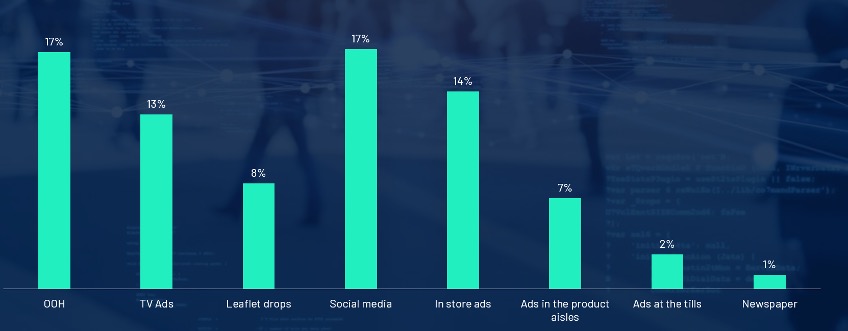
Q: What advertising, if any, influences you the most when it comes to grocery shopping?
For media planners, that’s the opportunity. The late shop, the top-up shop, the hosting shop, they’re all happening in-store and in the last few weeks of the year. OOH is the only format that meets shoppers at every stage of the journey, shaping decisions and brand repertoire when it matters most.
Ciara Gibney is marketing manager, Talon Ireland
This research is based on an online methodology of 500 respondents 16+, gone to field between the 6-8th of October. For the full suite of results reach out to Caroline.decourcy@talonooh.com.