












 OOH shows up in the places that matter most and it continues to deliver something tangible in a world that’s getting increasingly hard to pin down, writes Ross Cunningham.
There’s always been something interesting about the rhythm of the industry the week Valentine’s Day rolls around: timelines fill with loud declarations, and suddenly every brand wants to make its presence felt. It struck me that this behaviour isn’t far from what we, as planners and marketers, lean on all year long.
The more time I spend looking at how plans are built and refined, the clearer it becomes that OOH still holds a very particular place in the mix. Yes, you might argue it’s not the newest medium on the schedule, but it continues to do the one thing many channels struggle with – it continues to deliver something tangible in a world that’s getting increasingly hard to pin down.
A Broadcast Medium Present Where Consumers Choose to Be
It’s hard to ignore that broadcast OOH continues to reach 89% of all adults in Ireland, giving brands the kind of public presence that simply cannot be replicated anywhere else. But what makes that reach matter even more, is the way audience behaviour is shifting. People are deliberately seeking out experiences again – stepping out from behind their screens, choosing moments that feel real, and choosing moments outside of the home.
You only had to look at Ireland last summer to see the scale of it. Stadiums were packed to capacity; every major gig sold out. For many (me included) Oasis in Croke Park became the defining marker of just how hungry people are to be a part of something. And now, with Ireland in the World Cup play-offs, you can feel that same energy starting to build all over again. Whether it’s a bucket hat or a sombrero – we want to be there.
When Something Shows up in the Public Realm, we Instinctively Trust it More
There’s a certain credibility that comes with anything willing to stand in full view. OOH benefits from that in a way few channels can these days. While other channels are wrestling with questions around authenticity, brand safety, and diminishing trust, OOH remains disarmingly straightforward. It sits in the same public spaces people move through every day, and as Justin Gibbons has long argued, the public realm holds you to a higher standard – you can’t bend the truth when you’re standing in the middle of it, and he’s not wrong, there’s no spinning your way out of a Bus Shelter on Leeson Street.
But here’s the Part People Didn’t Expect from OOH
What’s been interesting to watch over the last five years is how OOH has shown teeth in places people never associated with it. For all the talk about its broadcast strength, the medium is sharper at the other end of the funnel too. Programmatic DOOH has been a major player in that shift.
And if you spend enough time looking under the hood of campaigns (as we do), you start to notice something else. Programmatic OOH quietly handles the moments when plans need to shift gears, the times when a campaign has to go from brand building to driving action, sometimes faster than anyone had planned for. Yet here we are, seeing programmatic DOOH drive a 3x increase in purchase intent. While classic OOH continues to do what’s always done best, lifting awareness and recall by over 50%. So yes, for some, the perception is outdated. OOH has become a genuine all-rounder, still doing the big public moments its famous for, while also delivering the kind of responsiveness that keeps planners sane when the KPI’s start shapeshifting.
Lest not Forget the Thing OOH Has Always Done Better than Most
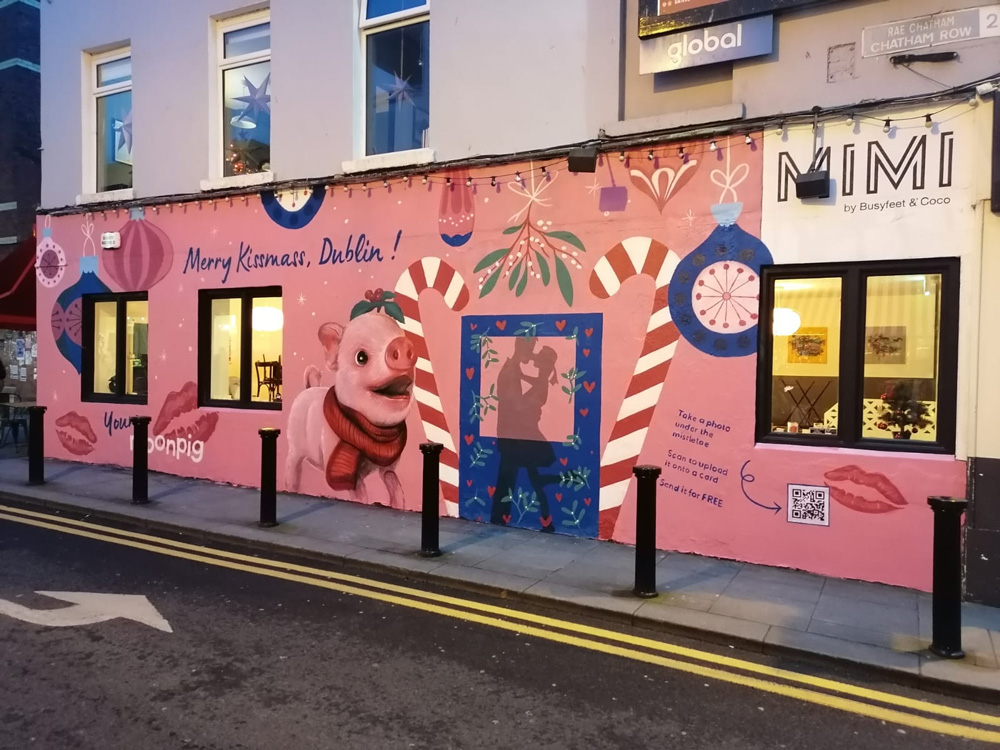
And the more I look at the medium, the more obvious it becomes that even with all this newfound flexibility, the core of OOH hasn’t shifted an inch. It still makes brands feel bigger. Fame isn’t complicated, but what is interesting is that it doesn’t come from volume alone – it comes from presence.
It’s the basic stuff, really. A message in a space people trust. A format that can’t be skipped. A medium that turns brands into part of the everyday landscape. That’s how you build fame, and even as the industry bends and shifts, that truth still holds. If anything, it’s becoming more valuable.
With Valentine’s Day tomorrow and the annual panic-buying of flowers about to commence, it felt like a good time to take stock on why brands and agencies keep coming back to OOH. Strip it back and the logic is fairly simple. OOH shows up in the places that matter most. It earns trust because it lives out in the open. It reacts when plans inevitably change, and when it’s used well, it has a knack for making brands feel bigger.
It just might take more than a bouquet of flowers to get some of us to a World Cup – that’s next month’s problem.
Ross Cunningham is client director with Talon.