












 Aaron Poole, marketing executive, PML Group with this week’s Out \ Look on Out of Home
Advertising effectiveness ultimately comes down to outcomes. It is not enough for a campaign to simply be present; it must be seen, remembered, and acted upon. In part two of our Multi-Format Effect research, we asked Dublin audiences what happens when campaigns show up across different OOH formats. The results show that multi-format exposure doesn’t just expand reach, but it drives tangible changes in behaviour.
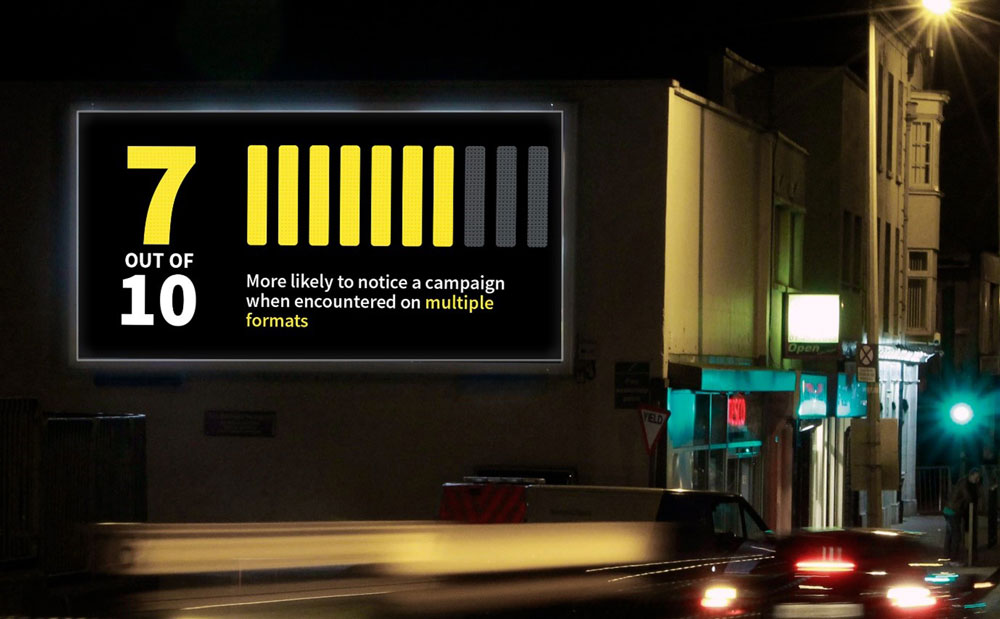
The first of these is noticeability. Almost seven in ten respondents (69%) said they were more likely to notice an ad if they encountered it in multiple places. For younger audiences, the effect is even more pronounced: 84% of 16–24s agreed, indexing at 122. At a time when consumers’ digital feeds are saturated, curated and often ad-blocked, this proves OOH’s unique ability to break through in the physical world. Repeated encounters across formats help ensure the message rises above the noise and stays in people’s minds.
That visibility also fuels curiosity. 45% overall and 53% of 16–24s (index 119) said that the more often they saw a campaign across formats, the more they wanted to find out about the brand or product. This runs counter to the fear of “ad fatigue.” In OOH, frequency across environments doesn’t dull the message; it sharpens it. Each exposure adds another layer of intrigue, nudging audiences towards discovery. For categories where trial and switching are key, such as telecoms, financial services and FMCG, that curiosity can be the difference between passive awareness and active intent.
Multi-format OOH also acts as a reminder at the moments that matter most. 57% of respondents overall said campaigns seen in different places reminded them about the brand when shopping or browsing online. Among 16–24s, this figure soared to 77%. This is the “street-to-store” effect in action, a concept we have championed in our retail media work. By embedding the brand across multiple touchpoints, OOH ensures that awareness translates into presence at the point of decision. A billboard primes the journey, a transport format reinforces it in motion, and a retail 6 Sheet delivers the final nudge at the entrance to the store. Together, they form a continuous chain of influence.
The behavioural impact doesn’t stop at individual action. OOH also sparks conversation. More than half of respondents (53%) said they were more likely to talk about a campaign after seeing it in more than one place. Conversation was especially strong among 16–24s (60%) and 35–44s (60%), showing that multi-format exposure extends impact beyond the individual to fuel cultural exchange. Word of mouth remains one of the most powerful multipliers in marketing, and OOH is uniquely positioned to ignite it. Shared visibility in public spaces gives campaigns a footprint that people reference, share and discuss.
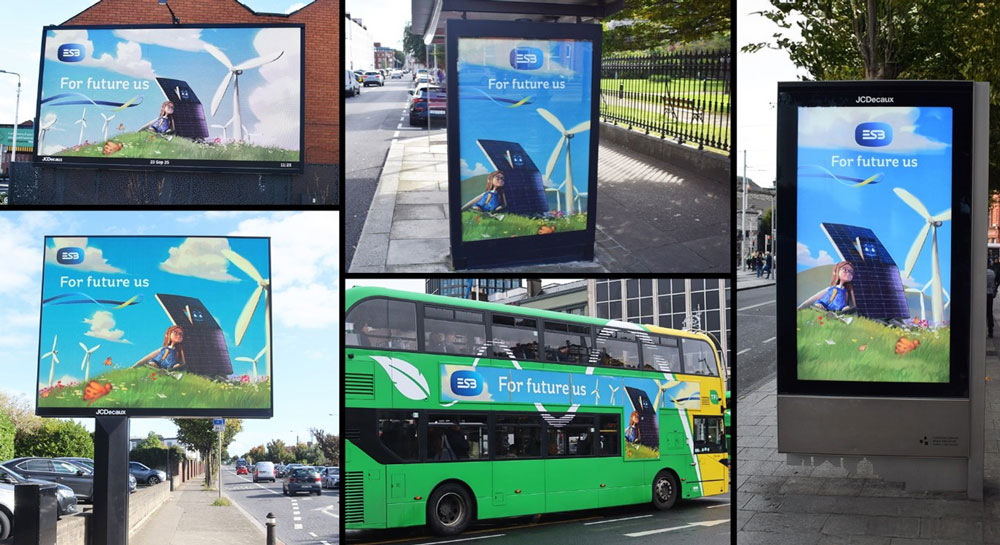
These findings reinforce the behavioural strength of OOH, particularly among younger audiences. Across all outcomes – noticeability, curiosity, reminders and conversation – 16–24s consistently index higher than the total population. This aligns with broader insights from our IMPACT Attention research, where OOH is shown to be a leading driver of brand discovery among youth audiences. It also confirms what we see in campaign measurement: OOH doesn’t just deliver impressions; it drives behaviours that move people closer to brands.
For advertisers, the implications are clear. Multi-format planning is not simply about maximising cover. It is about designing campaigns that are present in the right places, in the right combinations, to ensure visibility becomes curiosity, reminders become action, and impressions become conversations. By leveraging the full ecosystem of OOH, from broadcast billboards to contextual retail screens, brands can build campaigns that work harder at every stage of the consumer journey.
This is the second issue in our Multi-Format Effect research. Our first issue showed that audiences enjoy, remember and understand multi-format OOH. In our final issue we will close the loop by examining how context and relevance turn familiarity into action.
Colourtrend Decorates OOH with Eye-Catching Special Build
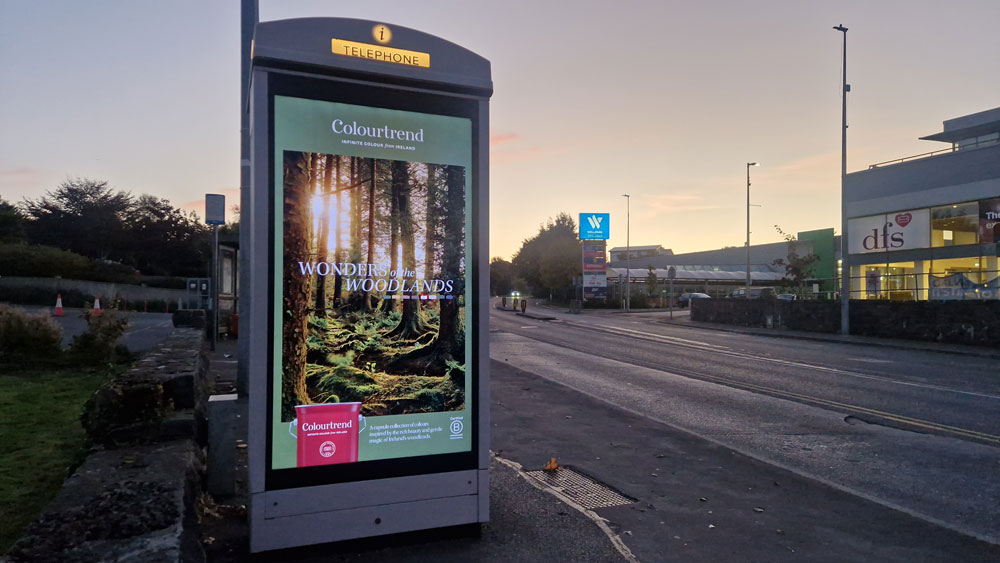
Colourtrend has unveiled a new selection of colours for Autumn inspired by Irish woodlands via a nationwide ‘Outdoors’ campaign. Wonders of the Woodlands comprises eight new shades that capture the rich palette of Ireland’s forests.
Planned by Javelin and Source out of home, the campaign comprises classic and digital roadside billboards and Adshel along with the dX screen in Dundrum Centre – all showcasing that you can indeed see the wood from the trees.
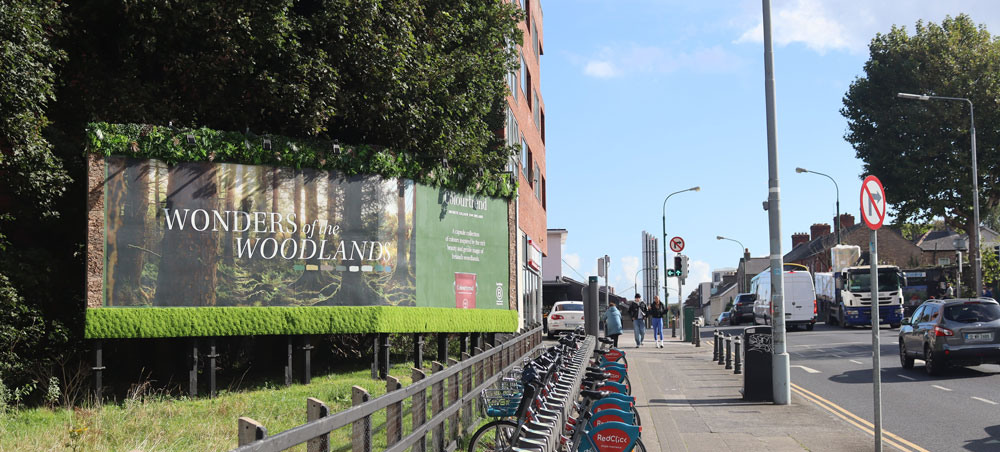
The centrepiece of the campaign is a special build 96 Sheet on Emmet Road, Inchicore which incorporates elements of the forest in a striking seasonal 3D display as the medium becomes the message.
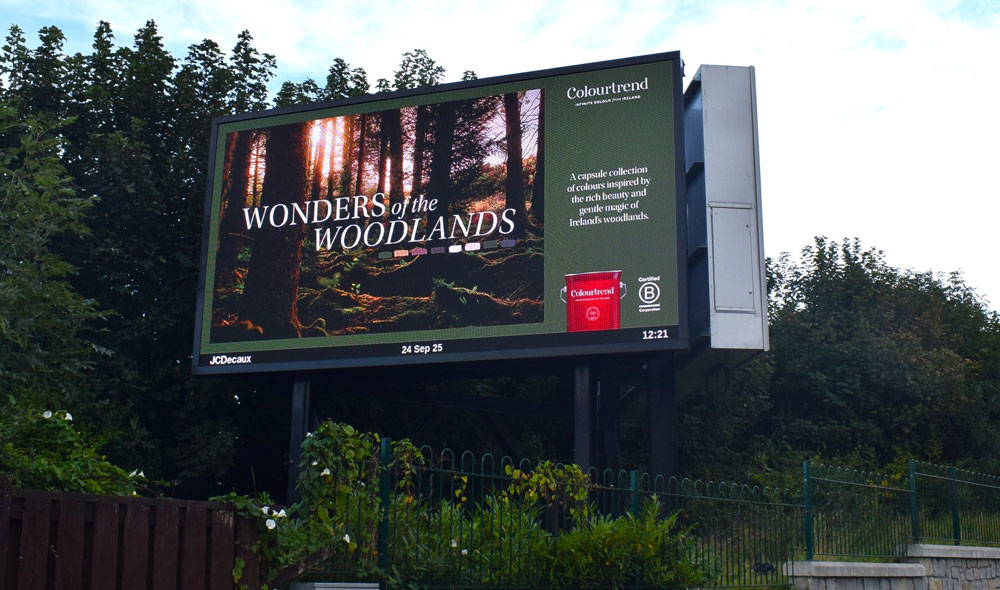
‘Colourtrend is delighted to launch our new collection ‘Wonders of the Woodlands’, this collection is inspired by the rich beauty and gentle shades of Irelands woodlands. We want these colours to inspire our customers to bring nature into their homes and create their own comforting sanctuaries. OOH gave us the opportunity to bring nature to them and showcase the stunning Irish woodlands and all the emotions they evoke.’ Jenny Fallon, Marketing Manager.
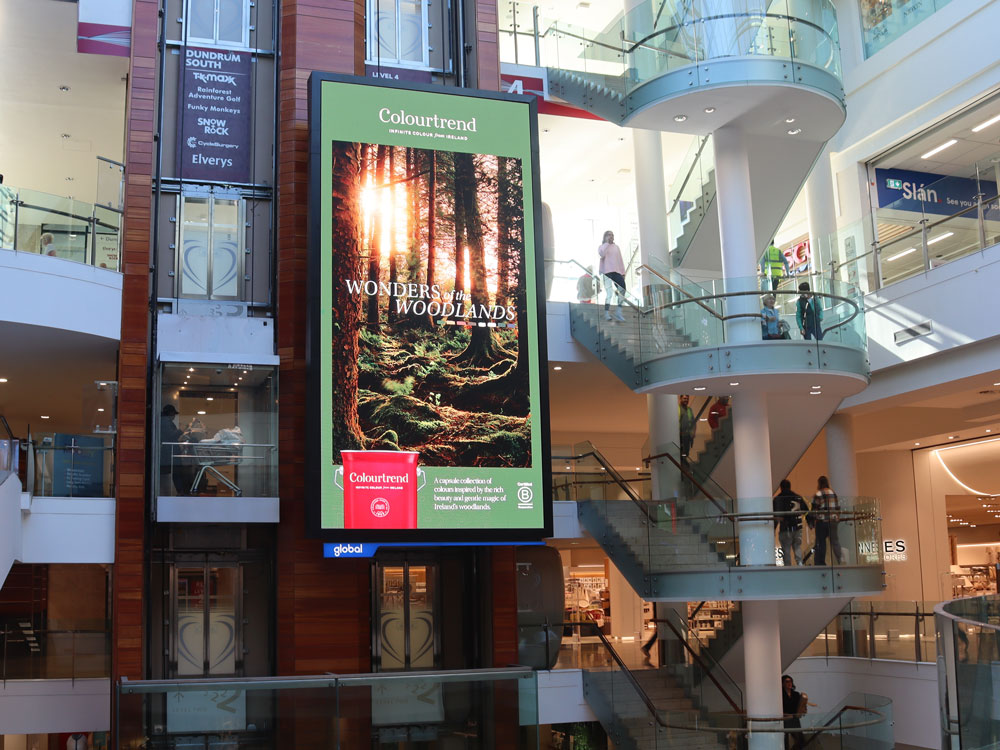
Each of the eight shades in the Wonders of the Woodlands has been carefully considered to reflect the beauty of native Irish woodlands and the unique blend of light and shadow, and rich organic textures.
The latest TGI survey finds that 21% of Irish adults intend to make major home improvements in the next 12 months.