













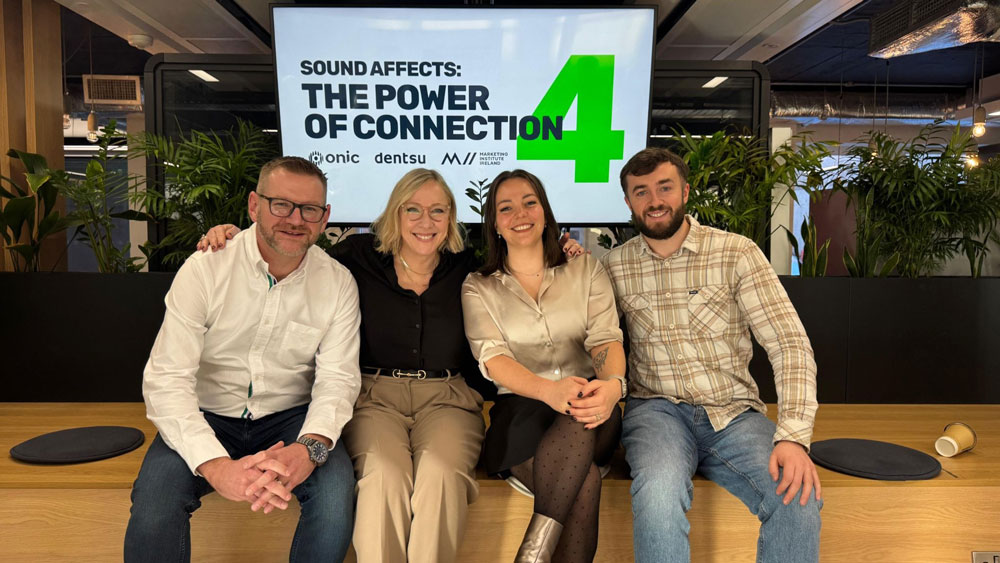
New research carried out by dentsu and the audio broadcaster Onic has highlighted the “the power of connection” when it comes to how and why Irish people engage with audio content.
This is fourth wave of their biennial Sound Affects research series and it builds on previous research which examined the impact of digital media, shifting listening behaviours and artificial intelligence on audio.
This year’s study introduces a newly designed and validated “Connection Model,” showing how brands can use audio moments to form “deeper, more valuable relationships with consumers.”
The research identifies three essential pillars that are required to drive meaningful connection: Content, Interest and Context. The research found that that while all three elements must be present in equal measure, marketers typically invest more heavily in content while underestimating the importance of targeting the right audiences at the right moment and in the right environment.
Learning & Nostalgia
A detailed listening study, including diary exercises, revealed that “interest” goes beyond simple relevance, with learning and nostalgia also playing a strong role in driving engagement. From a contextual perspective, the placement of content within “like-minded” spaces matters, but mood and the listener’s motivation at different times of day are also critical.
The research also showed that entertainment and humour remain important, but emotional resonance and authentic human storytelling are among the strongest drivers of connection.
The study also reaffirmed audio’s growing strength within the wider media ecosystem. Audio now accounts for 19% of Irish people’s total media consumption, with growth extending beyond traditional FM radio into DAB+, smart speakers and other digital audio platforms. Rather than fragmenting listening, this expansion is driving increased overall consumption, with each channel playing a complementary role, the research noted.
Connection
The value of “connection” was borne out by the number of respondents who felt “emotionally connected” to an audio advertisement with 34% saying that they were likely to recommend it or talk about it. The research also shows that 30% reported a positive attitudinal shift, and 25% said they were more likely to purchase as a result.
Four clear listening themes also emerged from the research.
Back to the Office: While the morning commute between 6 a.m. and 9 a.m. now mirrors pre-pandemic listening behavior, the afternoon commute has become more dispersed and elongated, reflecting hybrid working patterns.
My Choice: Listener autonomy is rising sharply, with 65% now actively choosing what they listen to, up from 55% in 2023. In addition, some 70% select audio to match their daily routine, compared with 58% two years ago. Mood regulation increasingly influences these choices as the day progresses, the research notes.
Storytelling: Four of the top five content types Irish listeners feel connected to are driven by storytelling. More than one-third of respondents said advertising resonates most when introduced through a personal story or anecdote.
Part of Home: Smart speakers have re-established audio as a central presence in the home, with 71% of people consistently playing audio while doing household tasks such as cooking and cleaning.
Speaking at the launch of the research, Dael Wood, strategic consulting director at dentsu, said connection has become a defining economic force within the media ecosystem.
“In contemporary media ecosystems, connection is not simply a social or emotional function- it is a primary driver of economic value. Media organisations, brands, content creators and platforms all monetise connection because it translates directly into engagement, influence and ultimately revenue,” Wood said.
Brian McCarthy, group commercial and operations director at Onic, said the findings directly support the company’s strategic positioning. Onic’s portfolio of audio brands includes the likes of FM104, Q102, Cork’s 96FM, LMFM and WLR.
“At the Onic launch earlier this year we said our business stood for powering connections every day. This research shows just how powerful those connections are and the massive opportunity they provide for our clients to unlock an even greater return on investment,” McCarthy said.
He added that the combination of FM, DAB+ and digital audio allows Onic to deliver bespoke solutions aligned to different listening needs and moments throughout the day.
“We’ve proven we can reach places other media can’t and drive incredible connections. The research shows that 19% of media consumption time is spent with audio, yet only about 10% of media budgets are allocated there. With the strength of connection we have, brands should be looking to correct that imbalance and reap the benefits,” he said.