











 Aaron Poole, Marketing Insights Manager, PML Group with this week’s Out \ Look on Out of Home
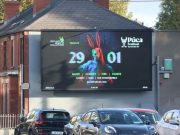
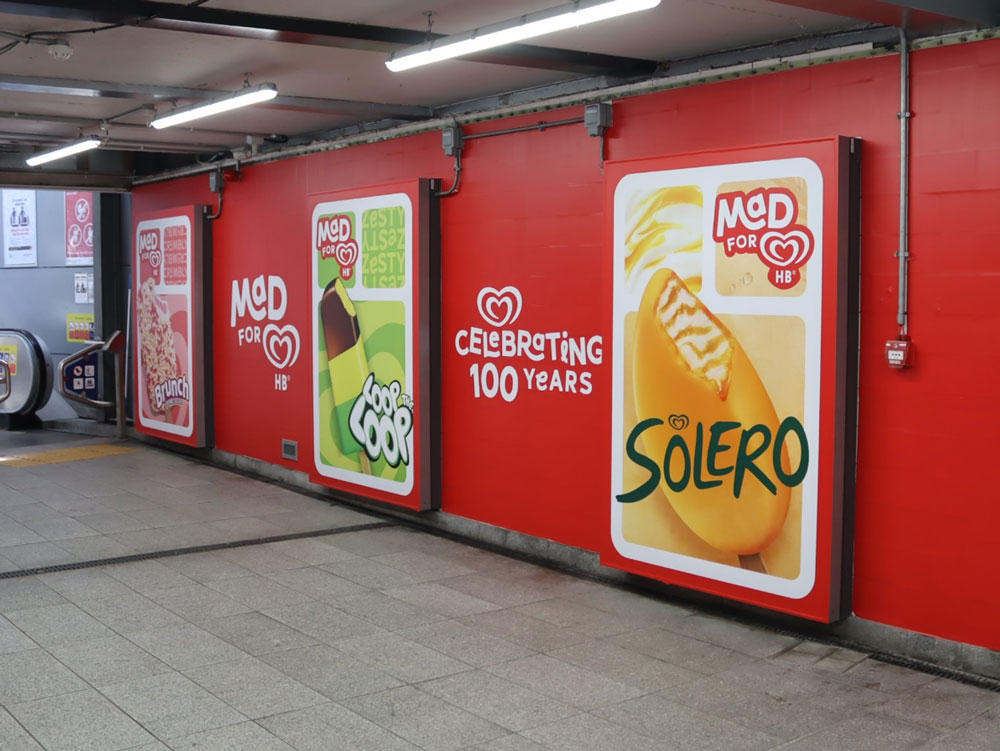
HB is currently bringing 100 years of ice cream to life on OOH, with colourful creative arriving at a fitting moment as warmer weather, longer evenings and summer routines return to the streets. Planned by Spark Foundry and PML with creative by TMICC, the campaign uses recognisable products, bright flavour cues and playful copy to make the anniversary feel connected to shared seasonal memory, rather than simply applying a centenary logo to the work.
For brands, that is the useful part of milestone messaging. A birthday, anniversary or major achievement can easily become an internal corporate moment, spoken mostly to the business itself. On OOH, the same milestone has the potential to become public, visible and connected to the routines, communities and behaviours that helped the brand reach that point in the first place.
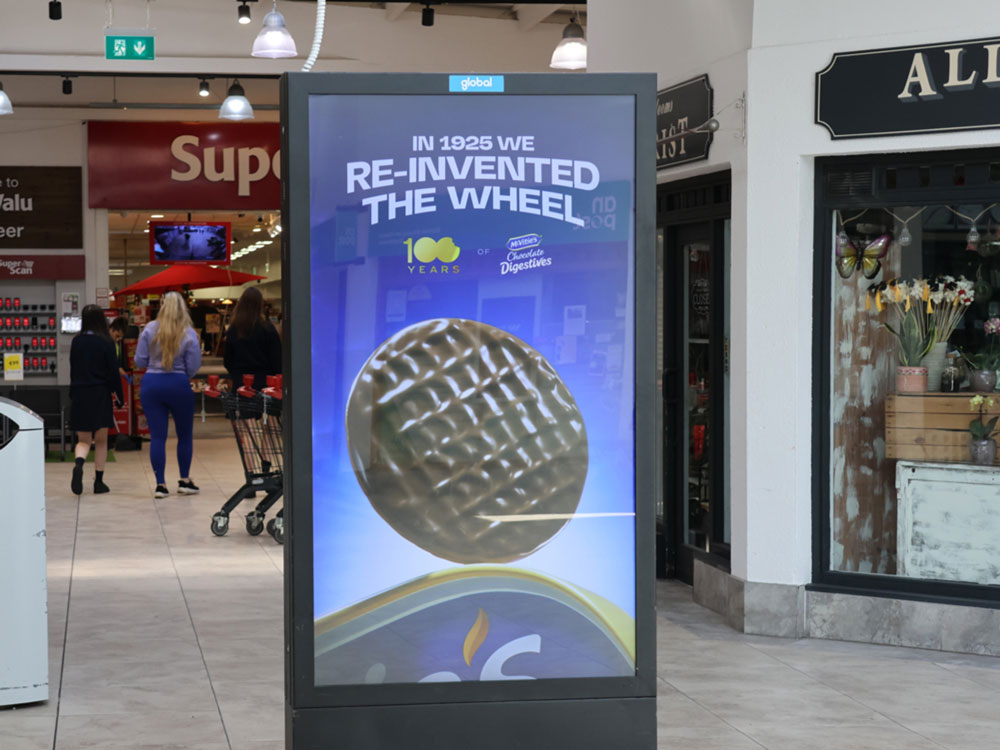
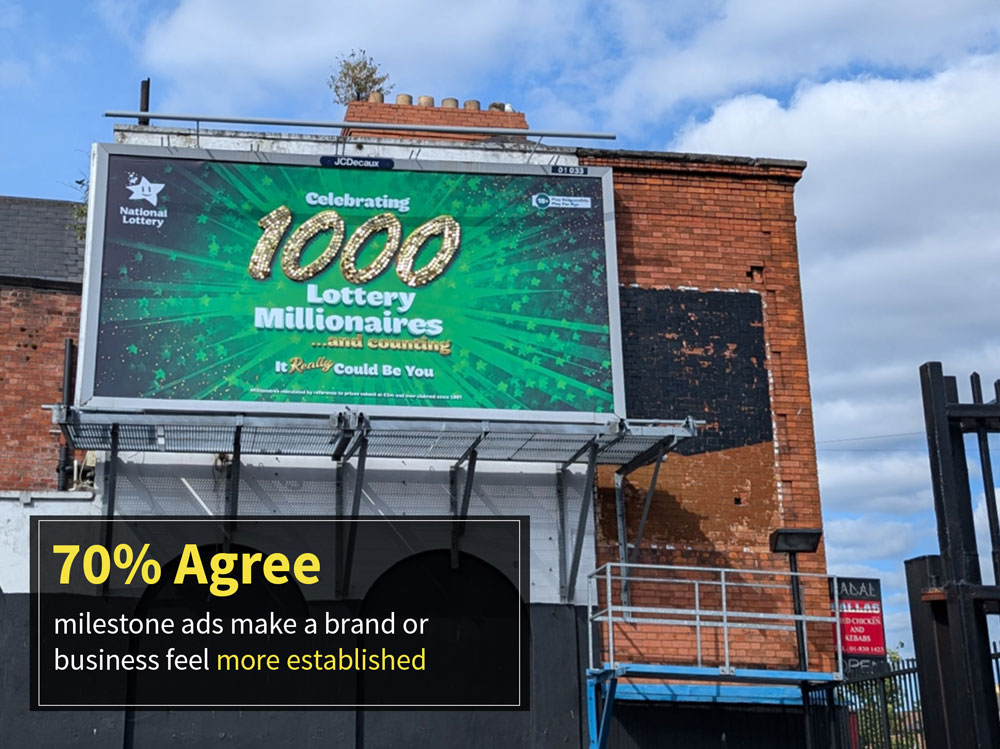
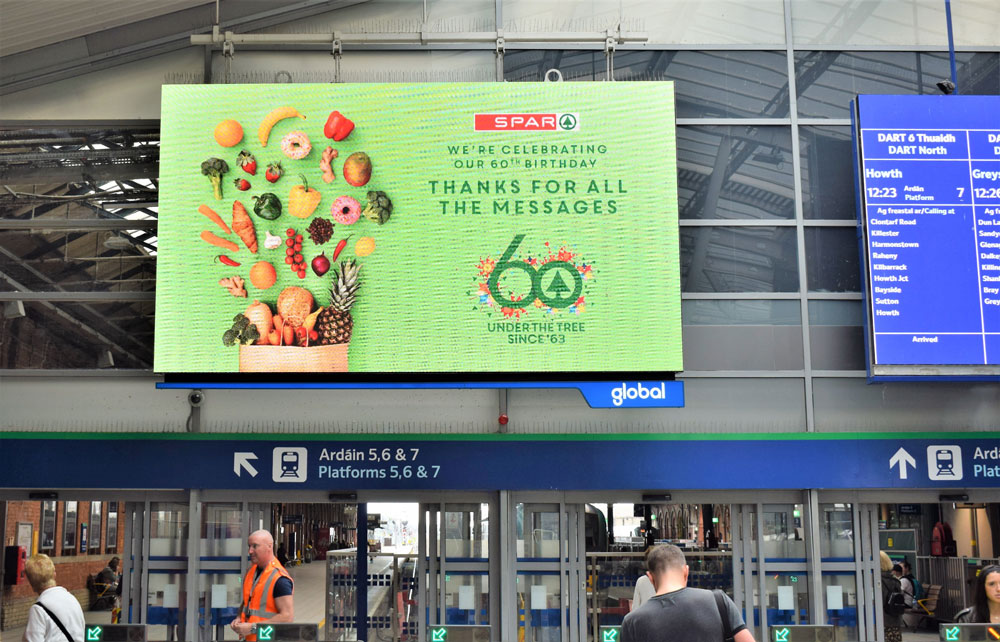
Campaigns in recent memory have offered several examples of this in action. McVitie’s marked 100 years of the Chocolate Digestive with creative that leaned into the product’s familiarity and its place in everyday ritual, with the Outdoor campaign planned by PHD and Source out of home. Planned by Starcom and Source out of home, Donnybrook Fair’s 25-year celebration was rooted in community, using OOH close to store to recognise a quarter century of great food in the area. Planned by the same teams, National Lottery celebrated its 1,000th millionaire milestone with the kind of scale and optimism that naturally belongs on large roadside formats. SPAR’s 60th birthday activity, planned by Spark Foundry and PML, used OOH to thank shoppers and reflect the brand’s long-standing presence in local retail life.
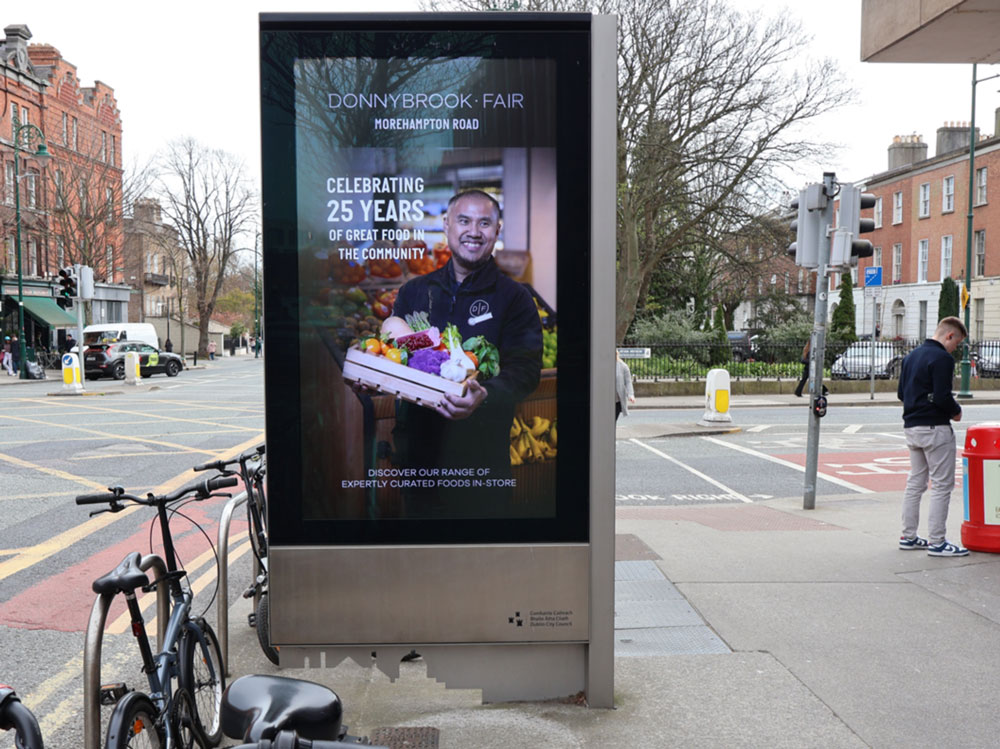
The strongest examples do not treat the milestone as the whole message. They use it as the reason for the message. HB can talk about 100 years because its products are part of Irish summer culture. McVitie’s can talk about 100 years because the Chocolate Digestive is instantly understood. Donnybrook Fair can celebrate 25 years because the message sits within a real neighbourhood context. SPAR can celebrate 60 years because its stores are woven into everyday shopping behaviour across the country. In each case, the anniversary gives the brand permission to be visible, while OOH gives that visibility physical presence.
To understand how audiences respond to this type of work, our latest research with Ipsos B&A asked 300 Dubliners aged 16 to 54 about ads marking a brand or business birthday, anniversary or major milestone. Questioning looked beyond whether people simply like this kind of advertising, testing whether milestone messaging helps ads feel more noticeable, more positive, more established and more justified.
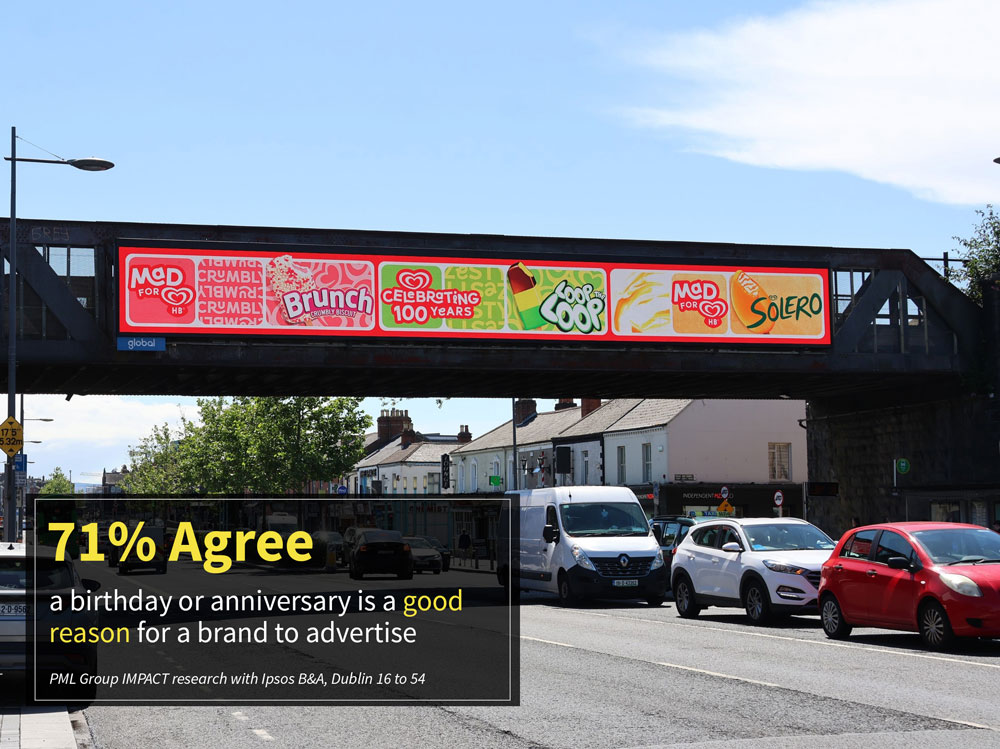
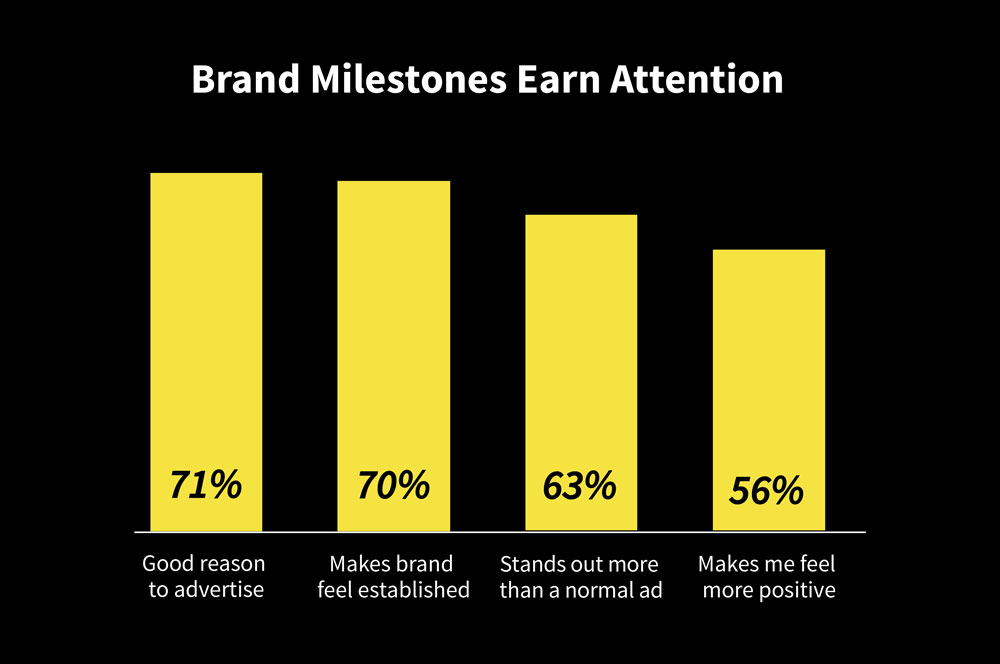
The findings suggest audiences understand why brands use these moments. More than seven in ten respondents, 71%, agree that a birthday or anniversary is a good reason for a brand or business to advertise. Almost the same proportion, 70%, agree that ads like this make the brand or business feel more established. For most people, a milestone does not come across as an excuse to advertise. It gives the brand a credible reason to show up.
The standout effect is also strong, with 63% agreeing that ads like this stand out more than a normal ad. This rises to 72% among 25 to 34-year-olds and 68% among 35 to 44-year-olds, underlining the value of this type of creative hook for brands operating in busy environments. OOH already delivers scale and repetition, but a milestone gives the audience something additional to process. It tells them why the brand is there now.
The response is not only about credibility with more than half of respondents, 56%, agreeing that ads like this make them feel more positive about the brand or business, rising to 66% among 25 to 34-year-olds and 63% among 35 to 44-year-olds. That younger adult response is worth noting because it suggests milestone messaging is not only trading on nostalgia among people who have known a brand for decades. When handled well, it can also make established brands feel more relevant to consumers still forming habits, preferences and loyalties.
The sense of establishment is especially strong among 35 to 44-year-olds, where agreement rises to 82%, compared with 70% overall. For brands trying to balance heritage with present-day relevance, that is a valuable signal. A milestone can reassure audiences that a brand has endured, while the creative execution can show that it still has something fresh to say.
OOH is particularly well suited to this type of communication because milestones are social by nature. Birthdays, anniversaries and round numbers are markers we understand in our own lives. They help us make sense of time, memory and significance. When brands use them well, they create a simple bridge between corporate history and human recognition. A 25th, 60th, 100th or 200th anniversary is not just a date in a brand presentation. On the street, in a station, outside a store or across a commuter route, it becomes a public signal that the brand has endured.
For national brands, anniversary messaging can reinforce fame and heritage. For local retailers, it can deepen the connection between business and neighbourhood. For charities and public-facing organisations, it can translate longevity into trust and sustained contribution. In each case, OOH is not just carrying the announcement. It is placing the milestone into shared public space, where people encounter it as part of their real-world routines.
The best examples make the audience feel part of the celebration, rather than simply asking them to notice the milestone. That might mean thanking shoppers, reminding people of a product they have grown up with, using humour around a familiar brand truth, or connecting a milestone to a wider public benefit. The risk is assuming that a big number is automatically interesting. The research suggests people are receptive to milestone messaging, but the best work still needs to give them a reason to care.
As OOH continues to be measured for attention, brand celebration messaging offers a useful reminder of the medium’s role in building memory. It gives advertisers a way to connect longevity with relevance, turning internal milestones into public moments that people encounter in the flow of everyday life. With 71% agreeing that a birthday or anniversary is a good reason to advertise, and 70% agreeing it makes a brand or business feel more established, the value of these campaigns lies not only in what they say about where a brand has been, but in how confidently they place that brand in the present.
Father’s Day prompts meet shoppers close to purchase
Seasonal retail moments often play out in a shorter decision window than many campaigns suggest. Father’s Day is a good example: some shoppers plan ahead, some browse for inspiration, and others make the decision much closer to the day itself.
PML Group’s Seasonal Shopping research with Ipsos B&A has previously shown the role OOH can play in prompting purchases around key occasions, with billboards and bus stop advertising among the strongest channels for encouraging seasonal-event spend. The relevance for Father’s Day is straightforward: when the occasion is already on the calendar, visibility close to retail environments can help turn awareness into action.
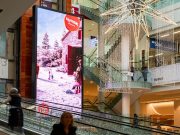
Dunnes Stores is using a focused retail approach for its Paul Costelloe line, with Father’s Day gifting creative running on Global dPods in Dundrum Town Centre. Planned by dentsu and PML, the activity places the message inside a major shopping destination, close to the point where shoppers are already browsing and considering gift options. The format choice keeps the campaign tightly linked to the retail environment rather than relying on broad reach alone.
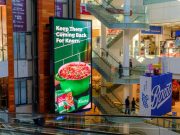
National Lottery Scratchcards are taking a wider retail and convenience route, with Father’s Day creative running across digital roadside, grocery, mall and forecourt screens. Planned by Starcom and Source out of home with creative from Oliver, the campaign uses short occasion-led copy to position Scratchcards as a gift addition, suited to environments where smaller purchases and last-minute decisions are part of the shopper journey.
Across both campaigns, the common thread is not simply Father’s Day messaging, but proximity to purchase. Dunnes Stores is present in a destination shopping environment, while National Lottery is visible across everyday retail, mall and forecourt touchpoints. For seasonal occasions, that placement matters because the message is reaching people while decisions are still open and the opportunity to act is close by.