












 Trust is slow to build and quick to erode. It can only be built through consistent action, empathy and accountability, writes Darragh Rea, who provides some context to this year’s Edelman Trust Baromoter.
Teenagers turning 18 this year were born in the shadow of the financial crash. They were toddlers when ghost estates dotted the landscape. Now they are stepping into adulthood in an Ireland that looks very different on paper. The economy is strong. Employment is high. Corporate tax receipts are at record levels.
Ireland is experiencing a Jekyll and Hyde moment. On the one hand, the economy is seeing record levels of corporation tax; the number of Irish multi-millionaires has never been higher; and the labour market is effectively at full employment.
And yet ask people how they feel and you will hear about anxiety sweeping through society. So, when we look at the Irish results of the latest Edelman Trust Barometer, the real surprise is that none of it feels surprising.
Turn on the radio, scroll through your feed or listen to a taxi driver, and the sense of economic frustration and a growing insularity are part and parcel of how people talk about their lives and their future.
That familiarity matters. It tells us this is not a sudden shock. It is a mood that has been building.
Ireland remains in what the Edelman Trust Barometer deems ‘distrust territory’. Our overall Trust Index (the average percent trust across business, government, media and NGOs) now stands at 47, below the threshold that indicates public trust in institutions. Taken together, it suggests that many people are not convinced by the macroeconomic story.
Ireland’s economic indicators remain strong, but when only 15 percent of the public believe the next generation will be better off compared to today, it’s a sign of a confidence gap between national performance and personal expectation. Growth may be visible in the numbers, but security must be felt in people’s lives.
Behavioural science helps explain why this matters. People respond more strongly to perceived loss than to incremental gain. Stability and predictability shape confidence more than macroeconomic success. If housing feels out of reach, if jobs feel exposed to disruption, and if the cost of living feels relentless, then optimism declines even in a growing economy.
Two-thirds of the Irish public report a moderate or higher level of grievance, driven by perceptions that business and government serve a select few and their actions harm them, the system favours the rich and powerful, and the rich are getting richer while regular people struggle. That perception is corrosive and it undermines the legitimacy of institutions while fuelling a broader sense of discontent. The 11-point institutional trust gap between higher and lower-income households reinforces that growth is not experienced evenly.
Beyond the economy, the pattern continues. Trust in media and government remains low and concern about disinformation is high. Eighty percent of Irish adults on average say they are hesitant or unwilling to trust someone who differs from them in terms of values, sources of information, problem solving approaches or cultural background. In times of uncertainty, people narrow their circles of trust and while that instinct may be human, at scale it creates social distance.
And yet, expectations remain high.
People still believe institutions should lead, and that divides can be bridged. They still expect improvement. The issue is not the absence of expectation- it is the gap between what is expected and what is perceived to be delivered.
Expectation itself is not the problem. In fact, it is healthy, and societies move forward because they demand better. No serious institution should ever claim the work is complete, meaning the challenge is ensuring that delivery keeps pace with expectations.
Trust sits at the centre of that challenge.
Trust is not a campaign line or a positioning exercise. It rests on two practical foundations: competence and integrity.
Competence means doing what was promised, and delivering products, services and policies that work. Integrity means how that delivery happens. Transparency. Fairness. Accountability when outcomes fall short.
When competence and integrity align consistently over time, trust grows, and when either weakens, scepticism accelerates.
Our global research consistently shows that trust is one of the strongest predictors of sustainable growth. Organizations that are trusted attract loyalty more easily, retain customers longer and build resilience in volatile periods. Trust reduces friction, creates permission, and drives performance.
In Ireland today, there is a clear demand for proof over promise, and the people want evidence that economic success translates into opportunity. That institutions understand lived experience.
For government, this means recognising that trust cannot be commanded; it must be earned. Visible fairness in policy choices and tangible improvements in everyday life, particularly around housing and cost of living, are essential. So too is a tone that seeks to unify rather than divide.
For business, there is both risk and opportunity. On one hand, the perception that companies serve a select few is a warning sign. On the other, business is currently the most trusted of the four institutions measured. That trust is an asset, but a fragile one. Employers who invest in their people, demonstrate social responsibility and create spaces for respectful dialogue can help rebuild broader confidence.
For media, the challenge is existential. In a fragmented landscape where clicks drive revenue, the temptation to sensationalise is strong, but accuracy and proportionality are not luxuries; they are the foundation of credibility. When trust in media falls, disinformation and hate find fertile ground.
And for civil society, there is a vital bridging role. In times of polarisation, organisations that bring communities together become indispensable.
None of this is easy. Trust is slow to build and quick to erode. It is built through consistent action, empathy and accountability, and requires leaders who are willing to resist short-term populism in favour of long-term cohesion.
Ireland’s economic success over the past 30 years has transformed Irish society. But prosperity that does not feel secure or fairly distributed will test social cohesion.
If we want the next generation to believe they will be better off, we must first give them reasons to trust that the system works in their favour.
Rebuilding trust will not happen through slogans or statistics, but through steady delivery, honest leadership and a visible commitment to fairness.
A country that rebuilt itself from the 2008 financial crash is the same country that can create a new sense of optimism about a fairer Ireland, but only if trust becomes a national priority.
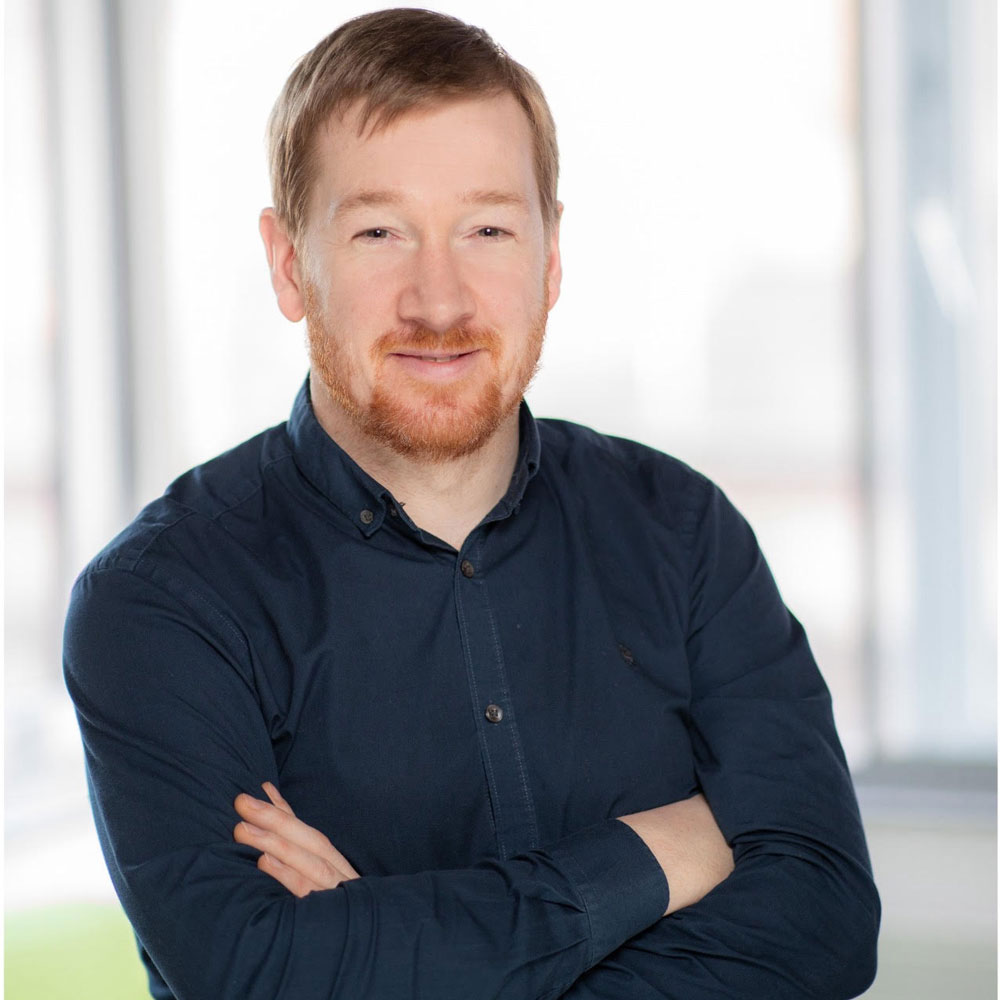
Darragh Rea is CEP of Edelman Ireland
To access the full report click HERE