














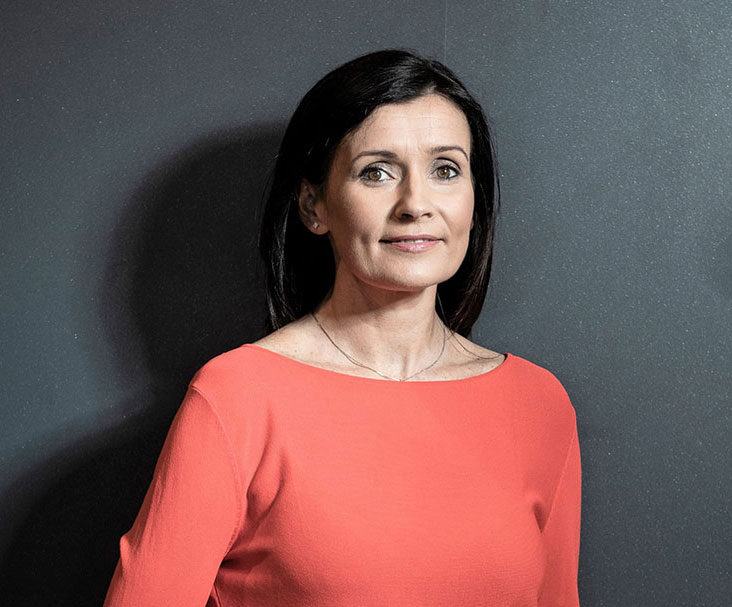
 Too many media plans rely on imagined customers and broad demographic labels, producing similar strategies that struggle to stand out. Fiona Field, founder of Seventh Wave, argues that brands should focus on real buyers and the moments that create new demand to make their budgets work harder.
Sophie loves Pilates, lives in Sandyford and is digitally savvy. She appears on more media plans than you’d think, and yet she doesn’t even exist.
Pen portraits like Sophie have their place, because they help marketing teams, stakeholders and creative agencies picture who they’re talking to. But when it comes to deciding where the money goes, they can send you in the wrong direction. And that matters, because media is often one of the biggest line items for a business.
Sophie usually comes from a segmentation study. The accompanying target audience often arises from the TV trading world. It might be adults aged 25–44 years, ABC1 adults or housekeepers with kids. Whatever the label, it’s a trading audience standing in for a customer. Put the two together and you get something resembling an arranged marriage: a character you can’t buy, matched with an audience that’s too meaningless to stand for much. This may still work for trading, but as a picture of your customer it’s out of date, so the plan ends up looking like everyone else’s. I like to call it a beige plan.
A trading audience isn’t a customer
Adults aged 25–44 is the most common example, and it earned its place for good reasons. Linear TV indexes older, so trading against a younger audience means you only pay for the ratings delivered against it. It’s a smart way to trade. But the problem starts when a trading currency becomes the definition of your customer and ultimately drives your channel selection.
Look a little closer and 25–44-year-olds are not one audience. At one end, census data tells us that one in three adults aged 25–29 are still living with their parents. At the other end of the spectrum, the average first-time mother in Ireland is now almost 32, which means many people in their late 30s and early 40s are juggling young children, childcare and a mortgage. One group is saving to move out (or not!), while the other is paying for everything at once.
It’s the same label on the plan, but very different lives. The bigger irony is that the people most likely to buy your product may not be in that age group at all, and may look nothing like Sophie.
How plans went beige
Most plans start from the same audience research, the same tools and the same platform benchmarks, so of course a lot end up looking alike. And because they’re judged on audit results and cost against the target audience, the conventional choice is the safest one. Being different can seem less cost-efficient, so money moves towards performance media. It looks like it works because it’s easy to measure, but that’s not the same as knowing it does.
It gets worse when everyone does it. When more brands target the same audience, in the same places, with similar messaging, each one becomes harder to tell apart from the next. You can buy memorability, but it costs a fortune. Standing out with less budget takes more skill, and the confidence to depart from the norm. I was curious to read The Public House’s Interesting Index, here on Adworld, which confirmed my suspicions. The ads that ranked were mostly top spenders, and the only real exception got there through controversy (Novig’s Sydney Sweeney ad). Few brands will want to go this route, but it shows how much room there is to break the pattern, in media as well as creative.
AI is going to make the beige problem worse. It learns from the same inputs and serves up the same answers, all in a millisecond. Get ready for fifty shades of beige! If every plan ends up running on the Performance Maxes of the world, we’re in trouble. The same algorithm will be making the same choices for everyone. So, what can we do about it?
Two audiences, not one age group
It might seem overly simplistic, but I believe brands need to think about two audiences: the people who can buy your product today and the people you need to win over tomorrow.
Today’s audience shouldn’t be imagined. It’s the people already buying in your category, whether they buy from you or from a competitor. Your own customer data shows who buys from you, when and why, and market research shows who your competitors are winning. Winning share from them matters just as much as keeping the customers you have.
Tomorrow’s audience isn’t an age group either. It should be defined by the moments when people’s habits change. The teenager begging for their first phone. The couple who’ve just moved house and need everything from broadband to a new sofa. The parents who’ve finally paid their last crèche bill and suddenly have money to spare each month. Look under the hood of these changes rather than at age and demographics, and that’s where you’ll find potential buyers your competitors have missed.
Separating the two gives brands the confidence to invest in recruitment that drives long-term growth, while staying connected to the customers who pay the bills today.
Five questions for your next plan
- Are you using timing to your advantage, or just following the category calendar?
- Where can you reach your buyers that your competitors are not?
- What do you know that your competitors don’t, and is it actually shaping the plan?
- Is your plan driven by your strategy, or by what’s easiest to measure?
- If your competitors gave the same brief to an AI tool, would their plan look different to yours?
Where the money goes should be decided by real buyers, and the moments that bring new ones into the market. Getting out of beige doesn’t mean being different for the sake of it. It means looking for the places your competitors aren’t, whether that’s a channel they’ve ignored, a time of year they’ve gone quiet, or a group of buyers nobody is talking to. That’s where a smaller budget can go much further.
Fiona Field is founder of Seventh Wave, an independent media and marketing consultancy for business leaders navigating change.