










 Aaron Poole, Marketing Insights Manager, PML Group, with this week’s Out \ Look on Out of Home
Breast Cancer Ireland’s Very Pink Run is back on the streets this summer, supported by an extensive Out of Home campaign encouraging people across the country to sign up, show up and help power a future free from breast cancer.
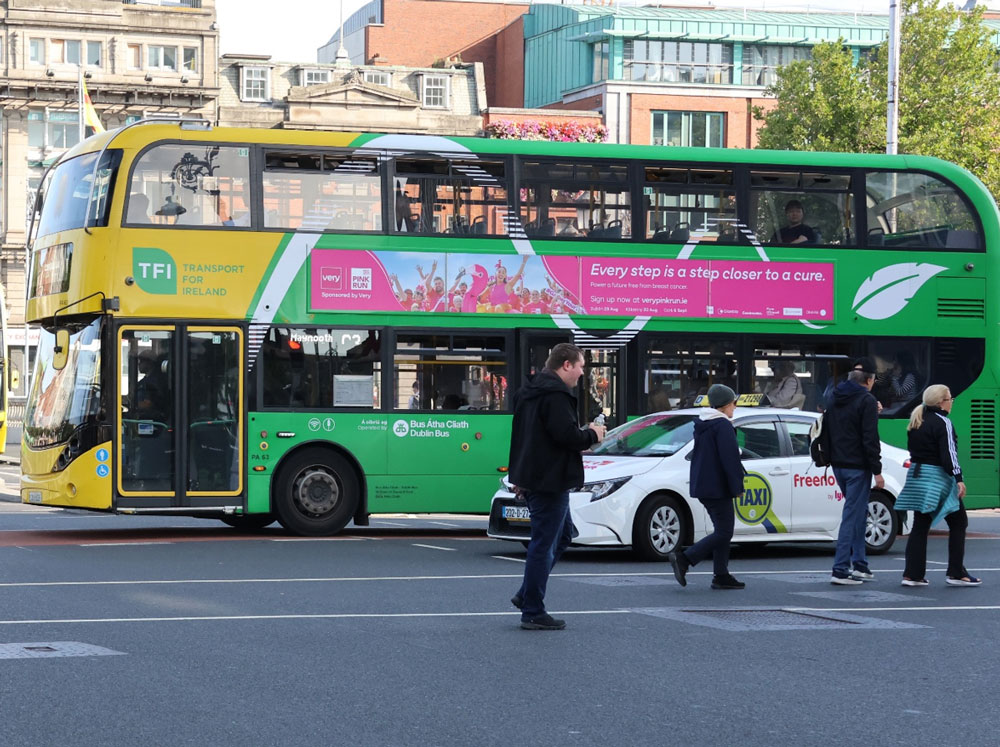
Taking place in Dublin on 29 August, Kilkenny on 30 August and Cork on 6 September, the Very Pink Run brings people together in support of Breast Cancer Ireland, raising vital funds for research while creating a highly visible show of solidarity with those affected by the disease.
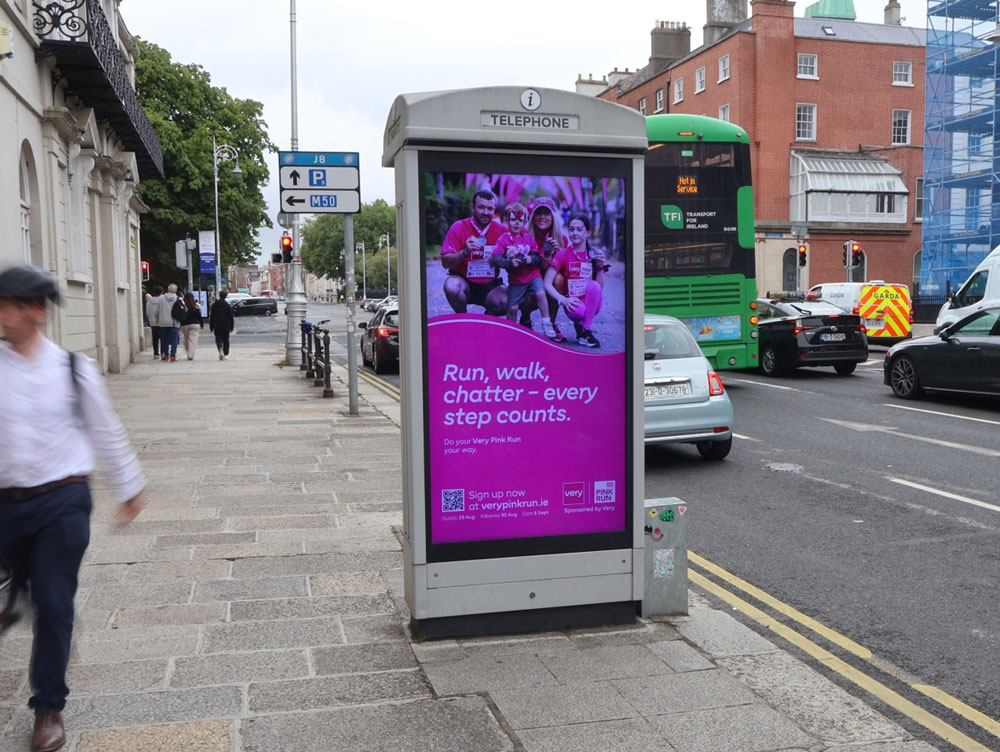
That sense of collective participation sits at the heart of this year’s creative. Images of previous participants bring the energy and personality of the event to the campaign, alongside messages including “Every step is a step closer to a cure”, “Run, walk, chatter – every step counts” and “Powering a future free from breast cancer.”
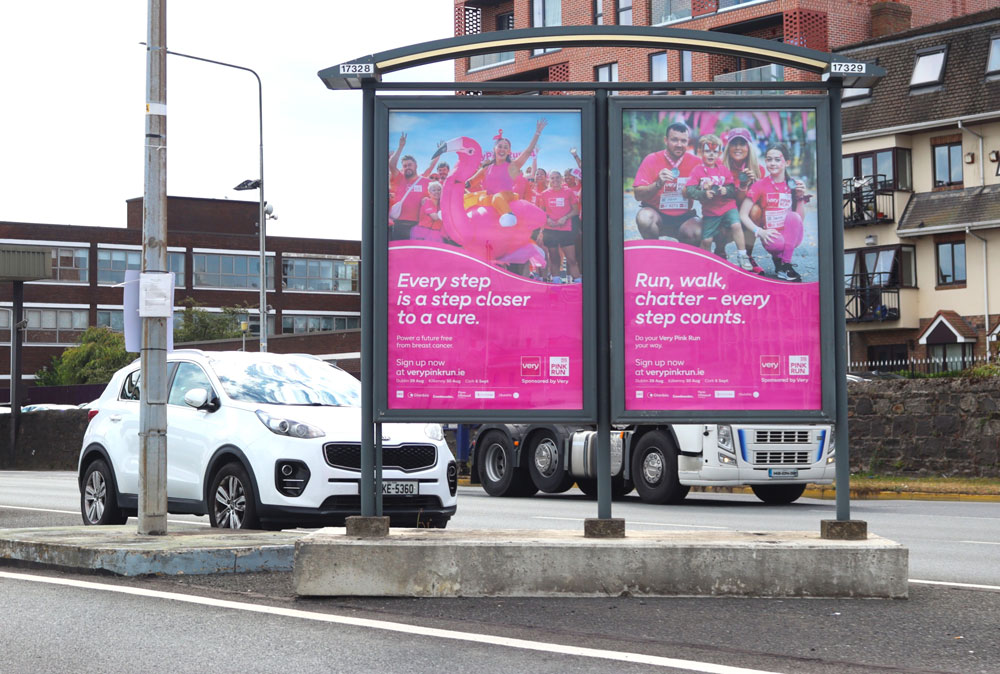
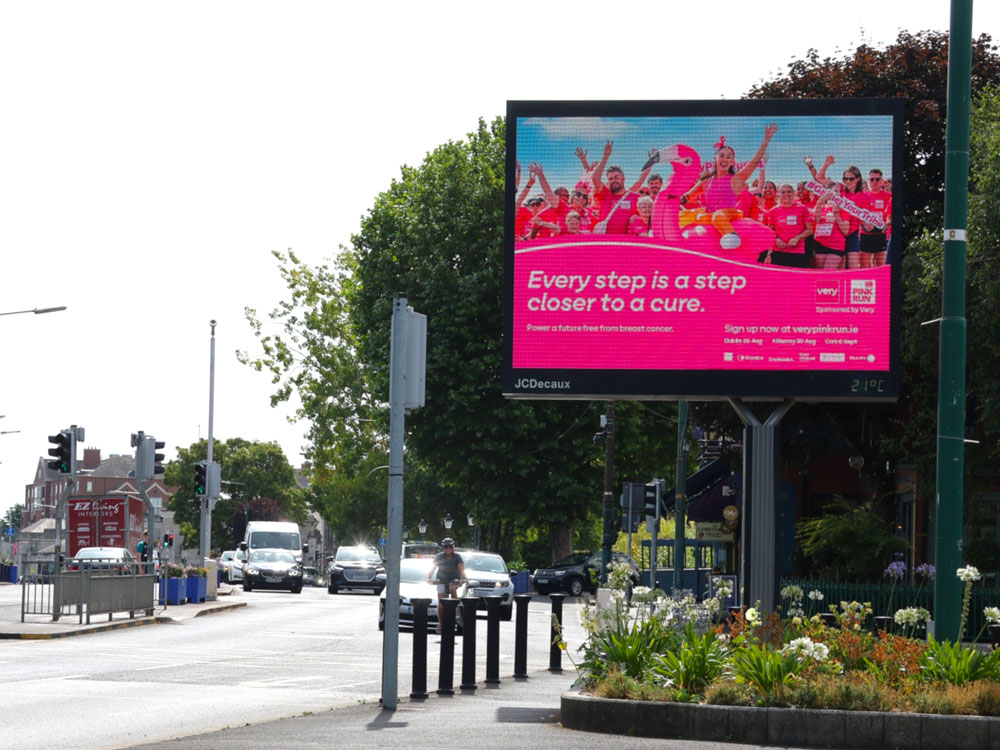
The OOH campaign combines broad-reaching formats with a strong presence across the places and journeys connected to the events themselves. 48 Sheets and Supersides deliver large-format visibility, while a 25-panel East Link Adshel takeover, Metropoles and roadside digital extend the campaign across key Dublin routes.
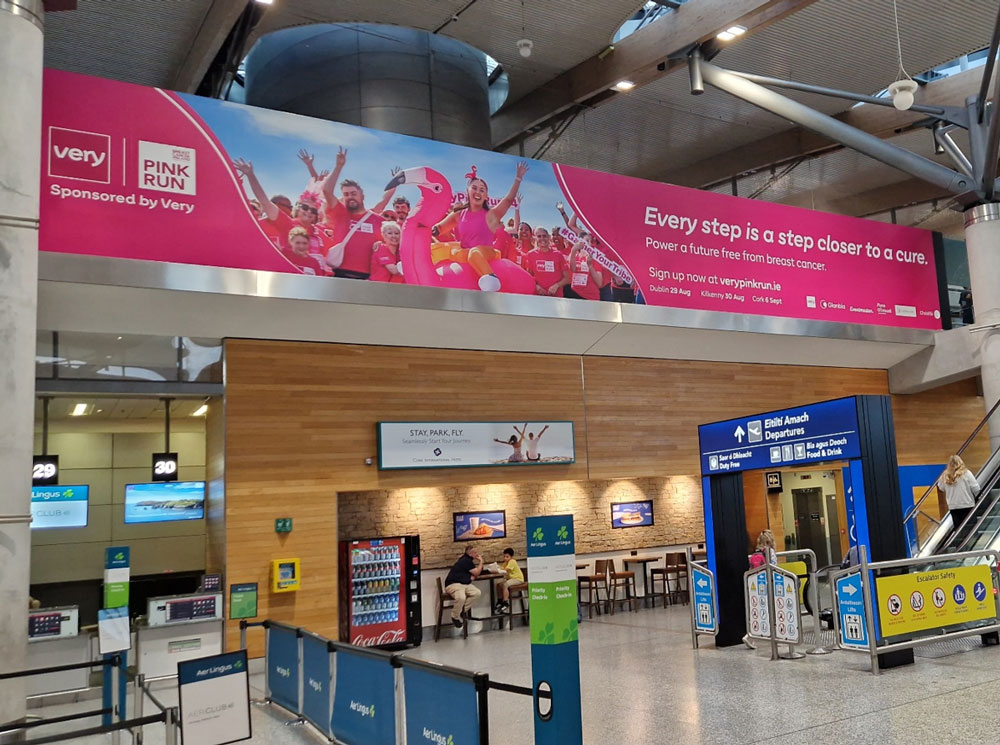
The message also travels with commuters. Digital dPods feature across Connolly, Heuston, Pearse, Malahide and Blackrock, supported by Transvisions at Connolly and Heuston. Activity extends beyond the capital through a Commuter Square in Kilkenny, commuter digital in Cork and a prominent overhead format at Cork Airport.
Aisling Hurley, Chief Executive Officer at Breast Cancer Ireland, commented:
“Out of Home advertising has been a hugely powerful part of our Very Pink Run campaign, giving us the ability to bring our message to life at scale and reach people as they go about their everyday lives. The visibility and impact of Outdoor has helped us create real momentum, build awareness and, most importantly, inspire people across the country to join our pink community.
“It has been an invaluable part of our media mix, turning awareness into action and helping us unite even more people behind our ambition to rewrite the future for those affected by breast cancer.”
Siobhan Hearne, Marketing Director at The Engine Room, said:
“Including OOH in the media mix was essential to the success of the Very Pink Run campaign. It delivers high-impact visibility, extends the reach of our campaign activity and keeps the event front of mind for potential participants, helping to drive awareness, engagement and registrations at scale.”
For an event centred on people coming together, there is a natural fit between the campaign and the environments in which it appears. Visibility across streets, transport hubs and commuter routes gives the Very Pink Run a tangible presence ahead of each event, while prominent dates, registration messaging and QR codes provide a direct route from awareness to sign-up.
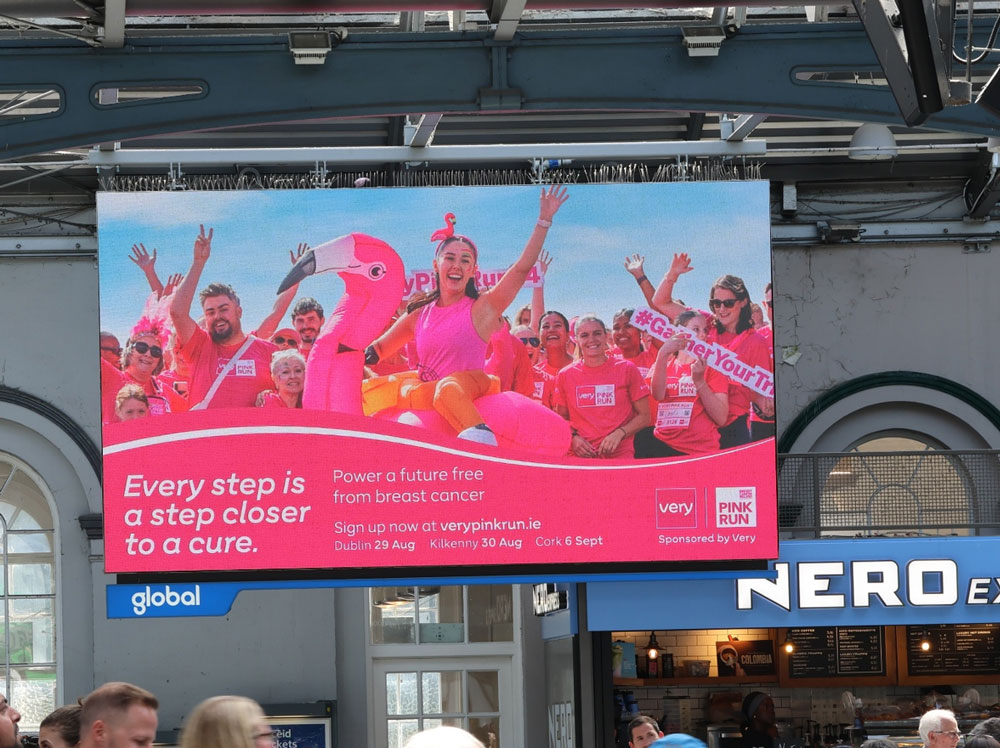
The Very Pink Run takes place in Dublin on 29 August, Kilkenny on 30 August and Cork on 6 September.
Registration is open at verypinkrun.ie.
Dublin Through the Places People Value
What makes Dublin, Dublin?
The answer depends very much on who you ask. For some, it is the bustle of the city centre. For others, it is green space, the coast, a favourite neighbourhood or somewhere to eat, drink, shop or spend an evening.
That variety comes through strongly in the latest findings from PML Group’s iQ research. With our research partner Ipsos B&A, we recently asked 300 Dublin respondents to tell us, in their own words, their favourite part of the city.
The city centre or town centre was the most common response, cited by 21%. Parks and green spaces and Dublin’s atmosphere and vibrancy followed, both at 12%. Food, pubs and restaurants were mentioned by 8%, as were coastal areas and the seaside when rounded.
Beyond these, the responses spread across a wide range of places and characteristics. Historic sites and heritage, Phoenix Park and local areas each featured among around 7% of respondents. People and community atmosphere, St Stephen’s Green and Grafton Street were each mentioned by around 6%, while shopping featured among 5%.
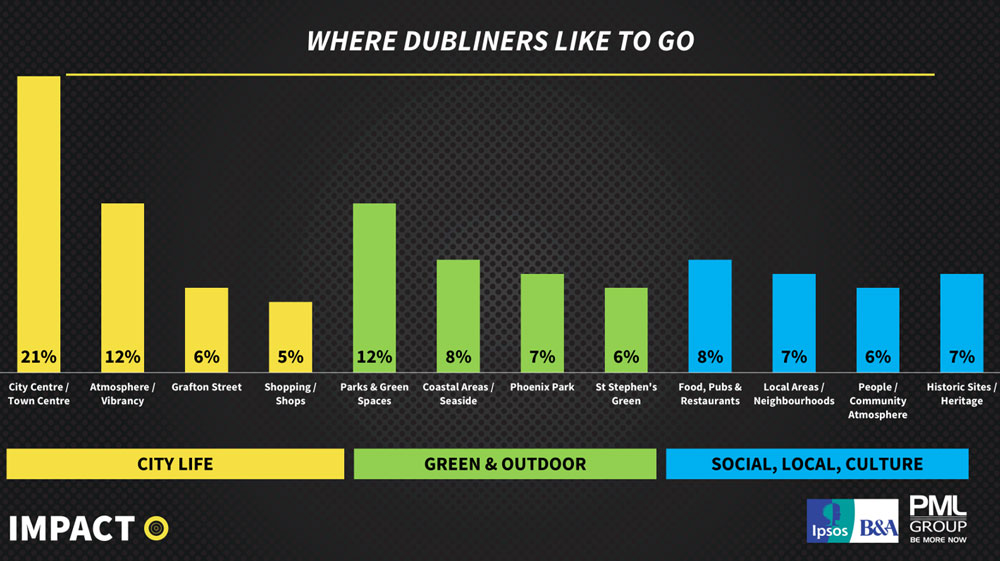
The results underline the continued importance of Dublin city centre, but they also show that people’s relationship with the capital stretches well beyond it.
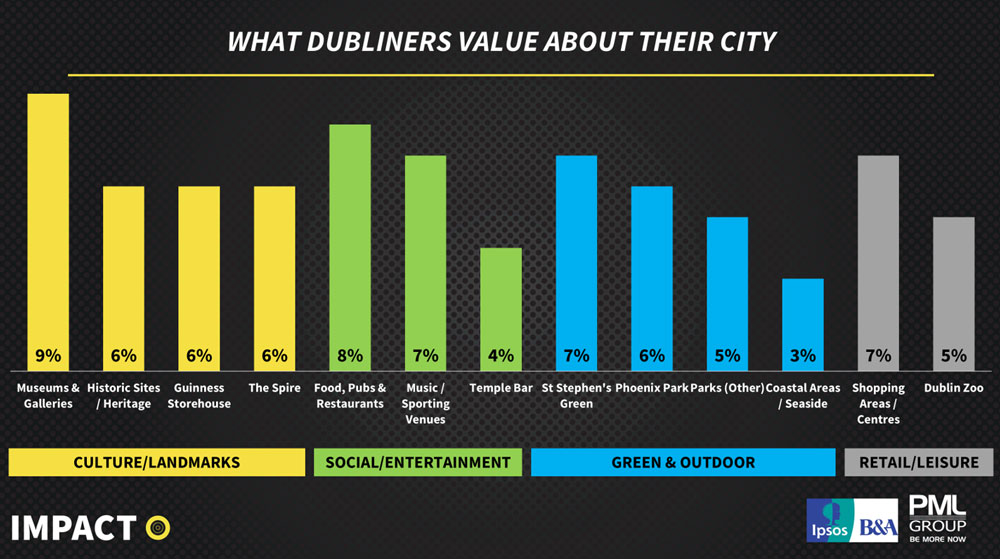
That becomes even clearer when respondents are asked about their favourite venue or attraction to visit. Museums and galleries lead at 9%, followed by food, pubs and restaurants at 8%. St Stephen’s Green and shopping areas are each cited by 7%, with music and sporting venues at a similar level.
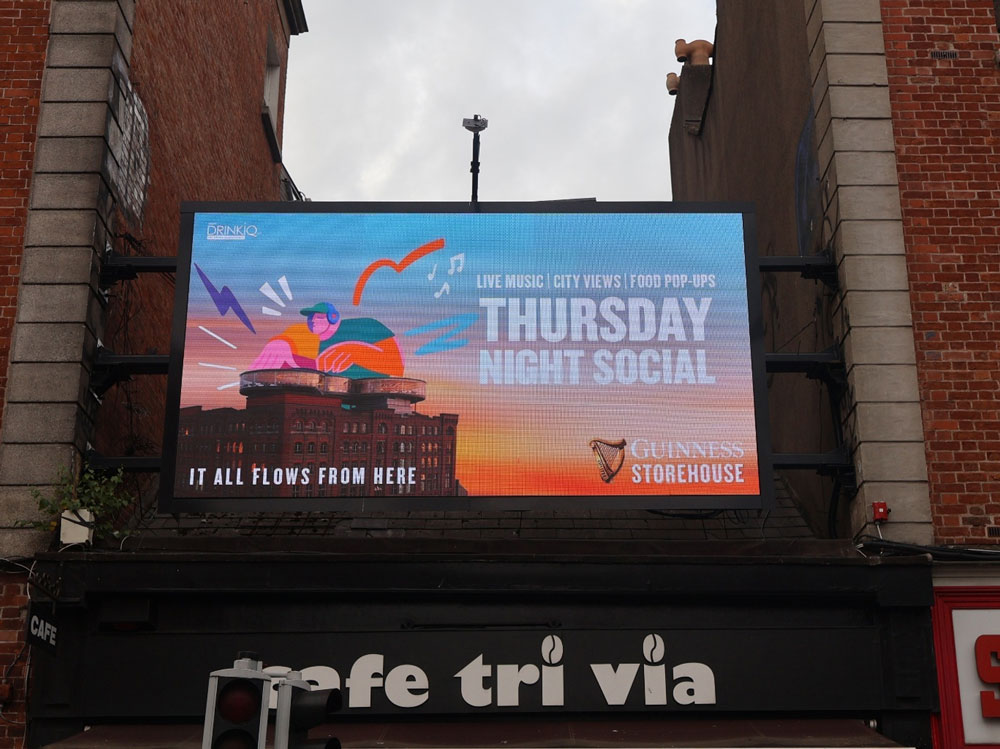
Phoenix Park, the Spire and Guinness Storehouse are each mentioned by just over 6%, while historic sites and heritage, Dublin Zoo, other parks, Temple Bar and coastal destinations all feature in the responses.
There is also a long tail of individual answers. Some 18% of responses to the attractions question sit within the ‘other’ category, reflecting the range of venues and destinations people named.
It makes for a useful picture of Dublin as a city experienced in many different ways.
People move between the centre and their local area, between work and retail, hospitality and entertainment, parks and leisure, culture and the coast. The importance of each environment changes with the person, the day and the occasion.
For advertisers, understanding those differences can make location a more meaningful part of the planning process.
A campaign seeking broad visibility across Dublin may require a strong presence on major routes and in high-footfall areas. A retail brief may place greater emphasis on shopping environments and the journeys around them. Food and drink brands can consider the places and times associated with social occasions, while entertainment campaigns may benefit from understanding how audiences move towards venues and through the city around key events.
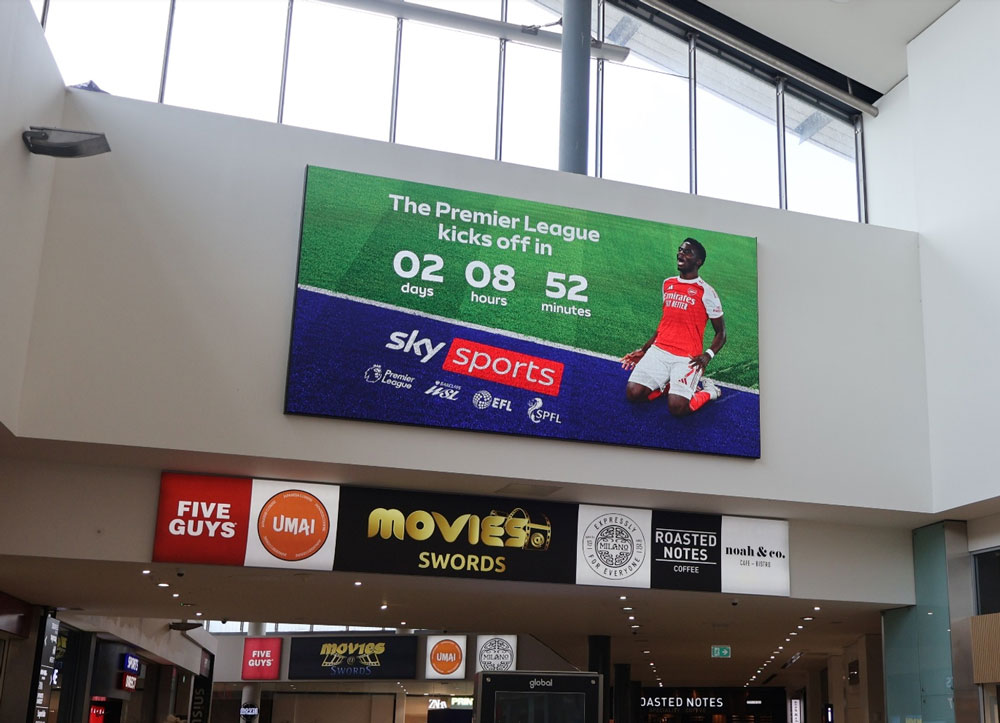
None of that means reducing an audience to a particular location. Instead, it adds another layer to what we know about them.
Demographics can tell us who people are. Location and movement can tell us more about the environments they encounter, the journeys they make and the occasions taking place around them. This is where OOH has a particularly valuable role to play.
Its presence within the physical city allows brands to build broad public visibility while also making deliberate choices around environment and context. Classic OOH can deliver scale and sustained presence across key locations, while digital OOH creates further scope to respond to factors such as place, time, audience movement or changing conditions where these are relevant to the campaign.
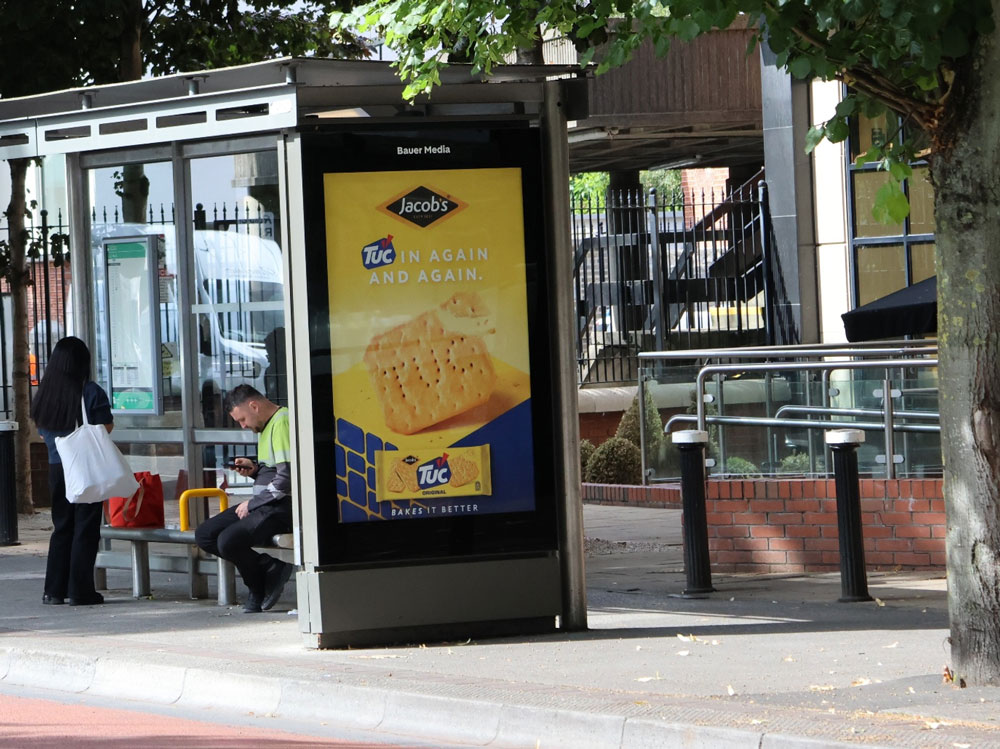
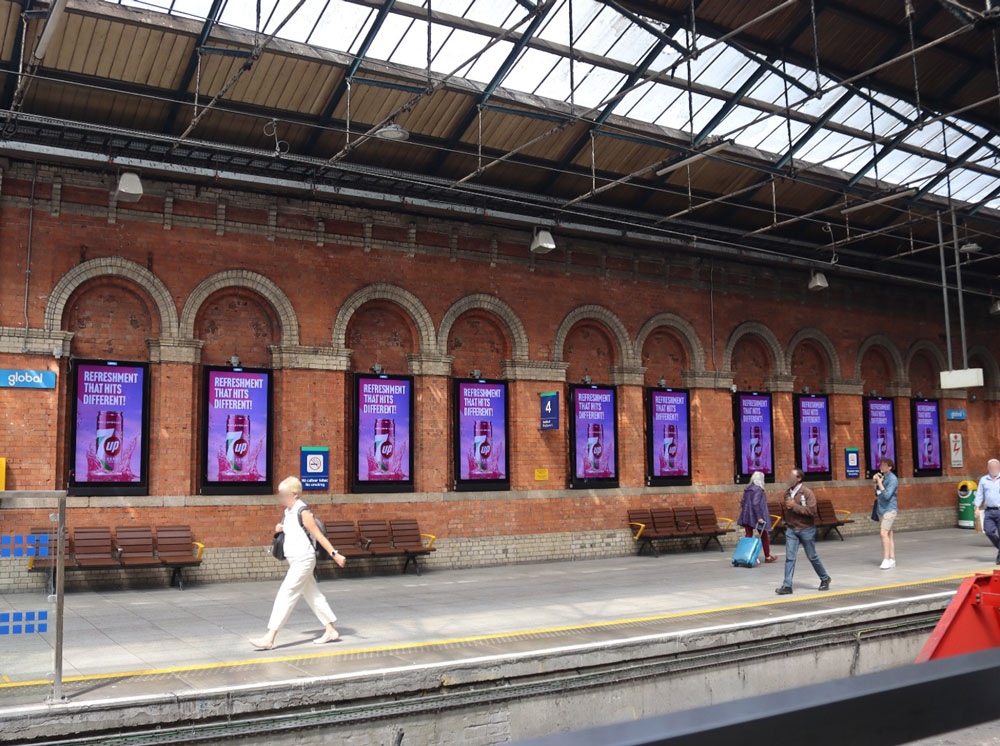
The result is not necessarily a more complicated plan. It is a more informed one: the findings do not suggest that every advertiser should be targeting parks because Dubliners value green space, or placing advertising beside museums because they rank highly among favourite attractions. Their value is in showing just how varied the experience of Dublin is.
For brands, that creates a wealth of different opportunities to be present in the city in ways that relate to the objective at hand.
Dublin can be the city centre, the local neighbourhood, the shopping trip, the commute, the night out, the match, the gig or the weekend by the coast. Effective OOH planning starts by understanding which of those places, journeys and occasions are most relevant to the people a brand wants to reach.
That is where location moves beyond simply telling us where an audience is, and starts helping us understand where a brand has the greatest opportunity to connect with them.