
















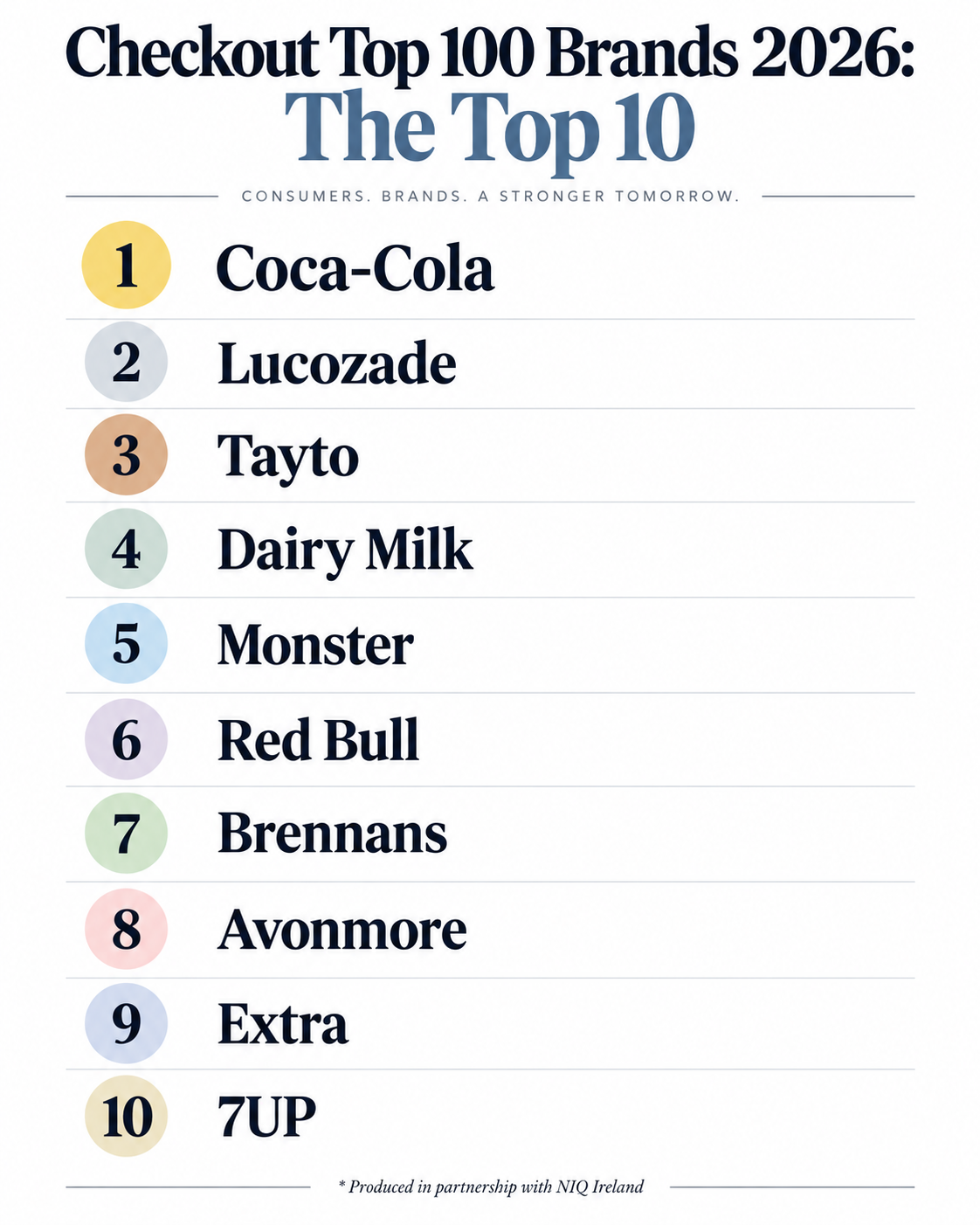
Coca-Cola has retained its position as Ireland’s biggest-selling grocery brand for a 22nd consecutive year. The annual ranking, compiled by Checkout magazine in partnership with NIQ Ireland, and based on value sales through mainstream grocery outlets, places Coca-Cola ahead of Lucozade, Tayto, Dairy Milk and Monster.
Red Bull is sixth, followed by Brennans, Avonmore, Extra and 7UP.
While the continued dominance of Coca-Cola and other long-established brands demonstrates the enduring value of scale, familiarity and brand equity in the Irish grocery market, the make-up of the wider ranking point to changes in consumer tastes and preferences that are bubbling beneath the surface.
Three of the top six brands are primarily associated with soft drinks or energy drinks, while confectionery, carbonated soft drinks and sport and energy drinks all feature among the ten largest grocery categories.
At the same time, however, much of the growth within those categories is moving away from their traditional heartland.
For example, the NIQ data highlighted by Checkout shows zero- and no-sugar variants driving growth in carbonated soft drinks and helping to offset declining sales of traditional full-sugar products.
A similar trend is evident in sport and energy drinks, where brands are increasingly emphasising functionality, wellness and reduced sugar through product launches and reformulation.
“The 2026 Top 100 Brands ranking reinforces the resilience of Ireland’s most established grocery brands,” said Ruth Lloyd-Evans, senior business insights manager at NIQ Ireland.
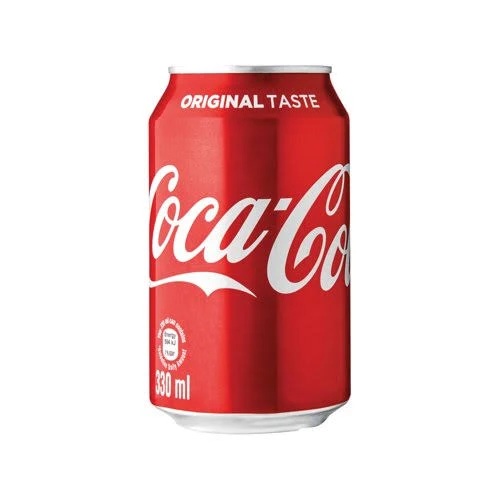
“Many of the brands at the top of the ranking have earned a place in shoppers’ baskets over decades, underlining the importance of trust, familiarity and consistent delivery.”
She added that growth opportunities were increasingly coming from innovation, premium products and propositions addressing changing shopper needs.
The tension between established favourites and changing consumer behaviour is one of the clearest themes running through this year’s ranking.
Irish brands Tayto, Brennans and Avonmore all feature in the top ten, while Ballygowan is ranked 12th, Deep RiverRock ( 21st), Brady Family (24th), Kerrygold (31st) and Irish Pride (37th).
However, many are using product innovation to reach beyond their traditional categories. Ballygowan, for example, has entered functional drinks with an Irish-produced caffeinated water, while Deep RiverRock (which is owned by Coca Cola) has launched ViTAL, combining vitamin-enhanced water with fruit juice, botanicals and minerals.
Kerrygold, one of Ireland’s most recognisable food exports, has also embarked on what it describes as its most ambitious period of product innovation, including an expansion beyond butter into a 15-product premium cheddar range.
Brady Family, meanwhile, has launched products free-from nitrites and artificial preservatives, while Irish Pride has repositioned parts of its bread portfolio around fibre and the absence of emulsifiers and preservatives.
The developments illustrate an increasingly important challenge for mass-market food brands: retaining the familiarity and trust that made them successful while adapting to consumers who are scrutinising ingredients, nutritional benefits and product formats more closely.
“Consumers remain willing to pay a premium when products deliver meaningful benefits, such as health, convenience, functionality, quality, or trusted brand credentials,” said Maev Martin, editor of Checkout.
This is also visible further down the rankings. VITHIT, for example, ranked 50th overall, is the leading brand in the health and functional drinks category. It was acquired by UK-listed Nichols for €75m in August, underlining the commercial value being attached to brands positioned around health, hydration and functionality.
Fit Foods, at number 52, is similarly tapping demand for high-protein convenience foods, including the launch of smaller portion-controlled meals combining protein and fibre.
The same patterns are being repeated across entire grocery categories.
Premium and hand-cooked products are helping drive growth in crisps and snacks while mainstream lines face softer demand. In pre-packed meats, snacking and convenience formats are outperforming traditional sliced meat.
Elsewhere, cheese sales are increasingly being shaped by premiumisation, snacking and convenient formats, while conventional block and sliced cheddar products are under greater pressure.
Mineral water, the tenth-largest category, is being boosted by flavoured and functional products, premium brands and bigger pack formats.
According to the Checkout/NIQ Ireland research, even relatively mature categories such as yoghurt, coffee and tea are fragmenting as shoppers seek new nutritional benefits or consumption occasions.
High-protein and functional yoghurts are outperforming some more conventional products, while cold brew and alternative coffee formats are gaining traction. In tea, green, decaffeinated, fruit and herbal varieties are outperforming the broader category.
These trends present grocery manufacturers with both opportunities and complications.
While consumers may be increasingly health-conscious, the Checkout research shows that some of Ireland’s biggest brands and categories are showing little evidence of a wholesale retreat from indulgence. Confectionery, for example, remains the country’s biggest grocery category, while Coca-Cola, Tayto and Dairy Milk occupy three of the top four positions.
Instead, the evidence points towards consumers attempting to reconcile competing priorities: health alongside indulgence, convenience alongside quality and value alongside occasional premiumisation.
Manufacturers are responding by stretching established brands into new formats rather than necessarily trying to change consumer behaviour altogether. Smaller portions, reduced-sugar versions, additional protein, functional ingredients and premium variants allow familiar brands to participate in changing consumption patterns without abandoning their core propositions.
That strategy could become increasingly important as new forces reshape food consumption.
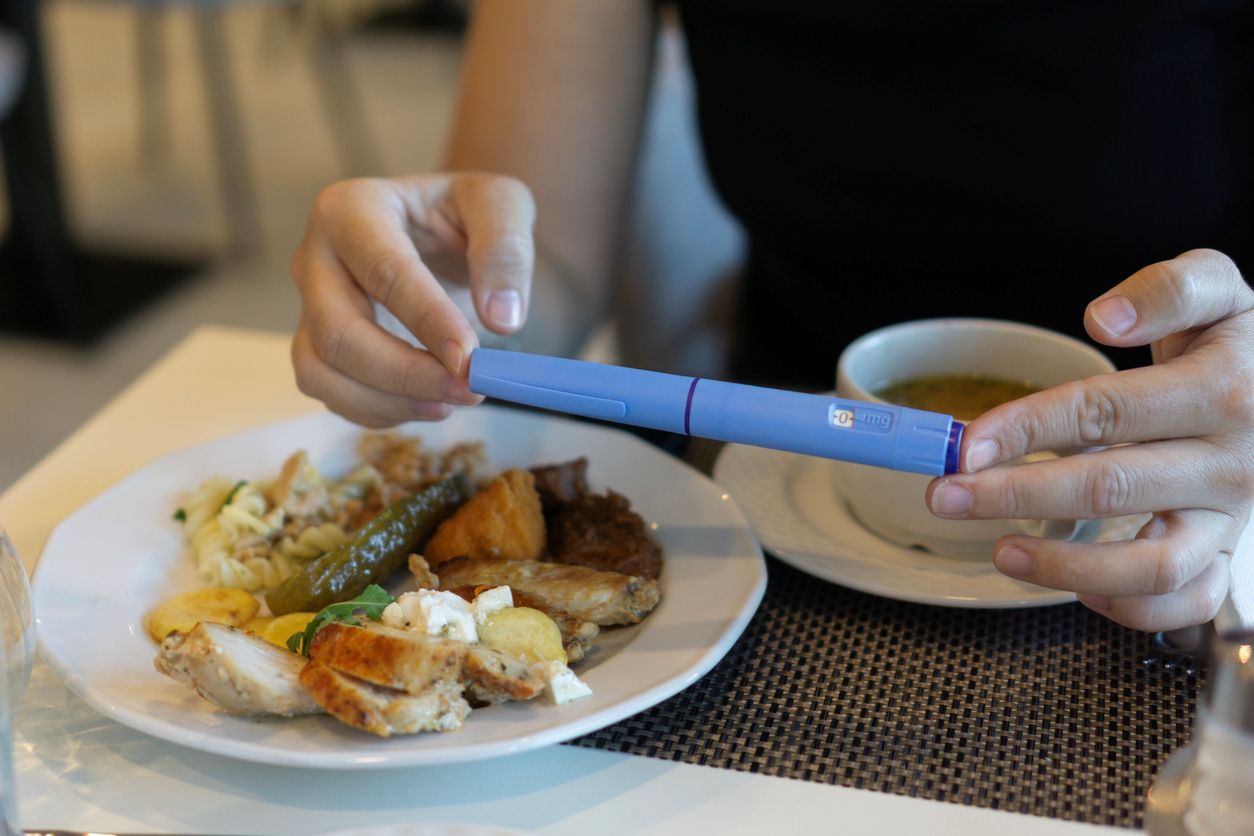
With the use of GLP-1 weight-loss drugs on the rise in Irish society, the Checkout survey notes that this is likely to have a potential influence on grocery shopping, particularly if oral versions of the treatments increase adoption. The scale and timing of the impact in Ireland remains uncertain, but widespread use could have consequences for portion sizes, snacking and calorie-dense categories.
For now, however, the 2026 ranking suggests that Ireland’s biggest grocery brands are proving remarkably difficult to dislodge.